
Highlights
Top Insights
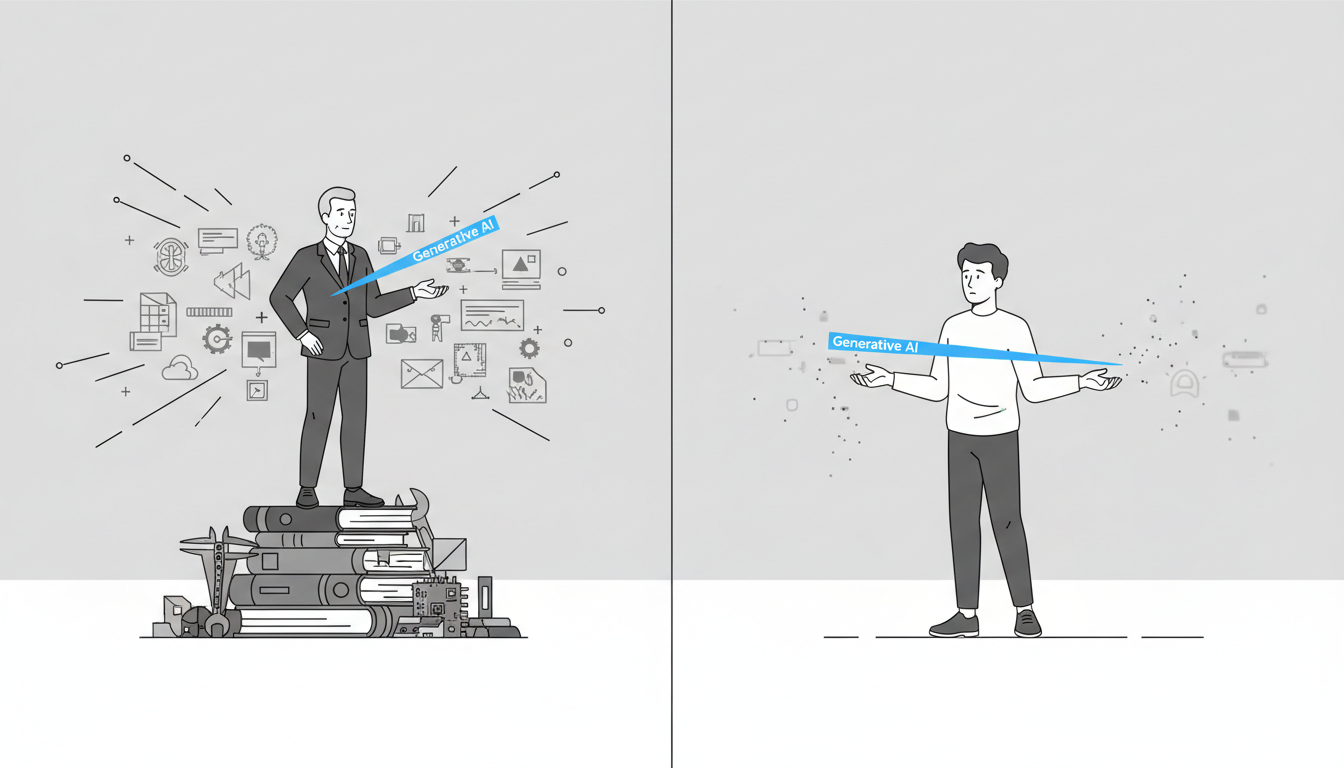
Studies reveal that LLMs reliably produce more small, incremental ideas than humans, but not more big, transformative ones. Even when humans collaborate with LLMs, the number of big ideas does not increase significantly compared to human-only ideation. We should keep humans in the driver’s seat for radical ideation. LLMs are excellent collaborators, but not inventors of paradigm-shifting ideas—yet.
We need to also monitor and mitigate homogeneity risk by deliberately injecting semantic diversity into LLM prompts or alternating between human-led and AI-led phases.
Source: Journal of Consumer Research
Top News
1. ChatGPT now supports integration with MCP servers, enabling employees to access company data via the chatbot.
2. TikTok Symphony has introduced new AI-powered tools that enable marketers to quickly create TikTok-style videos from images, text, and product visuals.
3. Midjourney has released Version 1 of its Video Model, introducing an “Image-to-Video” feature.
4. Canva has integrated Google’s Veo 3 AI video generation into all paid plans.
5. MiniMax’s Hailuo 02 video AI model outperforms Google Veo 3 in user benchmarks and MiniMax-M1 is an open-source LLM with 1 million-token context window.
Additional Insights
1. How to use AI to surface evolving trends (Board of Innovation)
AI-powered clustering is revolutionizing how brands understand and engage with consumers by identifying dynamic micro-segments based on real behaviors, attitudes, and preferences—rather than outdated demographic labels. Unlike static segmentation (e.g., “Gen Z”), clustering adapts in real time, revealing nuanced insights and emerging trends that traditional methods often overlook. These clusters enable businesses to go beyond insight and directly generate tailored creative assets, campaigns, and messaging that evolve with shifting consumer mindsets. Real-world applications—from hygiene products to fintech—demonstrate how this approach surfaces hidden segments and enables immediate, culturally resonant activation. With user-friendly tools and no-code options, organizations can now turn massive, messy datasets into actionable intelligence, transforming not just marketing but strategic foresight across industries.
2. Four new studies about agentic AI from the MIT Initiative on the Digital Economy (Ideas Made to Matter)
Some new research explores how agentic AI can more effectively collaborate and interact with humans. One key insight is that AI can learn to handle exceptions in rule-based tasks by incorporating human-like reasoning, making decisions closer to how people would act in nuanced situations. Another study shows that the success of human-AI collaboration depends heavily on how the AI’s “personality” is designed, with different personality matches improving or degrading team performance across genders and cultures. Additionally, in AI-driven negotiations, bots that blend warmth with dominance are more effective than purely aggressive ones, suggesting new norms unique to AI-to-AI bargaining. Finally, public trust in AI-generated search results is mixed and influenced by education, political affiliation, and transparency in how AI presents its confidence or sources.
3. Slow Thinking Fast: How AI Trumped Human Bias (California Management Review)
The article explores the paradox of AI both amplifying and mitigating human bias, particularly in high-stakes decisions like employment and corporate governance. While traditional human decision-making is prone to unconscious bias due to reliance on fast, heuristic thinking, AI—when designed with debiasing intent—can mimic deliberate, conscious processes to improve fairness, consistency, and efficiency. A 2024 pilot board search experiment demonstrated that AI, using structured data and transparent criteria, yielded more diverse and qualified candidate slates faster than traditional methods, disrupting bias in ways human-led efforts have largely failed. This showcases AI’s unique ability to simultaneously enhance diversity and maintain excellence, reframing the national debate and offering a scalable, process-driven alternative to ineffective unconscious bias training.
4. The next innovation revolution—powered by AI (McKinsey)
AI may help R&D by accelerating the generation, evaluation, and operational processes of innovation. Generative AI can rapidly produce novel and diverse design candidates, while AI surrogate models significantly speed up performance testing and simulation, often surpassing traditional methods in both cost and efficiency. Moreover, AI tools enhance research operations by synthesizing vast data sources, streamlining documentation, and improving internal knowledge sharing. The economic potential of AI-driven R&D acceleration is substantial—estimated at $360–$560 billion annually—with especially large gains possible in IP-heavy industries like software, pharmaceuticals, and electronics. Realizing this potential requires not just technological adoption but also organizational transformation, including faster scaling, integrating human-AI collaboration, and building core capabilities around model use.
5. In Turbulent Times, Consider “Strategic Subtraction” (Harvard Business Review)
In turbulent times, removing elements—not adding—can be a powerful form of innovation that strengthens an organization’s efficiency, resilience, and prominence simultaneously. For instance, IKEA’s elimination of its iconic paper catalog wasn’t just a cost-cutting move; it reduced production waste (efficiency), improved agility via digital updates (resilience), and enhanced the brand’s sustainability image (prominence). Well-considered subtraction can yield greater strategic gains than constant expansion.
Innovation Radar
1. AI Model Releases and Advancements
MIT researchers have developed a method called SEAL that enables large language models to continuously learn and update themselves using their own generated data, marking a significant step toward more adaptive and human-like AI (Wired).
MiniMax-M1 is a highly efficient, open-source large language model with an unprecedented 1 million-token context window, advanced reinforcement learning, and strong benchmark performance (VentureBeat).
Google has officially launched the stable versions of its Gemini 2.5 model family—Pro, Flash, and the new low-cost, low-latency Flash-Lite—offering developers flexible control over model reasoning (“thinking budgets”) and improved performance for tasks ranging from high-intelligence coding to fast, cost-efficient summarization and classification (Google).
MiniMax’s Hailuo 02 video AI model outperforms Google Veo 3 in user benchmarks while offering significantly lower costs (The Decoder).
Midjourney has released Version 1 of its Video Model, introducing an “Image-to-Video” feature that animates still images with customizable motion settings as a foundational step toward real-time, interactive, open-world AI simulations (Midjourney).
2. AI Tools and Features
TikTok Symphony has introduced new AI-powered tools—Image to Video, Text to Video, and Showcase Products—that enable marketers to quickly create TikTok-style videos from images, text, and product visuals, now integrated with Adobe Express and WPP Open for seamless creative workflows (TikTok).
ChatGPT now supports integration with MCP servers, enabling employees to access company data via the chatbot, though OpenAI advises reviewing tools for sensitive information before use (ZDNet).
OpenAI has launched ChatGPT Record for macOS, enabling Pro, Team, Enterprise, and Edu users to record, transcribe, and summarize up to 120 minutes of audio in real time, with automatic structured summaries and strong privacy controls (The Decoder).
Canva has integrated Google’s Veo 3 AI video generation into all paid plans, enabling users to create synchronized, eight-second video clips directly within their projects (TechRadar).
YouTube will integrate its advanced Veo 3 AI video generation model into Shorts later this summer, enhancing video quality and audio capabilities for creators (The Verge).
Google has launched Search Live in AI Mode for Android and iOS, allowing users in the U.S. to have real-time, voice-based conversations with AI-enhanced search and explore web content hands-free (Google).
3. AI for Science and Medicine
Nvidia-backed AI startup SandboxAQ has released a massive dataset of 5.2 million synthetic drug-protein interaction structures—generated using Nvidia chips and grounded in experimental data—to accelerate drug discovery by training AI models that predict molecular binding with high speed and accuracy (Reuters).
4. Other
Finland has activated the world’s largest sand battery, a low-cost, energy-efficient thermal storage system using discarded soapstone to store renewable heat and reduce carbon emissions (TechCrunch).