Highlights
Top Insights
1. Just a tiny fraction of firms have integrated GenAI across functions to consistently generate real value, exposing a vast gap between potential and practice.
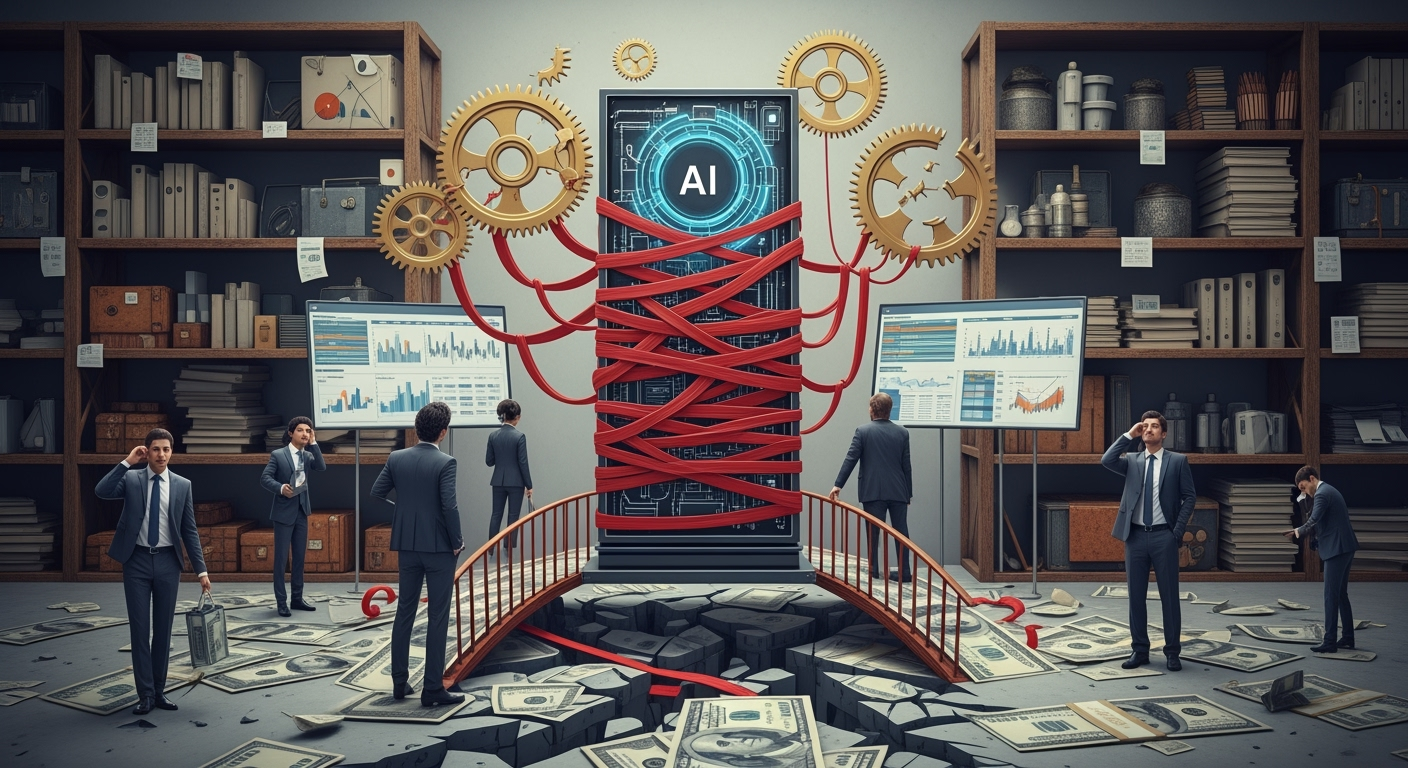
2. Companies often “layer” new tech onto outdated processes, which automates inefficiency instead of eliminating it.
3. Departmental silos and fragmented governance cause teams to optimize locally but fail globally, leading to unprofitable sales and misaligned priorities.
4. One Company Cut €4M & 80,000 Hours in Year 1: A media firm reengineered its marketing with GenAI, yielding massive efficiency gains, not by tinkering, but by reinventing the entire process.
Source: End-to-End Reinvention Unleashes a Technology’s Full Potential (BCG)
Top News
1. xAI launched its new flagship model Grok 4 and the advanced Grok 4 Heavy.
2. An experimental ChatGPT feature called “Study Together,” prompts users to answer questions instead of just providing answers.
3. Google’s Gemini app now lets paid users create AI-generated videos with audio from a single image using Veo 3.
4. Comet, an AI-powered web browser by Perplexity, replaces traditional browsing with a fluid, intelligent assistant.
5. Hugging Face has launched Reachy Mini, a $299 open-source desktop robot.
Additional Insights
1. Against “Brain Damage” (One Useful Thing)
Ethan Mollick argues that while AI doesn’t literally damage our brains, it can harm our ability to think if used uncritically—especially in learning, creativity, and collaboration. Misinterpretations of studies, like the “Your Brain on ChatGPT” research, fuel fears by showing how relying on AI can reduce engagement and retention. When used without guidance, especially by students, AI can short-circuit learning and reduce performance, though well-prompted and teacher-guided use has shown impressive educational benefits. Similarly, AI can enhance creativity and idea generation, but risks anchoring users to its predictable suggestions unless one first develops their own ideas. In writing and collaboration, using AI too early can displace deep thinking and meaningful group interaction. Ultimately, the message is clear: AI doesn’t damage your brain, but it can weaken your thinking if you let it do the hard work for you. Think first—then let AI amplify, not replace, your intellect.
2. Reverse Thinking for Strategic Advantage (California Management Review)
In an unpredictable world, conventional logic can blind firms to innovation. Reverse thinking—flipping assumptions, roles, and tactics—encourages deeper insights and bold action. Three key methods are outlined: assumption reversal to challenge norms and expand the idea space; role reversal to expose weaknesses through adversarial thinking; and tactical reversal to achieve surprising outcomes through counterintuitive moves. AI supercharges these approaches by identifying biases, simulating contrarian perspectives, and modeling complex ripple effects. Tools like large language models, narrow AI, and graph-based systems together form a strategic discovery engine that enables companies to uncover non-obvious solutions, de-risk bold decisions, and stay ahead of disruption. The future, the authors argue, will belong to organizations that dare to think—and act—opposite.
3. The learning organization: How to accelerate AI adoption (McKinsey)
While frontline employees rapidly adopt generative AI, organizational leadership often lags, slowing formal adoption. To bridge this gap and accelerate AI integration, leaders should adopt four key practices: (1) nurture existing grassroots innovation by embracing a “gardener’s mindset” rather than rigid top-down planning; (2) create incentives that reward learning and collaboration, not just usage; (3) foster rapid, small-scale experimentation using clear hypotheses, cross-functional collaboration, and rigorous learning processes; and (4) maintain high standards for praise, distinguishing between incremental improvements and breakthrough innovations. Ultimately, learning organizations that spot, support, and scale emerging innovations build long-term competitive advantage in the fast-evolving AI landscape.
Innovation Radar
1. AI Model Releases and Advancements
Elon Musk’s xAI launched its new flagship model Grok 4 and the advanced Grok 4 Heavy, alongside a $300-per-month “SuperGrok Heavy” subscription (TechCrunch).
Character.AI has unveiled TalkingMachines, a real-time, voice-driven video generation model that animates expressive avatars from audio input using efficient diffusion and attention techniques—marking a major step toward lifelike, conversational AI agents for storytelling, streaming, and interactive virtual experiences (AI News).
Tencent has introduced Hunyuan3D-PolyGen, a generative AI model that significantly boosts the efficiency and quality of 3D asset creation using advanced tokenization, mesh generation, and reinforcement learning technologies (Tech in Asia).
Moonvalley has publicly released its 3D-aware AI video model, Marey, offering filmmakers a subscription-based, ethically trained tool with hybrid controls for greater creative freedom (TechCrunch).
Mistral AI and All Hands AI have released upgraded Devstral Small 1.1 (open-source) and Devstral Medium (API-based), offering state-of-the-art agentic coding performance and generalization at highly competitive prices (Mistral).
2. AI Tools and Features
OpenAI is testing a new ChatGPT feature called “Study Together,” which aims to make the chatbot a more interactive educational tool by prompting users to answer questions rather than just providing answers, potentially to promote learning over cheating (TechCrunch).
Google’s Gemini app now lets paid users create AI-generated videos with audio from a single image using Veo 3, a powerful video generator that includes watermarks for transparency (Mashable).
Anthropic is expanding Claude for Education with integrations into Canvas, Panopto, and Wiley, launching new student programs, and partnering with universities to responsibly enhance AI-powered learning while prioritizing privacy, equity, and ethical use (Anthropic).
Comet is a new AI-powered web browser by Perplexity that replaces traditional browsing with a fluid, intelligent assistant designed to amplify curiosity, streamline tasks, and turn the internet into an extension of your mind (Perplexity).
Replit has partnered with Microsoft to allow enterprise users to build and deploy secure, production-ready applications using natural language—without coding—through integration with Azure services and availability via the Azure Marketplace (Replit).
3. AI for Science and Medicine
Mayo Clinic researchers have developed an AI tool that accurately detects surgical site infections from patient-submitted wound photos (Mayo Clinic).
Google has released two new open-source health AI models, MedGemma 27B Multimodal for interpreting complex medical data and MedSigLIP for versatile medical image analysis, expanding its MedGemma collection to support customizable, privacy-conscious, and high-performing healthcare applications (Google).
4. Other
Hugging Face has launched Reachy Mini, a $299 open-source desktop robot aimed at democratizing robotics by making AI-powered hardware accessible to millions of developers (VentureBeat).