Highlights
Top Insights
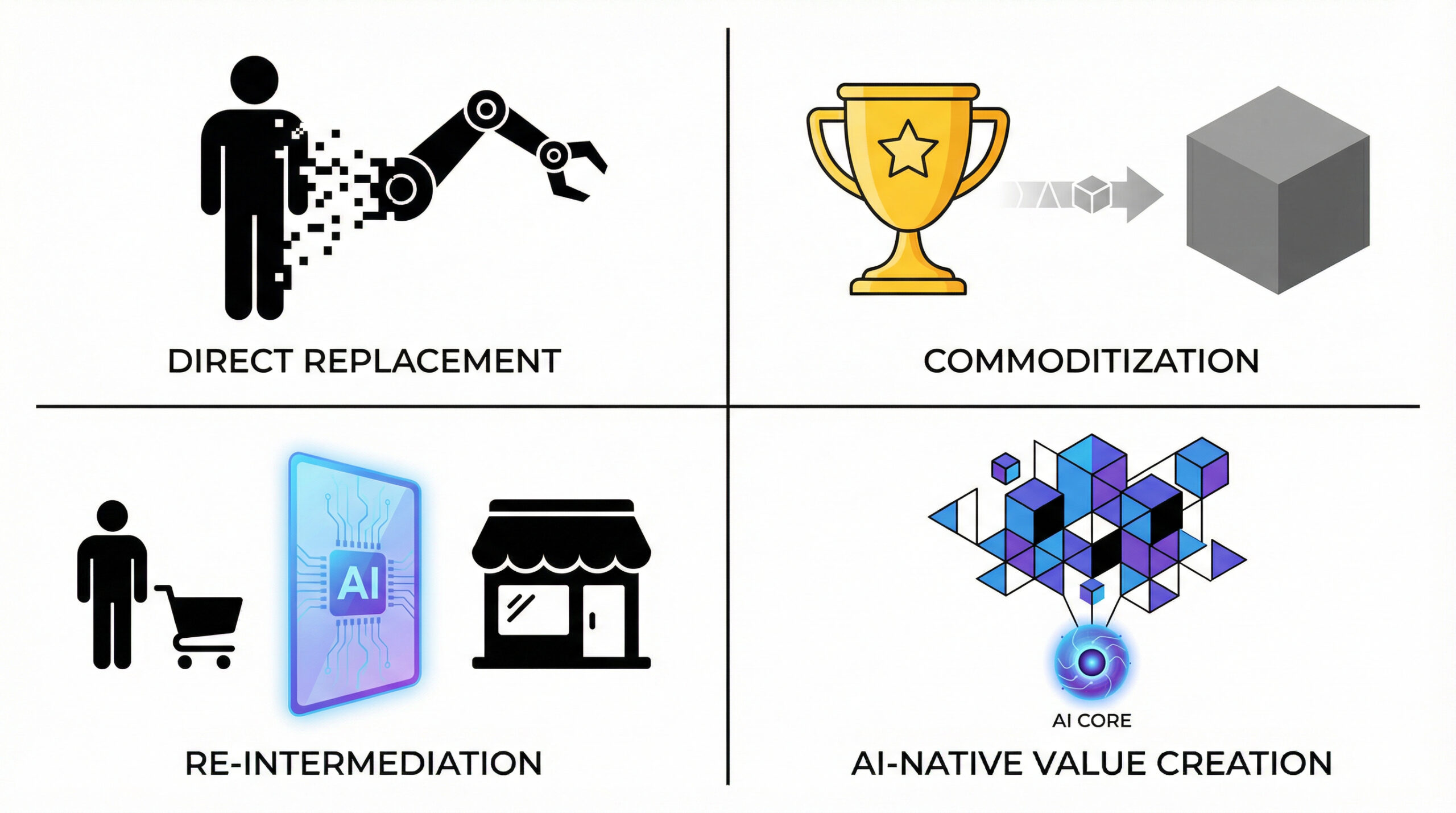
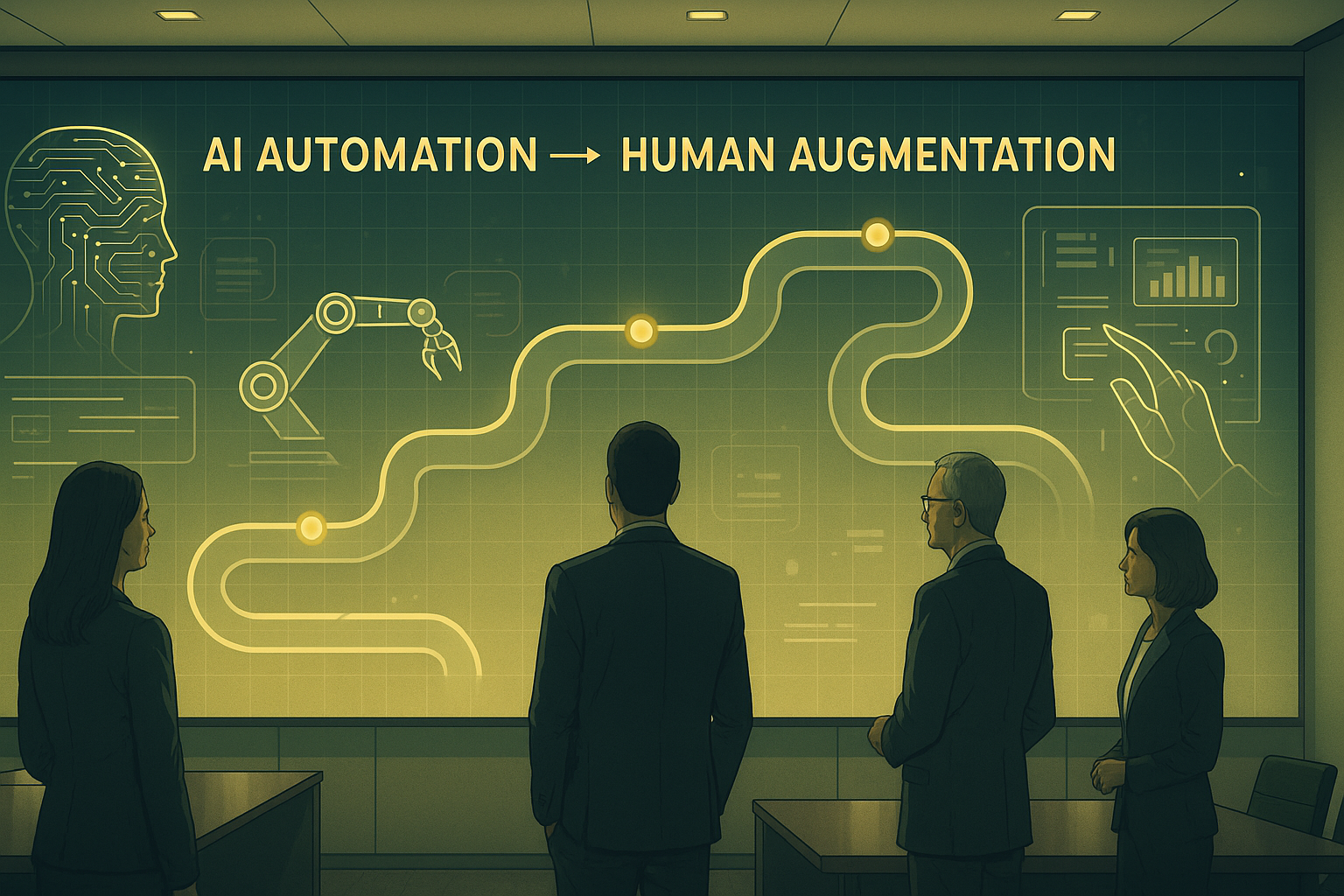
1. Roles involving judgment, creativity, or emotional intelligence should be enhanced, not replaced, by AI.
2. Different business units need different AI approaches. Customer service may need a “human + AI” model to preserve experience quality, while backend operations might be fully automated.
3. McDonald’s learned the hard way: automating too fast without accounting for human nuance led to customer frustration and reputational damage.
Source: AI Automation and Augmentation: A Roadmap for Executives (California Management Review Insights)
Top News
1. ChatGPT Agent is a powerful new capability that allows ChatGPT to proactively complete complex tasks.
2. Moonshot AI’s newly released open-source model Kimi K2 outperforms GPT-4 and other leading proprietary models in key coding and agentic benchmarks.
3. Elon Musk announced that Grok AI will be available in Tesla vehicles.
4. OpenAI is developing a payment checkout system within ChatGPT.
5. A new self-driving lab uses real-time, dynamic chemical experiments to collect data 10 times faster than traditional methods.
Additional Insights
1. How AI Is Redefining Managerial Roles (Harvard Business Review)
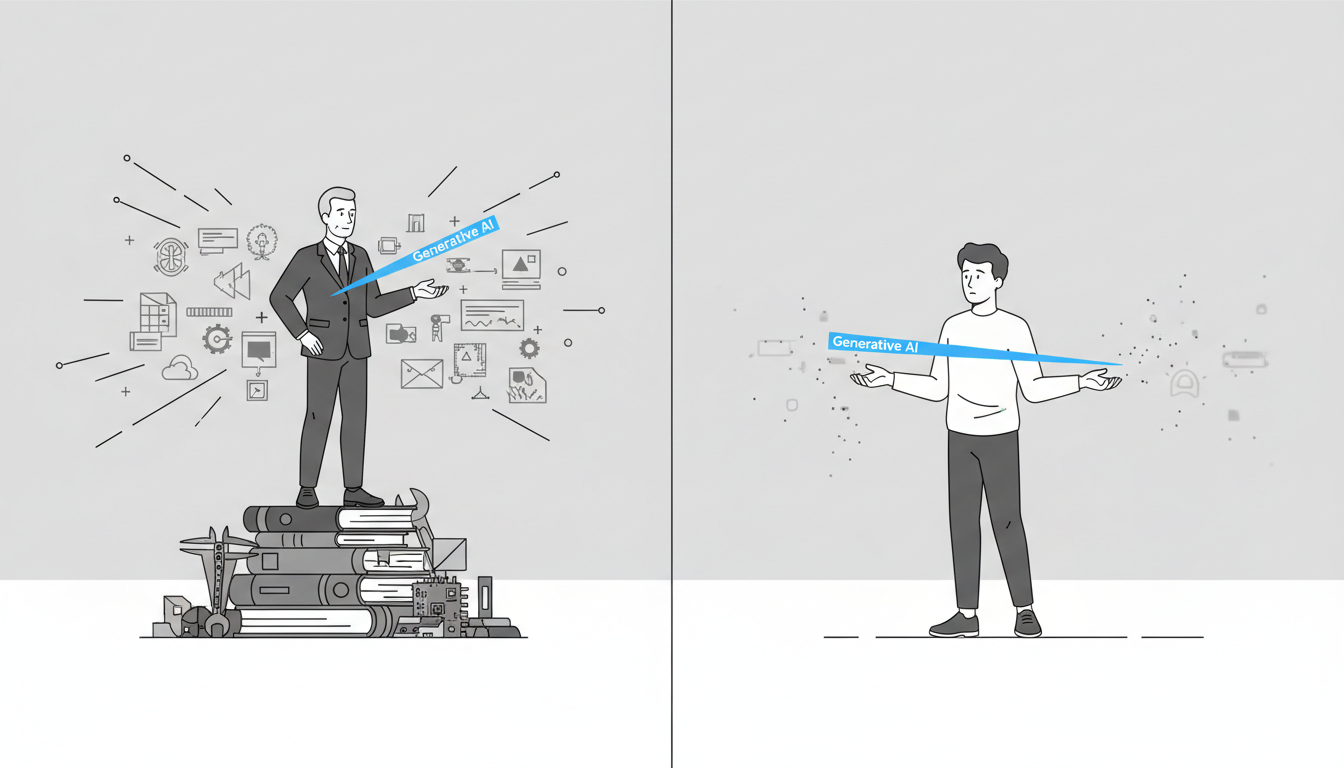
Generative AI is fundamentally reshaping middle management by enabling a more autonomous workforce and streamlining traditional managerial functions like coordination, supervision, and upskilling. A Harvard Business School study showed that tools like GitHub Copilot shift work from project management to core tasks—such as coding—by reducing reliance on managerial oversight and promoting self-sufficiency, especially among lower-skilled workers who benefit most. As AI increasingly handles scheduling, quality checks, and learning support, companies can flatten hierarchies and redefine roles based on skill rather than title. Managers are evolving into more strategic, client-facing contributors, while associates are empowered to take on higher-level responsibilities. However, successful integration requires careful task analysis and a cultural shift to support those who may feel threatened by these changes.
2. How AI changes the way you think (The Economist)
A growing body of research, including a recent MIT study, suggests that while generative AI tools like ChatGPT can ease cognitive load and boost short-term productivity, they may dull users’ creative and critical thinking over time. Brain activity measurements revealed that students relying on AI showed reduced engagement in creative and attention-related brain regions and struggled to recall what they had written. Similar findings from Microsoft and SBS Swiss Business School show that AI use often leads to “cognitive offloading” and “cognitive miserliness,” where users increasingly rely on AI for problem-solving, potentially creating a feedback loop of mental dependency. While some argue that offloading tasks is a natural evolution—akin to using calculators or navigation apps—others warn that offloading complex thinking may erode critical faculties and creativity. Suggested solutions include using AI more deliberately, encouraging users to think through steps, and even redesigning AI to provoke deeper thought, though such interventions may be unpopular or counterproductive. Ultimately, the long-term impact of widespread AI reliance on human cognition remains uncertain but could carry serious implications for education, workplace innovation, and overall mental fitness.
3. Nine AI-fueled business models that leaders can’t ignore (PwC)
AI is fundamentally redefining business by enabling new models that scale services, expand product scope, and optimize capital in ways previously constrained by cost, complexity, or data limitations. Unlike prior tech shifts, AI lets companies deliver hyper-personalized experiences, automate decision-making, and reduce marginal costs toward near-zero. Emerging models include services-as-software, autonomous advisors, robotic service providers, dynamic marketplaces, and precision capital tools. These changes challenge traditional business boundaries and offer immense growth potential but require trust, governance, and strategic investment. Companies that move quickly can reset industry standards, while laggards risk obsolescence. Leaders must prepare by anticipating competitive threats, reimagining customer and production journeys, and designing hybrid human-AI workforces.
4. From POCs to real impact: 6 lessons we’ve learned building AI solutions (Board of Innovation)
Building effective AI solutions requires more than technical capability—it demands strategic alignment, thoughtful design, and a deep understanding of end-users. Many projects falter by starting with limited goals or fixating on internal data; instead, the most impactful efforts begin by reimagining what’s possible with AI. Key lessons include: targeting high-value use cases with ROI clarity (cost efficiency, revenue optimization, or growth); knowing when to build custom tools versus buying off-the-shelf; aligning stakeholders early; designing with user trust, transparency, and workflows in mind; avoiding perfectionism in early data and infrastructure stages; and scaling with modular, user-integrated MVPs. Ultimately, success comes from integrating business needs, human context, and scalable tech into solutions that deliver real, sustained impact.
Innovation Radar
1. AI Model Releases and Advancements
Microsoft has introduced Phi-4-mini-flash-reasoning, a highly efficient 3.8B-parameter model optimized for advanced math reasoning and low-latency inference in resource-constrained environments (Microsoft).
Moonshot AI’s newly released open-source model Kimi K2 outperforms GPT-4 and other leading proprietary models in key coding and agentic benchmarks, offering superior performance, lower costs, and enterprise-ready capabilities that signal a major disruption in the AI landscape (VentureBeat).
Voxtral is a new open-source family of state-of-the-art speech understanding models from Mistral AI that deliver highly accurate, multilingual transcription, audio comprehension, and function-calling capabilities, available in scalable sizes, affordably priced, and designed for real-world production use (Mistral).
Suno has launched v4.5+, introducing advanced AI features like vocal overlays, instrumental underlays, and vibe-based inspiration tools to streamline studio-quality music creation (Digital Music News).
2. AI Tools and Features
Elon Musk announced that Grok AI will be available in Tesla vehicles next week (Reuters).
OpenAI is developing a payment checkout system within ChatGPT to earn commissions from product sales made through the chatbot (Reuters). ChatGPT Agent is a powerful new capability that allows ChatGPT to proactively complete complex tasks on your behalf—from browsing the web and running code to creating presentations and editing spreadsheets—using its own virtual computer and a suite of tools, all while keeping you in control and prioritizing safety (OpenAI).
Claude’s new Financial Analysis Solution integrates powerful AI tools with real-time data from leading financial platforms to streamline investment research, automate complex analysis, and enhance productivity for financial professionals, all while ensuring enterprise-grade data security and seamless deployment (Anthropic).
Amazon has launched Amazon Bedrock AgentCore (preview), a modular set of enterprise-grade services that enables developers to securely and efficiently deploy, manage, and scale AI agents using any framework or model, with built-in support for memory, identity, observability, tool integration, and more, eliminating infrastructure complexity and accelerating production readiness (Amazon).
Google is rolling out advanced AI features in Search—including Gemini 2.5 Pro, Deep Search, and AI-powered business calling, exclusively for Google AI Pro and AI Ultra subscribers in the U.S., offering enhanced reasoning, research, and productivity tools (Google).
Mistral AI’s Le Chat has launched major updates: including Deep Research, voice interaction, multilingual reasoning, Projects for organizing conversations, and advanced image editing, to help users research, communicate, and stay organized more naturally and efficiently (Mistral).
3. AI for Science and Medicine
A new self-driving lab developed at NC State uses real-time, dynamic chemical experiments to collect data 10 times faster than traditional methods, drastically accelerating and making more sustainable the discovery of advanced materials (Science Daily).
4. Other
Eight babies have been born in the UK free of mitochondrial disease using a pioneering IVF technique that combines DNA from three people—two parents and a female donor—to prevent the transmission of the debilitating genetic disorder (BBC).