Highlights
Top Insights
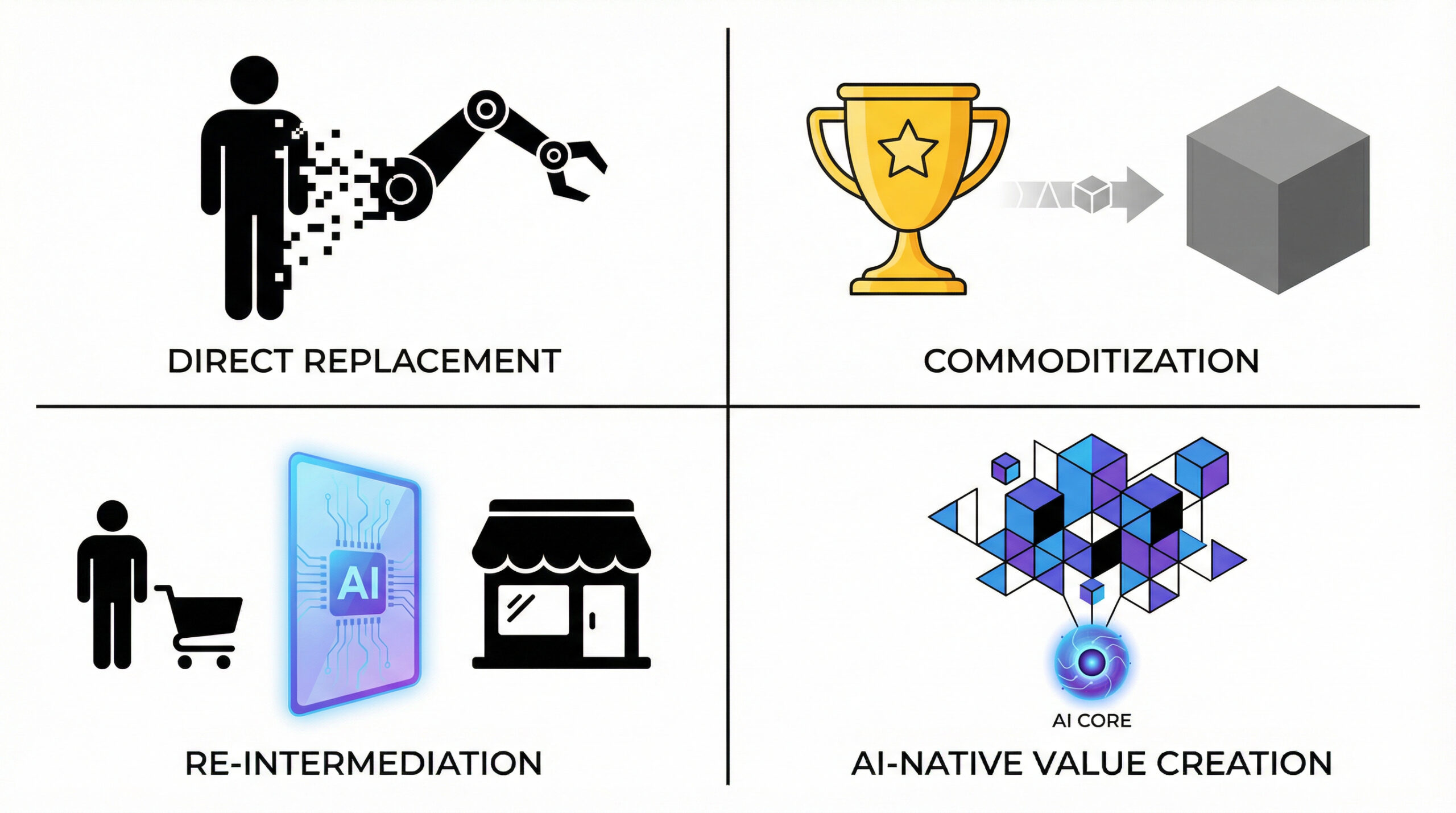
1. CEOs are often aiming too low, focused on automation and short-term efficiency instead of reimagining entire workflows, products, or even business models. This “imagination gap” is the core barrier to transformative AI value.
2. Existing internal data or processes might be turned into entirely new commercial AI products. For example, Penske transformed its internal fleet data system into Catalyst AI, a customer-facing platform that generates new revenue.
Source: CEOs Aren’t Thinking Big Enough with AI (BCG)
Top News
1. Alibaba’s open-source Qwen3-235B-A22B-2507 model outperforms Claude Opus 4 in key benchmarks.
2. Anthropic researchers found that giving AI models more time to think can make them perform worse on certain tasks.
3. App-building tool, Figma Make, is now available to all Figma users, enabling natural language-driven prototyping and app creation.
4. AI models from DeepMind and OpenAI have solved International Mathematical Olympiad problems at a gold medal level.
5. Meta has unveiled a wristband that allows users to control computers and smartphones with hand gestures.
Additional Insights
1. How Pioneering Boards Are Using AI (Harvard Business Review)
Most corporate boards still see AI as a peripheral tool, yet pioneering directors are quietly using large language models like ChatGPT to enhance meeting preparation, frame strategic questions, simulate scenarios, and even challenge management proposals in real time. Some boards have taken it further—using AI to analyze boardroom dynamics or including virtual AI observers like “Aiden Insight” in discussions. Unexpectedly, these tools can not only improve information processing and reduce preparation time but also foster better decision-making by surfacing biases, testing assumptions, and simulating alternative futures. However, boards must overcome barriers like digital illiteracy, data security fears, and the risk of anchoring decisions in outdated information to fully unlock AI’s value.
2. Eureka all day long (The Economist)
AGI could trigger an explosive economic leap, potentially driving GDP growth above 20% annually by automating not just labor but innovation itself. This would profoundly reshape labor markets, wealth distribution, and investment dynamics, potentially concentrating income among capital owners and superstar workers while marginalizing routine jobs. However, various constraints—energy, regulation, slow robotics, or even limits to useful ideas—may temper this surge. Economists debate whether such a future would result in soaring wages, selective abundance, or destabilizing inequality, and financial markets have yet to fully price in such a scenario. Still, if AGI progresses as rapidly as recent trends suggest, its economic impact could be both transformative and deeply disruptive.
3. How to break the ‘AI hype cycle’ and make good AI decisions for your organization (Ideas Made to Matter)
To break the AI hype cycle, Akamai CTO Robert Blumofe emphasizes that organizations must move beyond fear-driven, premature adoption and focus instead on building AI fluency through practical, employee-centered strategies. He urges leaders to resist overinvesting in large language models (LLMs), which are often expensive and misapplied, and instead prioritize purpose-built AI solutions tailored to specific tasks. Blumofe warns against mistaking basic LLM successes for enterprise-ready capabilities, advocating instead for a broader exploration of AI techniques like deep learning and symbolic AI. He also champions a culture of experimentation, suggesting that employees be empowered to test AI applications freely in sandbox environments. Ultimately, he cautions against assuming AI is always the default solution, stressing that technology should be matched to problems—not the other way around.
4. Rethinking AI Agents: A Principal-Agent Perspective (California Management Review Insights)
Unlike older systems, modern AI agents are adaptable, interactive, and capable of handling complex workflows across dynamic settings. However, instead of granting them full autonomy, the authors recommend a “guided autonomy” approach—where AI agents operate within defined boundaries and under human oversight. Viewing AI agents through the lens of principal-agent relationships helps organizations manage them more effectively by focusing on alignment, accountability, and safety. Challenges such as goal misalignment, information asymmetry, unclear responsibilities, and multi-agent complexity require thoughtful governance, regular audits, and coordination mechanisms. Ultimately, AI agents are positioned to transform work by becoming trusted teammates, but only if their integration is carefully orchestrated with human values and institutional safeguards in mind.
5. McKinsey Technology Trends Outlook 2025 (McKinsey)
Agentic AI—AI that acts autonomously in multistep workflows—has emerged as a fast-rising trend, despite relatively low current adoption, with a 985% increase in job postings and $1.1 billion in equity investment in 2024 alone. Also notable is the convergence of AI with other domains: AI now plays a pivotal role in accelerating innovations across robotics, bioengineering, energy, and semiconductors. While AI is progressing rapidly, infrastructure and talent gaps are causing bottlenecks, especially in compute capacity, data center power, and semiconductor supply chains. Additionally, a revived push for sovereign cloud infrastructure shows that geopolitical and regulatory concerns are now shaping cloud adoption and digital autonomy strategies, particularly in Europe. Finally, while foundational AI models dominate headlines, smaller, efficient models and specialized hardware are quietly enabling AI to run on local devices, reshaping enterprise strategy and edge computing potential. These trends point to a future where autonomy, scale, and trust must be balanced in highly dynamic technological ecosystems.
Innovation Radar
1. AI Model Releases and Advancements
Alibaba’s newly released open-source Qwen3-235B-A22B-2507 model outperforms competitors like Kimi-2 and Claude Opus 4 in key benchmarks, while offering a low-compute FP8 version for efficient enterprise deployment and signaling a strategic shift to separate instruction and reasoning models (VentureBeat). Alibaba has launched Qwen3-Coder, its most advanced open-source AI model for software development, claiming it outperforms domestic rivals and rivals top U.S. models like GPT-4 in key coding tasks (Reuters).
Google has released the stable version of Gemini 2.5 Flash-Lite, its fastest and most cost-efficient AI model yet, designed for high-speed, low-latency tasks with optional advanced reasoning and now generally available for production use (Google).
Anthropic researchers found that giving AI models more time to think can actually make them perform worse on certain tasks, challenging the assumption that longer reasoning always leads to better results (VentureBeat).
2. AI Tools and Features
Google Photos now lets users turn still images into short animated videos, apply creative art styles like anime or sketches with “Remix,” and access all these tools in a new “Create” tab (Google). Google has launched “Web Guide,” an experimental AI-powered search feature using its Gemini model to organize results into categorized, curated summaries and links, offering a more structured alternative to traditional search for users who opt in (The Verge). Google has launched Opal, an experimental tool in public beta that lets users easily create, edit, and share AI-powered mini apps using natural language and visual workflows—no coding required (Google).
YouTube Shorts has introduced new AI-powered tools—including Photo to Video, generative effects, and the AI Playground—to make short-form content creation easier, more fun, and creatively dynamic (YouTube).
Figma’s AI-powered app-building tool, Figma Make, is now available to all users—with full functionality reserved for paying subscribers—enabling natural language-driven prototyping and app creation enhanced by design references and a new AI credit system (The Verge).
3. AI for Science and Medicine
For the first time, AI models from DeepMind and OpenAI have solved International Mathematical Olympiad problems at a gold medal level using only natural language, marking a major leap in large language models’ mathematical reasoning abilities (Nature).
4. Other
DeepMind is developing autonomous, self-improving robotic systems, exemplified by table tennis-playing robots trained through competitive self-play and guided by vision-language models, to overcome the limitations of traditional programming and machine learning, aiming to create adaptable machines that learn complex skills with minimal human intervention (IEEE Spectrum).
Meta has unveiled a wristband that uses AI to interpret electrical signals from forearm muscles, allowing users to control computers and smartphones with hand gestures or even just the intention to move (NYTimes).