Highlights
Top Insights
-
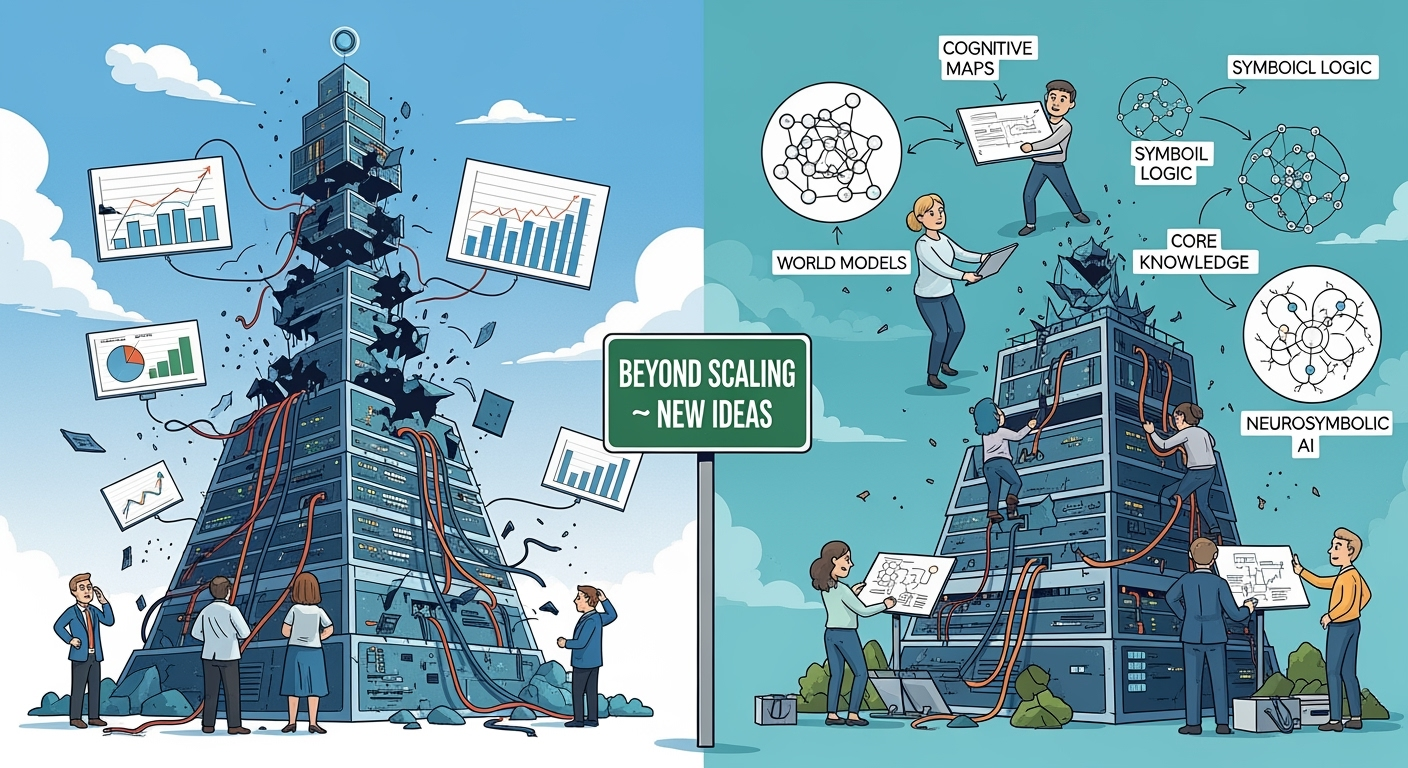
Simply making models bigger (more data, more compute) is yielding diminishing returns. GPT-5, Grok 4, and LLaMA 4 all illustrate the plateau.
-
AGI by 2027 is unlikely: Current models are not a quantum leap forward and continue to hallucinate, make reasoning errors, and lack true understanding.
- Future breakthroughs might depend on world models and hybrid neurosymbolic systems.
Source: The Fever Dream of Imminent Superintelligence Is Finally Breaking (NY Times)
Top News
1. Apertus is Switzerland’s first large-scale, fully open and multilingual language model.
2. HunyuanWorld-Voyager AI model can turn a single photo into short, explorable 3D-like video sequences.
3. Google’s NotebookLM now lets users customize the tone and length of its AI-generated podcasts.
4. OpenAI for Science is an initiative to build an AI-powered platform aimed at accelerating scientific discovery.
5. Tencent’s R-Zero is a reinforcement learning framework that enables LLMs to train themselves.
Additional Insights
1. Make Sure Your AI Strategy Actually Creates Value (Harvard Business Review)
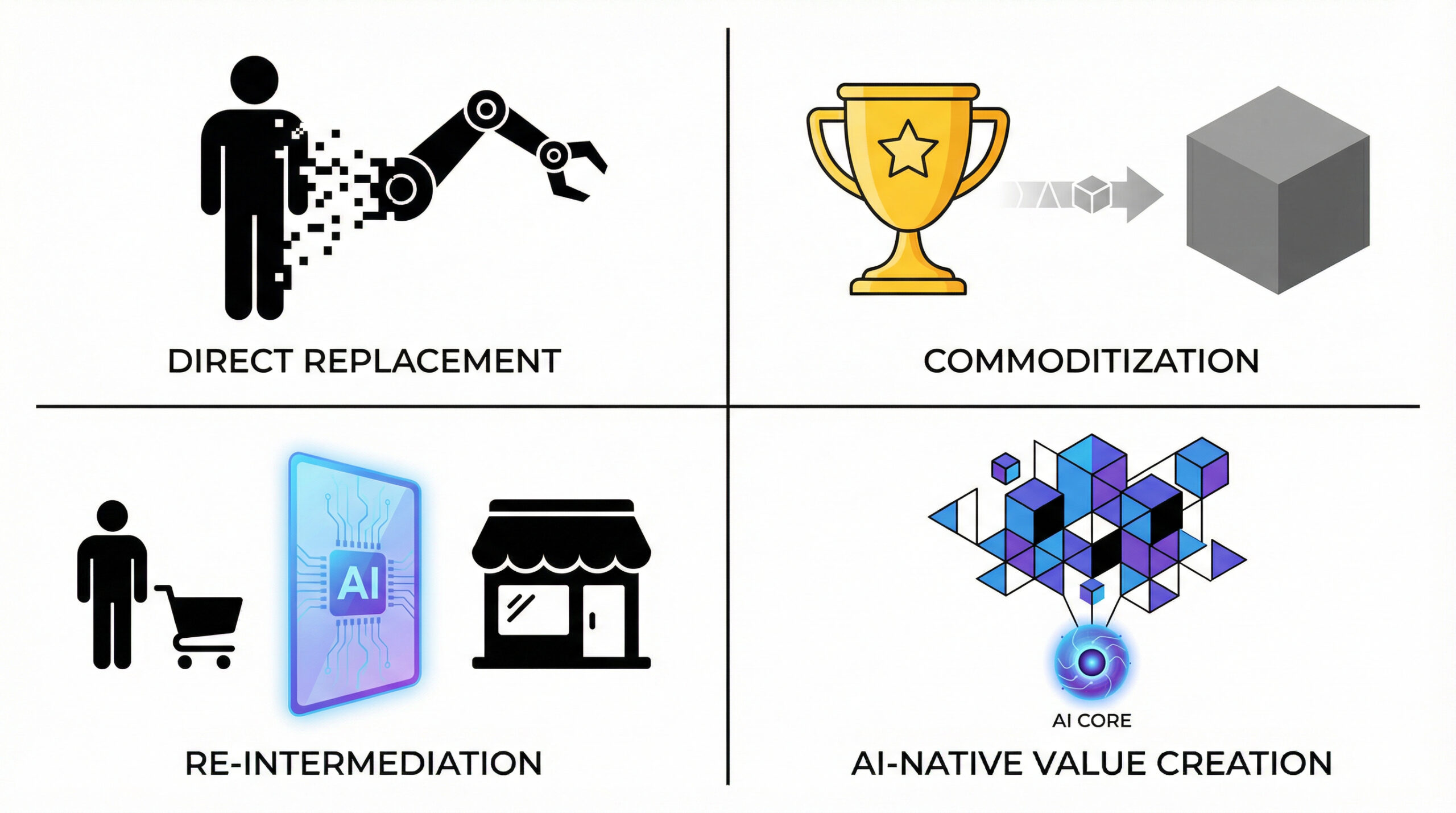
AI can actually hurt companies when it is bolted on without a clear strategy, as seen with Snapchat’s intrusive chatbot and Nordstrom’s AI-driven dilution of its high-touch service. By contrast, Yunji Technology and Duolingo show that AI becomes transformative only when it solves a concrete pain point and delivers a leap in customer value—not just novelty. Even more striking, AI agents themselves raise the stakes: since they surface the best-value options for buyers regardless of brand recognition, smaller, lesser-known companies can now outperform incumbents if their strategy creates superior value. This flips the competitive game from being about size and tech flashiness to being about clarity of strategy and real value delivery .
2. The Rise of Computer Use and Agentic Coworkers (A16Z)
The next big leap for AI is “computer-using” agents—software coworkers that can operate browsers and desktops like humans to complete end-to-end digital work, not just scripted RPA tasks. Progress from tools like ChatGPT/Claude-style agents shows they can click through UIs, use legacy systems, and chain actions across apps; their power comes from two multiplying factors: broad tool access (no API needed) and better reasoning over interfaces. The hard part isn’t proving they work, but tailoring them to messy, customized enterprise software with the right context, training data, and guardrails. A practical stack is emerging (interaction frameworks → models → durable orchestration → browser control → browsers → execution environments), with both pixel-based and DOM-based approaches, and commercial products bundling it all. The near-term wins will be vertical, company-tuned “agentic coworkers” in functions like marketing, finance, sales, and HR that plug into existing tools (Slack, Drive, CRMs) and especially shine where APIs are weak. Startups that master contextualization and reliability will define the first standard for digital labor.
3. From potential to performance: Using gen AI to conduct outside-in diligence (McKinsey)
Generative AI is reshaping the outside-in diligence process by compressing weeks of manual work into days while uncovering insights that traditional methods often miss. The most surprising are how gen AI not only speeds up data synthesis but also proposes unexpected hypotheses, helps build dynamic peer sets from unconventional sources (like patent filings and local-language news), and even detects overlooked revenue opportunities in proprietary customer data. Crucially, the value doesn’t come from using gen AI as a plug-and-play tool but from rethinking the operating model: treating prompts like product specs, building specialized agents, and using proprietary data as fuel. The biggest payoff lies in shifting analysts’ roles from manual data gathering to orchestrating AI-driven workflows, applying judgment, and ensuring governance. Firms that adapt fastest, by training models on unique data, formalizing structured prompts, and embedding oversight—stand to gain sharper, faster, and more reliable investment insights.
Innovation Radar
1. AI Model Releases and Advancements
UCLA researchers have developed optical generative models that use light instead of traditional digital computation to create images, offering a faster, energy-efficient, and sustainable approach to generative AI with applications in secure communications, wearable devices, and large-scale content creation (Phys Org).
EPFL, ETH Zurich, and the Swiss National Supercomputing Centre have released Apertus, Switzerland’s first large-scale, fully open and multilingual language model, designed to advance transparency, innovation, and public access in AI across research, industry, and society (The Verge).
Tencent’s newly released HunyuanWorld-Voyager AI model can turn a single photo into short, explorable 3D-like video sequences with strong spatial consistency, but it demands huge GPU resources, has regional licensing limits, and still falls short of true real-time interactive 3D worlds (Ars Technica).
Google DeepMind introduced EmbeddingGemma, a compact 308M parameter open embedding model delivering state-of-the-art multilingual performance for on-device, offline AI tasks like RAG and semantic search (Google).
2. AI Tools and Features
Google Labs announced Flow Sessions, a pilot program giving filmmakers mentorship and unlimited access to its AI filmmaking tool Flow (Google). Google’s NotebookLM now lets users customize the tone and length of its AI-generated podcasts, offering formats like Deep Dive, Brief, Critique, and Debate, along with new voice options for Audio Overviews (TechCrunch).
3. AI for Science and Medicine
An AI-powered stethoscope trialled in over 200 UK GP surgeries can detect heart failure, atrial fibrillation, and heart valve disease within 15 seconds, significantly improving early diagnosis compared to standard care (British Heart Foundation).
OpenAI has launched OpenAI for Science, an initiative led by Kevin Weil to hire top “AI-pilled” academics and use GPT-5 to build an AI-powered platform aimed at accelerating scientific discovery and restoring confidence in the model (ZDNet).
4. Other
Scientists are discovering that while cancer-driver mutations are widespread in healthy tissues, whether they develop into tumors depends on competition with neighboring cells and chronic inflammation, suggesting that boosting protective cells and targeting inflammatory processes may be key strategies for cancer prevention (The Economist).
Researchers successfully implanted CRISPR-edited pancreatic cells into a person with type 1 diabetes, enabling months of insulin production without immune-suppressing drugs: a promising but still early step toward a potential cure (Nature).
Tencent’s R-Zero is a reinforcement learning framework that enables large language models to co-evolve by generating their own tasks and solutions without human-labeled data, significantly improving reasoning abilities while reducing the costs and bottlenecks of dataset curation (VentureBeat).
UCLA engineers have developed a noninvasive AI-assisted brain-computer interface that decodes brain signals and infers user intent to control robotic arms or cursors, enabling people with paralysis to complete tasks more quickly and effectively (Eureka Alert).