Highlights
Top Insights
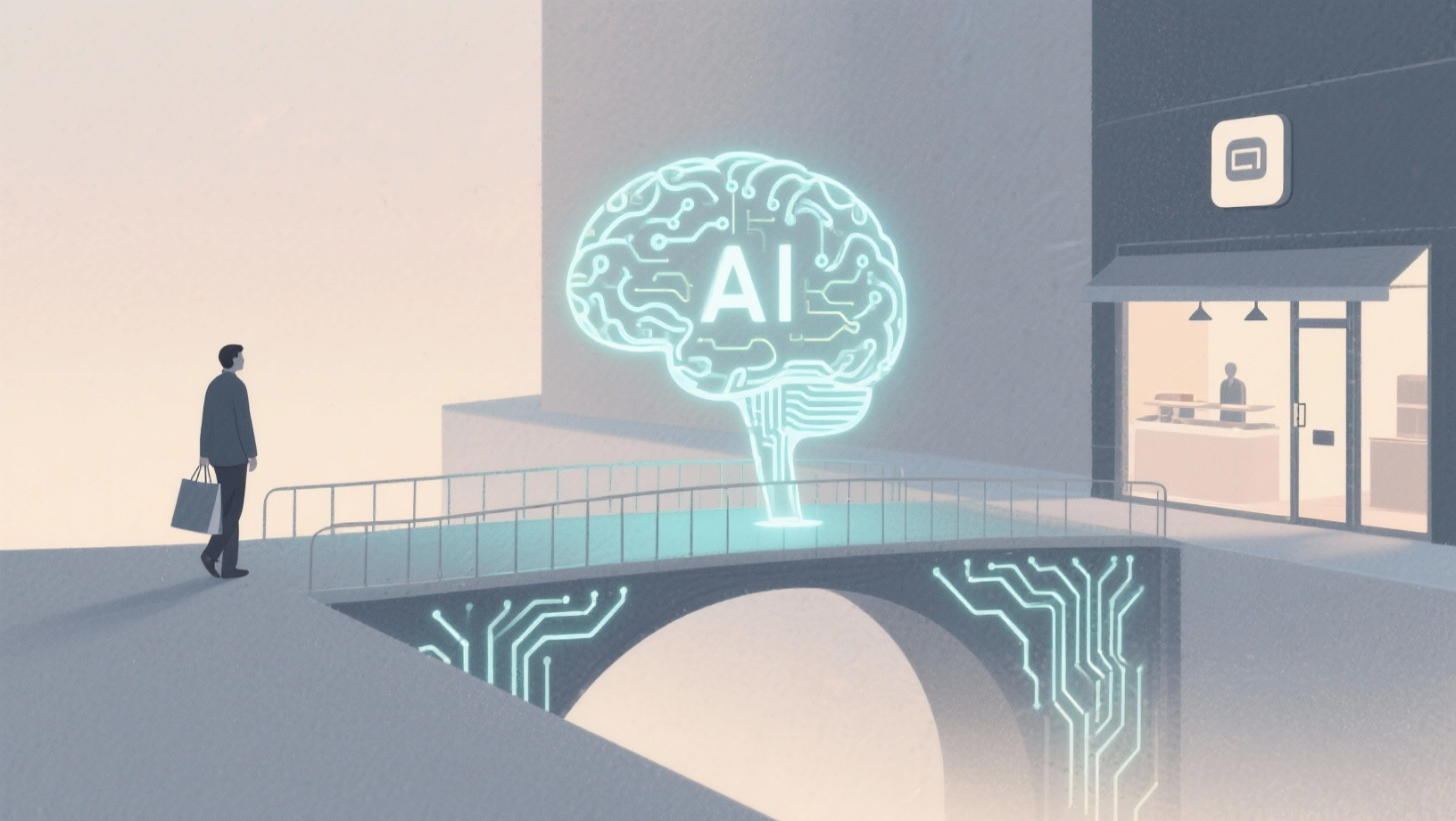
1. Agentic commerce is where shopping is handled by autonomous AI agents that anticipate needs, compare options, negotiate, and buy.
2. By 2030, agentic commerce could orchestrate $1T in US B2C retail and $3–5T globally (goods alone, not services).
3. Shopping moves from site-by-site browsing to intent-driven, end-to-end flows. Your agent becomes a concierge/operations manager, coordinating across platforms (research, design, pricing, payments, delivery).
Source: The agentic commerce opportunity: How AI agents are ushering in a new era for consumers and merchants (McKinsey)
Top News
1. Google introduced Veo 3.1 with richer audio, enhanced realism.
2. Salesforce is integrating its Agentforce with ChatGPT, allowing shared customers to sell products directly.
3. Walmart partnered with OpenAI to let customers shop directly through ChatGPT.
4. Claude now integrates with Microsoft 365 to enable enterprise-wide search. Claude also supports Agent Skills, skill folders that let it automatically load specialized instructions.
Additional Insights
1. Next best experience: How AI can power every customer interaction (McKinsey)
AI-powered “next best experience” is transforming customer engagement by predicting and personalizing interactions in real time, enabling companies to deliver the right message to the right person at the right moment. Unlike traditional push marketing, this approach uses integrated data, predictive models, and generative AI to coordinate touchpoints across the entire customer journey, boosting satisfaction by 15–20%, revenue by 5–8%, and cutting service costs by up to 30%. Leading organizations build next best experience engines on strong data foundations, advanced analytics, gen AI content generation, and campaign orchestration platforms. Real-world applications—like a payments processor reducing churn through predictive interventions or a telecom company improving NPS by sequencing communications, show how AI can drive conversion, retention, and upselling. Success, however, depends as much on change management, workflow integration, and cross-functional alignment as on technology. By starting with focused use cases, strengthening data infrastructure, and scaling through feedback loops, companies can unlock sustainable competitive advantage through hyper-personalized customer experiences.
2. How AI Agents Will Transform B2B Sales (BCG)
It highlights three progressive modes of AI-enabled selling, augmented, assisted, and autonomous, that are already replacing intuition-driven approaches. A future ecosystem of specialized AI agents will handle orchestration, lead generation, qualification, pricing, and customer success, allowing organizations to balance automation with human oversight depending on deal size and complexity. While most sellers currently use AI for tactical tasks like drafting emails or follow-ups, the real opportunity lies in strategic transformation—achieved through clear vision, purposeful AI deployment, robust tech integration, responsible governance, and strong people enablement. Leaders must define bold North Star goals, sequence implementation carefully, and invest heavily in data and frontline skills. As AI matures, companies that embed it deeply into sales workflows can unlock major growth and efficiency gains, with early adopters already seeing double-digit improvements in acquisition, upselling, and customer lifetime value.
3. Intelligence Equilibrium: A New Operating Model (CMR Insights)
The article outlines a strategic framework for integrating AI into organizational operations by balancing three core intelligence dimensions, cognitive, spatial, and emotional/social. Using TIAA as a case study, it shows how phased AI adoption—from contact center automation to generative AI in asset management and empathetic communication, boosts efficiency while preserving human trust. The model emphasizes shifting tasks from human-intensive “Advanced” zones toward “Defined” and “Simple” zones where automation is most effective, freeing employees for higher-value work. Leaders are urged to redesign operating models at the skill level, build task-intensity inventories, and optimize workflows to find an “intelligence equilibrium” between scaling and technological forces. Practical recommendations include starting transformation at the executive level, targeting the Defined task zone, rethinking spatial design, redefining roles, tailoring customer workflows, and stress-testing AI chains. The key insight: sustainable AI transformation requires deliberate human–machine orchestration, not isolated tech pilots, ensuring scale, trust, and human-centric value creation.
4. The Gen AI Playbook for Organizations (Harvard Business Review)
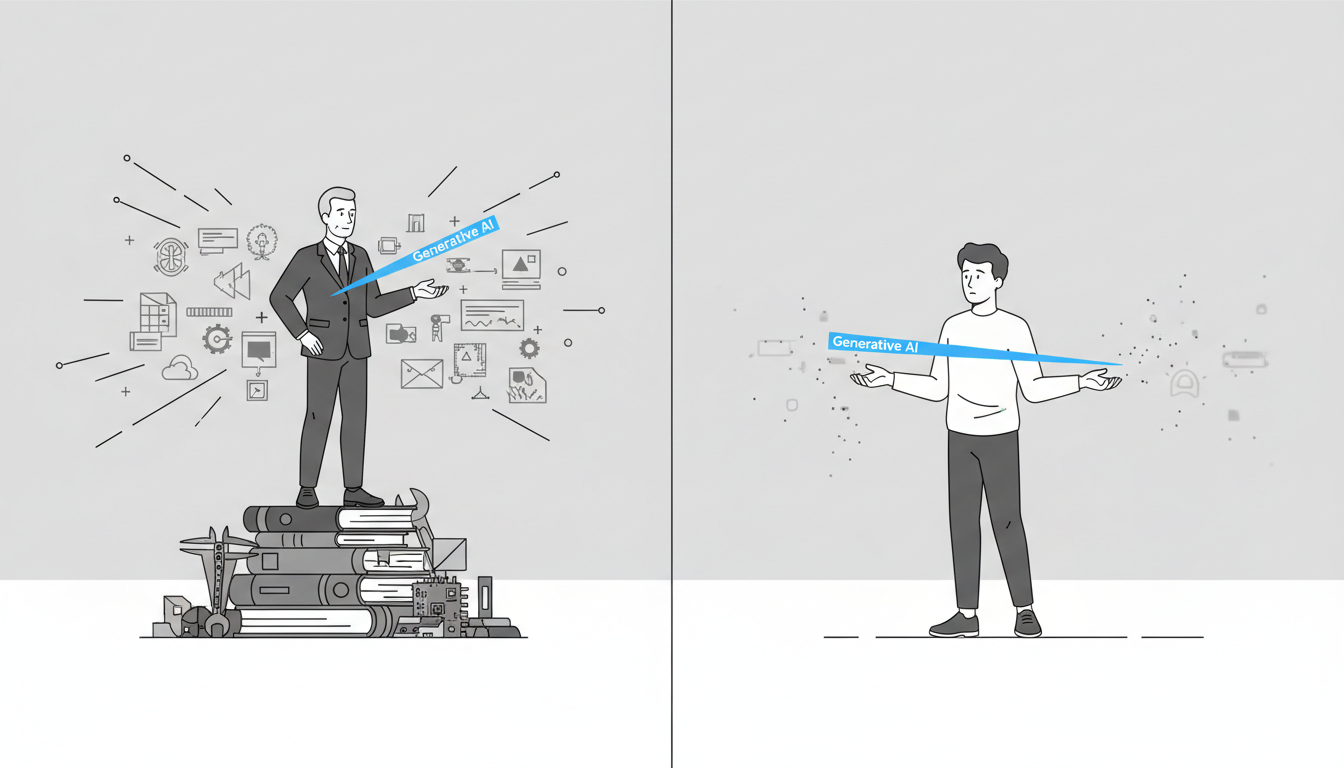
The playbook emphasizes that organizations should shift focus from the intelligence of generative AI to its strategic implications, prioritizing how to use it over waiting for perfection. It introduces a two-axis framework—cost of errors and type of knowledge required—to guide where AI can be most effectively applied. “No regrets” tasks (low error cost, explicit knowledge) are ideal for immediate automation, while “creative catalyst” tasks can enhance human creativity. High-stakes, tacit-knowledge areas demand human leadership with AI support, and “quality control” zones call for human-in-the-loop oversight. Because gen AI is widely accessible, competitive advantage comes from differentiated use, not just speed. Companies must broaden access to AI, build proprietary data and infrastructure, redesign workflows, and redeploy saved time strategically. Ultimately, advantage will hinge on how well strategy, data, and people are aligned to make AI a core capability rather than a generic tool.
Innovation Radar
1. AI Model Releases and Advancements
2. AI Tools and Features
AI scientist Andrej Karpathy has launched “nanochat,” a minimal full-stack tool that lets users build their own ChatGPT-like AI for about $100 in cloud GPU costs, though it requires technical skills, careful data handling, and involves notable limitations and complexities (Forbes).
Walmart partnered with OpenAI to let customers and Sam’s Club members shop directly through ChatGPT using its Instant Checkout feature (Reuters).
Salesforce is integrating its Agentforce software with ChatGPT, allowing shared customers to access data and sell products directly through the assistant (CNBC).
Gmail now offers a “Help me schedule” feature powered by Gemini that suggests meeting times from your calendar and auto-creates invites directly from email replies (Google).
Claude now integrates with Microsoft 365 to enable enterprise-wide search across tools like SharePoint, OneDrive, Outlook, and Teams, letting organizations access and analyze collective knowledge directly in conversations for faster, more informed decision-making (Anthropic). Claude now supports Agent Skills, modular, portable, and efficient skill folders that let it automatically load specialized instructions, scripts, and resources to perform tasks like document creation, coding, or brand compliance more effectively across apps, API, and Claude Code (Anthropic).