
Highlights
Top Insights
1. Agentic AI doesn’t require pristine, centralized data. Instead of forcing companies to consolidate everything into a “single source of truth,” AI agents can operate across fragmented systems using APIs, metadata, and shared business logic.
2. Instead of traditional department heads, organizations should appoint “mission owners.” These individuals are accountable for cross-functional outcomes (like “productive hires” or “delighted customers”), orchestrating both humans and AI agents toward shared goals.
Source: Designing a Successful Agentic AI System (Harvard Business Review Digital Article)
Top News
1. Napster unveiled Napster 26, a platform hosting thousands of AI chatbots, and Napster View, a holographic screen that brings them to life on laptop.
2. OpenAI announced ChatGPT Atlas, a new macOS web browser with ChatGPT built in.
3. ChatGPT’s new company knowledge feature connects to an organization’s tools (like Slack).
4. Anthropic’s Claude for Life Sciences expands Claude’s capabilities to support the entire scientific research process.
5. Microsoft’s Copilot Fall Release introduces AI features, like memory, health insights, and collaborative groups.
Additional Insights
1. The Non-Human Enterprise: How AI Agents Reshape Organizations (CMR Insights)
The article reveals a striking vision of the agentic enterprise—organizations run largely by autonomous AI agents that think, plan, act, and reflect with minimal human input. These agents, powered by large language models, can collaborate, learn, and adapt, forming self-optimizing systems that challenge traditional hierarchies. The surprising insight is how close we are to realizing such enterprises: companies like Tesla, Amazon, and Salesforce already deploy limited agent systems, hinting at a future where AI-run firms outperform human-managed ones in efficiency, scalability, and innovation. Entire industries—e-commerce, finance, logistics, and manufacturing—could soon be dominated by “non-human enterprises” capable of 24/7 operation, hyper-personalization, and autonomous R&D. Yet, this transformation brings deep ethical, organizational, and societal implications: leaders must redefine management, metrics, and governance while navigating new risks, biases, and accountability dilemmas. Ultimately, the agentic enterprise is less a technological upgrade than a paradigm shift redefining what it means to run an organization in the age of intelligent automation.
2. Agentic AI’s Hidden Data Trail—and How to Shrink It (IEEE Spectrum)
Agentic AI systems—those that perceive, plan, and act autonomously—create extensive digital trails as they log prompts, plans, and actions, often storing sensitive behavioral data across devices and clouds. While this accumulation is the default for most systems, it isn’t inevitable. Keivan Navaie outlines six engineering habits to reduce such data footprints without compromising autonomy: (1) constrain memory to specific tasks and timeframes; (2) make deletion comprehensive and verifiable; (3) restrict device access through short-lived, task-specific permissions; (4) maintain transparent “agent traces” that show actions and data flows; (5) always use the least intrusive data collection method; and (6) limit self-monitoring and third-party analytics with clear data expiration policies. These practices embody classic privacy principles—minimizing, limiting, and auditing data use—showing that agentic AI can remain efficient and helpful while protecting users’ privacy and autonomy.
3. Inspiration booster or creative fixation? (Humanities and Social Sciences Communications)
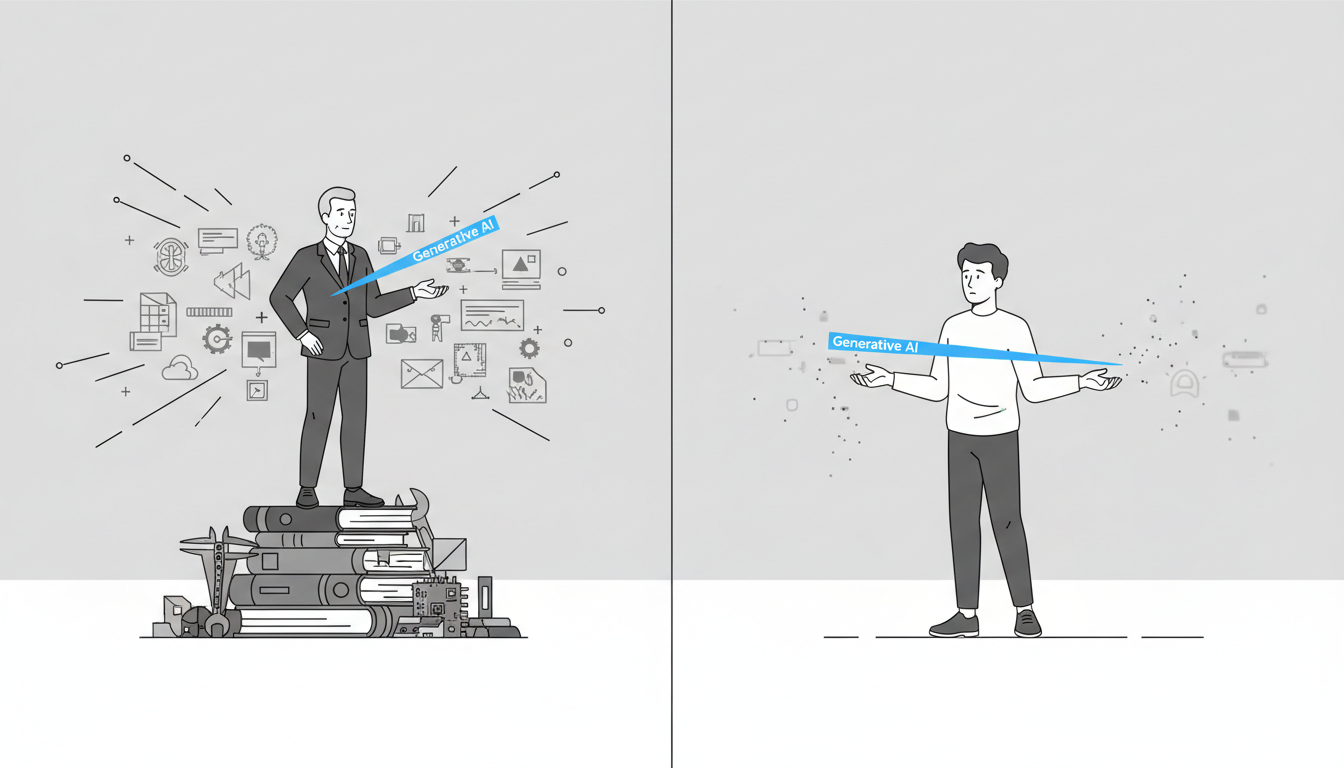
This study explores how large language models (LLMs) like ChatGPT affect human creativity through two opposite mechanisms. In simple creative tasks, LLMs act as inspiration boosters, sparking new ideas and improving performance. However, in complex tasks, they can cause creative fixation—people rely too much on AI suggestions, which limits original thinking. The researchers found that limiting the amount of information an LLM provides helps reduce fixation and boost creativity in complex tasks, though this can weaken the inspirational effect in simpler ones. Overall, the study suggests that LLMs should be used differently depending on task complexity to balance inspiration and independence.
Innovation Radar
1. AI Model Releases and Advancements
2. AI Tools and Features
Facebook’s new AI feature scans your camera roll to suggest your best photos and videos, offering creative edits and collage ideas to simplify posting (Digital Trends).
Napster has launched Napster View, a $99 clip-on holographic AI assistant display tied to its new Napster 26 platform of 15,000 specialized chatbots, marking the company’s pivot from music sharing to AI technology (CNET).
Anthropic has launched Claude Code on the web, a beta tool that lets developers delegate and run multiple coding tasks directly from their browser in secure cloud environments, enabling parallel development, GitHub integration, and mobile access (Anthropic).
ChatGPT Atlas is a new macOS web browser with ChatGPT built in, designed to act as an intelligent assistant that understands your browsing context, remembers relevant information, and can perform tasks like research, planning, and online actions directly within the browser (OpenAI). ChatGPT’s new company knowledge feature for Business, Enterprise, and Edu plans connects to your organization’s tools (like Slack, Google Drive, and GitHub) to deliver accurate, contextual, and cited answers based on your internal data—helping teams make informed decisions and work more efficiently while keeping company information private and secure (OpenAI).
Manus 1.5 is the most advanced version of the Manus agent system, offering major boosts in speed, reliability, and intelligence, new full-stack web app development capabilities, collaboration tools, and two agent options — the powerful Manus-1.5 and the cost-efficient Manus-1.5-Lite (Manus).
Microsoft CEO Mustafa Suleyman announced the Copilot Fall Release, positioning it as a major step toward human-centered AI that is personal, connected, and empowering, introducing features like Copilot Groups, long-term memory, proactive actions, health and education tools, and AI integration across Edge and Windows to make technology serve people (Microsoft).