Highlights
Top Insights
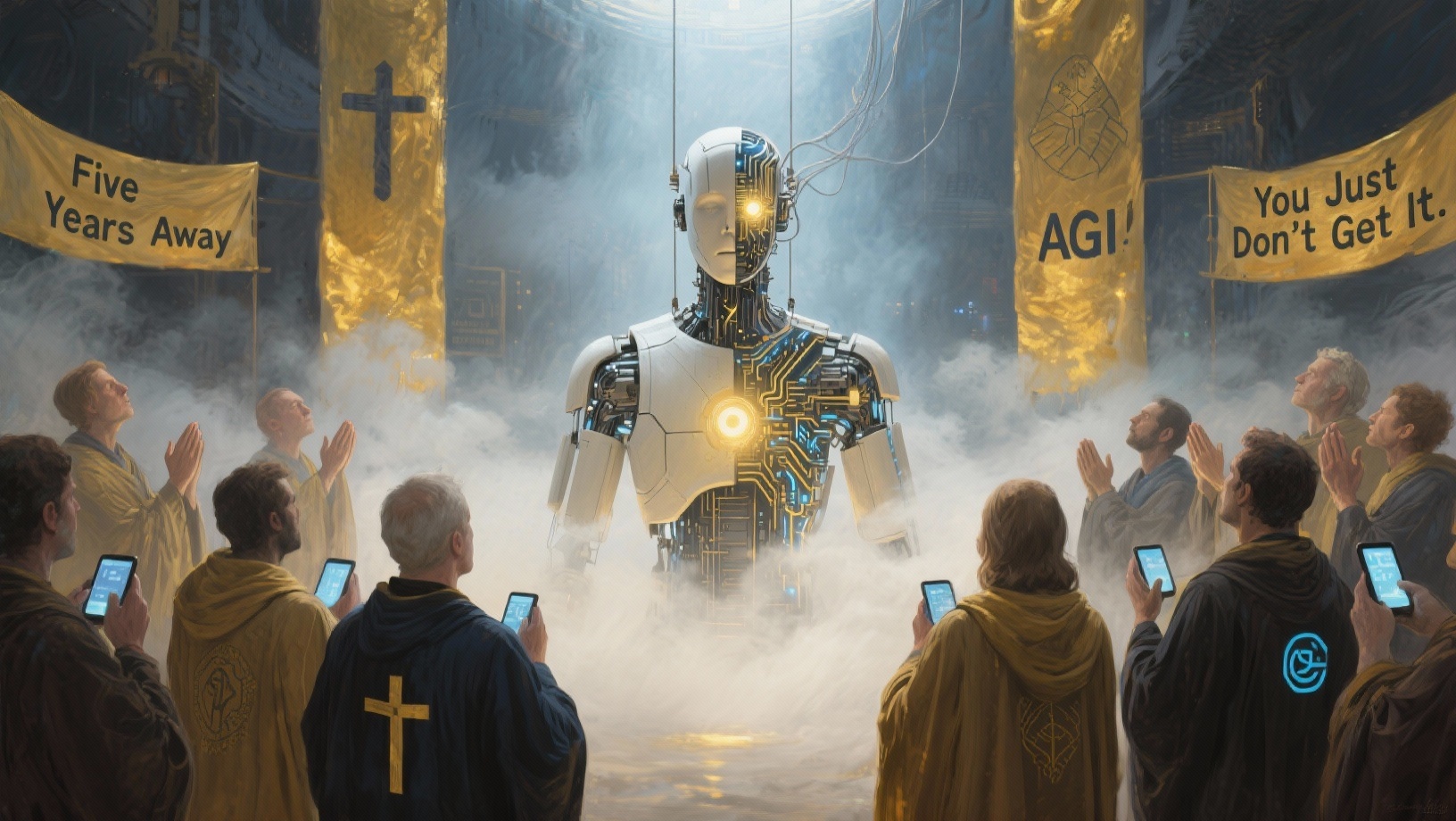
The belief in AGI mirrors classic conspiracy thinking:
Unverifiable core claim: It’s always “five years away,” yet no one can define it clearly.
Shape-shifting narrative: When predictions fail, the timeline simply moves.
Insider/outsider dynamics: Believers claim secret insight: “you just don’t get it.”
Promise of salvation or doom: AGI will either save humanity or destroy it, nothing in between.
Source: How AGI became the most consequential conspiracy theory of our time (MIT Technology Review)
Top News
1. MiniMax has launched its M2 model, which achieved a record-high score for an open model on Artificial Analysis’s intelligence index.
2. Odyssey-2 is an AI model that generates and streams interactive, real-time video.
3. Google Labs and DeepMind have launched Pomelli, an AI tool that helps SMB create scalable social media campaigns.
4. PayPal has partnered with OpenAI to integrate its digital wallet into ChatGPT.
Additional Insights
1. When Working With AI, Act Like a Decision-Maker (Harvard Business Review Digital Article)
The article argues that as AI grows more capable, true leadership requires slowing down and thinking deeply rather than outsourcing judgment to machines. While AI can increase efficiency, it can also subtly erode human reflection and accountability. Einhorn introduces four “AI leadership anchors” to preserve decision-making autonomy: (1) Authority check—stay the author of your decisions, not AI; (2) Purpose check—align actions with personal and organizational goals rather than algorithmic patterns; (3) Accountability check—own the consequences of decisions rather than deferring blame to tools; and (4) Truth check—verify and question AI’s confident but sometimes unreliable outputs. Together, these principles help leaders remain thoughtful, ethical, and human-centered in an AI-driven world.
2. When Brands Meet AI Bots: Customer Experience in the Era of Agents (BCG)
To stay relevant, brands must strategically reinvent CX around three core actions: first, optimize visibility and trustworthiness for third-party AI agents by ensuring these systems can accurately access and interpret brand information—essentially shifting from SEO to “answer engine optimization” (AEO); second, develop their own branded AI agents that leverage first-party data, authentic messaging, and deep domain expertise to offer personalized, high-trust recommendations that complement third-party tools; and third, empower human teams with AI-driven workflow tools that enhance efficiency and enable more meaningful, proactive customer interactions. This three-part strategy helps brands maintain autonomy, strengthen differentiation, and preserve the human touch in an AI-dominated shopping ecosystem where conversational agents increasingly control the customer journey.
3. Your futuring questions, answered (IDEO)
Jennifer Lo, IDEO’s design futures expert, describes her journey from operational innovation in healthcare to embracing human-centered design and ultimately becoming a futurist who integrates foresight, empathy, and strategy to drive meaningful transformation. She emphasizes that futuring isn’t about predicting outcomes but about building adaptability and creative capacity to navigate uncertainty. Effective futuring makes the future tangible through storytelling, prototypes, and participatory exercises that engage even skeptics. Lo outlines practical methods like weekly signal scanning to detect emerging trends, stressing the importance of curiosity and structured pattern recognition. She highlights that future-ready organizations must shift from control to curiosity, valuing experimentation and flexibility over rigid planning. Measuring futuring’s ROI lies not in immediate returns but in avoided risks and organizational resilience. She’s particularly intrigued by the future of aging and work, as longevity and demographic shifts redefine retirement. While AI can accelerate signal gathering and scenario creation, Lo cautions against overreliance, noting that human imagination, cultural insight, and ethical awareness remain central to meaningful futures work.
Innovation Radar
1. AI Model Releases and Advancements
2. AI Tools and Features
Mistral AI Studio is a production-grade platform that enables enterprises to move from AI experimentation to reliable, governed operations by unifying observability, durable agent runtimes, and a centralized AI registry for full traceability, evaluation, and control (Mistral).
Google announced major updates and wider access to Google Earth AI, a platform combining decades of geospatial modeling with Gemini’s advanced reasoning to help enterprises, governments, and nonprofits tackle global challenges like environmental monitoring, disaster response, and public health through new tools such as Geospatial Reasoning, Gemini-powered Google Earth insights, and expanded availability on Google Cloud (Google). Google Labs and DeepMind have launched Pomelli, an AI tool that helps small and medium-sized businesses easily create scalable, on-brand social media campaigns by analyzing their website to build a brand profile, generating tailored campaign ideas, and producing editable, high-quality marketing assets (Google).
Meta has introduced a new “Restyle” feature powered by Meta AI on Instagram Stories, allowing users to easily edit, enhance, and transform their photos and videos with prompts, preset effects, and “Add Yours” stickers to create and share personalized, trend-starting content (Instagram).
OpenAI collaborated with over 170 mental health experts to train ChatGPT (GPT-5) to better recognize distress, respond empathetically, and guide users toward real-world help—reducing unsafe or undesired responses in sensitive mental health conversations by 65–80% (OpenAI). PayPal has partnered with OpenAI to integrate its digital wallet into ChatGPT, allowing users and merchants to securely complete PayPal transactions directly within the AI platform starting next year (CNBC).
Anthropic has expanded Claude for Financial Services with a new Excel add-in, real-time market data connectors, and pre-built Agent Skills for key financial tasks like DCF modeling and coverage reports, enhancing Claude’s capabilities for finance professionals through deeper integration with industry tools and live data (Anthropic).
GitHub’s new Agent HQ unifies all AI coding agents into a single, integrated platform—complete with mission control, planning tools, and enterprise governance—enabling developers to seamlessly orchestrate, customize, and manage agents like Copilot, Claude, and Codex directly within their existing GitHub and VS Code workflows (GitHub).
Adobe announced major new AI innovations and assistants across Creative Cloud, including Photoshop, Lightroom, Premiere, Illustrator, and Firefly, introducing advanced generative, editing, and automation tools powered by leading AI models to help creative professionals work faster, collaborate more effectively, and maintain greater creative control (Adobe).
TikTok announced new AI tools—Smart Split for automatic video editing and AI Outline for content planning—plus updated subscription rewards giving creators up to 90% revenue share to make creating and sharing easier and more rewarding (TikTok).
Canva has launched its Creative Operating System, a comprehensive platform combining an upgraded Visual Suite, world-first design AI, and integrated business tools to empower users to create, collaborate, and scale their brands in the new “Imagination Era.” (Canva).