Highlights
Top Insights
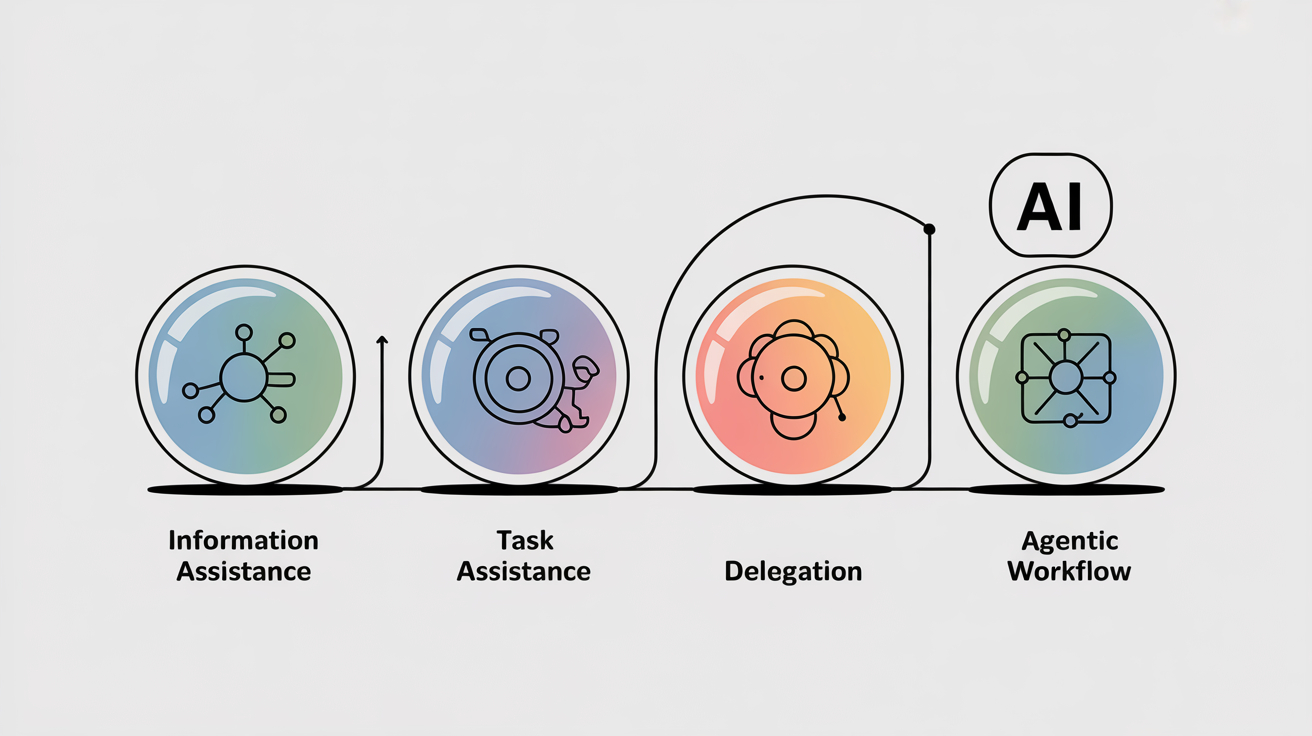
1. In AI adoption, many companies treat logins/time-in-tool as success, but the real shift is when AI becomes central to core work, not an add-on.
2. Companies keep optimizing “peripheral/admin” tasks instead of reimagining workflows in high-value activities, so usage rises without meaningful business impact.
3. Most employees are still in early stages of AI adoption (using AI for task assistance and delegation), without achieving semi-autonomous collaboration.
Source: The AI Adoption Puzzle: Why Usage Is Up But Impact Is Not (BCG)
Top News
1. Poetiq, claims its open-sourced “meta-system” that orchestrates off-the-shelf LLMs (using Gemini 3 Pro) scored 54% on ARC-AGI-2.
2. Adobe has launched free Photoshop, Acrobat, and Express integrations in ChatGPT.
3. GPT-5.2 is OpenAI’s newest frontier model series, delivering major gains in professional knowledge-work performance.
4. GLM-4.6V is an open-source multimodal model family (106B and 9B Flash) with native tool/function calling.
5. GWM-1 is Runway’s real-time, interactive general world model that simulates reality frame by frame.
6. Google launched an upgraded Gemini Deep Research agent via the new Interactions API.
Additional Insights
1. Big Ideas 2026 (a16z)
There is a shift from AI as a chat layer to AI as the operating layer: startups will focus on taming messy multimodal enterprise data so agents can work reliably, rebuilding infrastructure for “agent-speed” bursty workloads, and evolving the data stack and systems of record into coordination layers where intent turns directly into execution. At the app level, prompting fades as proactive, embedded agents (often voice-first) run full workflows, pricing moves toward outcomes over screen time, and vertical AI becomes “multiplayer” with permissioned collaboration across parties. In the real economy and health, AI-native factories/industrial stacks, physical observability, and autonomous labs accelerate production and discovery, while consumer and healthcare products trend toward personalization (“the year of me”) and recurring prevention-focused services (“healthy MAUs”).
2. The 5 AI Tensions Leaders Need to Navigate (Harvard Business Review)
The article argues that successful AI adoption at work is not about choosing extremes but about deliberately managing five recurring tensions: experts vs. novices, centralized vs. decentralized control, flatter vs. taller hierarchies, speed vs. deliberation, and top-down vs. peer-driven change. Across cases and research, AI boosts access, speed, and efficiency but can erode expertise, meaning, coordination, and trust if pushed too far or too fast. The most effective leaders treat these tensions as ongoing design challenges, using AI to lower barriers and remove drudgery while preserving human judgment, learning, and purpose—staying curious, skeptical, and willing to adapt as evidence evolves rather than framing AI as a simple savior or threat.
3. Intelligent protocol (The Economist)
AI is pushing the web toward Tim Berners-Lee’s old vision of “intelligent agents” that don’t just answer questions but actually carry out tasks, from booking trips to managing emails. The big hurdle is interoperability: today’s APIs are fragmented and human-oriented, so agents need shared standards to communicate and act reliably—hence efforts like Anthropic’s Model Context Protocol (MCP), Google’s agent-to-agent ideas, and an emerging industry push for open standards. New interfaces such as Microsoft’s NLWeb aim to make websites natively “chat-able” and agent-accessible, while agent-centric browsers from firms like OpenAI and Perplexity signal a new platform battle over who controls this agent layer. If agents become widespread, online business models (especially advertising) may shift from competing for human attention to competing for “agent attention,” and web activity could explode as agents browse at machine speed—though that also raises serious risks like errors, opaque behavior, and prompt-injection attacks, making safeguards and human oversight crucial.
Innovation Radar
1. AI Model Releases and Advancements
A six-person startup, Poetiq, claims its open-sourced “meta-system” that orchestrates off-the-shelf LLMs (using Gemini 3 Pro) scored 54% on the tough ARC-AGI-2 semi-private reasoning test—beating Google’s reported ~45% for Gemini 3 Deep Think—though independent replication is still pending (Tom’s Guide).
Instacart and OpenAI are deepening their partnership by integrating full grocery shopping and instant checkout directly into ChatGPT, allowing users to go from meal ideas to delivery in a single conversation (OpenAI). Adobe has launched free Photoshop, Acrobat, and Express integrations in ChatGPT, letting users edit photos, PDFs, and designs simply by describing their changes without leaving the chat (The Verge).
Claude Code now integrates with Slack (beta), letting teams tag @Claude to turn Slack discussions into automated coding tasks with context, progress updates, and pull-request links (Anthropic).
Google Labs is launching Disco with GenTabs, an experimental Gemini 3–powered feature that understands your open tabs and tasks to automatically create interactive, no-code web apps that simplify complex browsing and research (Google). Google has launched a significantly upgraded Gemini Deep Research agent via the new Interactions API, giving developers access to state-of-the-art autonomous web research capabilities alongside the open-sourced DeepSearchQA benchmark (Google).
A new visual editor for the Cursor Browser lets developers directly manipulate UI, component states, and styles through drag-and-drop and natural-language prompts, tightly unifying design and code (Cursor).