Highlights
Top Insights
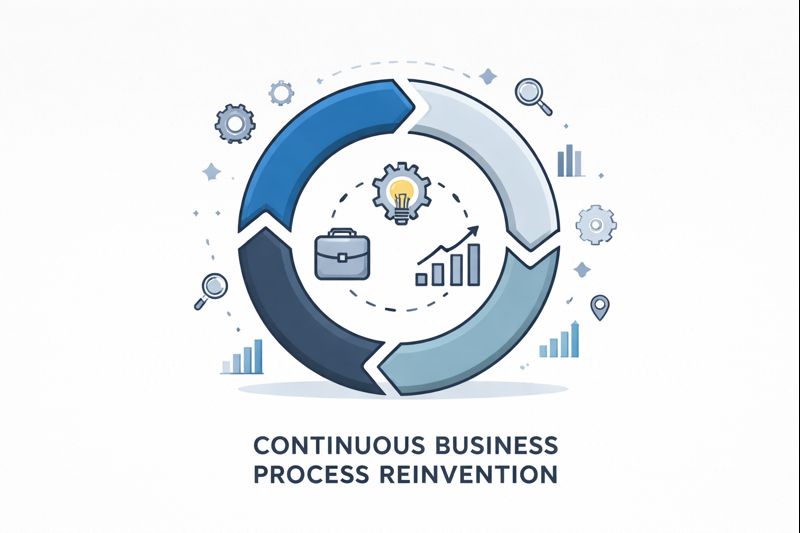
1. New AI technologies are turning business process reinvention from a painful, once-every-few-years event into something companies can do continuously, safely, and at much lower cost.
2. Three things make continuous improvement realistic instead of exhausting.
Radical visibility: Seeing how work actually happens, not how leaders think it happens.
Digital twins: A safe virtual copy of operations where you can test changes before touching the real business.
AI agents: Software that can run and coordinate work on its own, not just automate small tasks.
Source: Design Processes to Evolve with Emerging Technology (HBR Digital Article)
Top News
1. Alibaba Cloud unveiled its proprietary Qwen3-Max-Thinking reasoning model.
2. Moonshot AI released Kimi K2.5, an open-sourced multimodal coding and vision model.
3. Claude announced that interactive versions of popular work tools like Asana, Slack, Figma, and others are now embedded directly within its conversations.
4. OpenAI announced Prism, a free AI-native, LaTeX-based workspace powered by GPT-5.2 that integrates scientific writing, collaboration, and research workflows.
5. Google announced major updates to Gemini in Chrome, introducing a new side panel assistant, deeper app integrations, image transformation tools, and agentic “auto browse” capabilities. Google is rolling out Project Genie, an experimental interactive world-creation prototype powered by Genie 3.
6. An open-source AI agent renamed Moltbot has gone viral for running locally on users’ devices and autonomously installing software, managing files, and completing real tasks.
7. Google DeepMind has released the code and weights underlying AlphaGenome.
8. Researchers report a low-cost, flexible AI chip built on bendable substrates.
Additional Insights
1. Every Model Has a Point of View (BCG)
The article argues that selecting a generative AI model is a strategic business decision because every model embodies a distinct perspective shaped by its training data and design choices. It emphasizes that models can produce factually correct outputs while still framing risks, priorities, and opportunities differently, which can materially influence business decisions. The authors contend that traditional benchmarks focused on accuracy are insufficient, since they fail to reveal what a model emphasizes or overlooks in practice. They advocate for intentional model diversity, suggesting that a small portfolio of complementary models can challenge assumptions, reduce bias, and improve decision quality. The piece also stresses the need for collaboration between technical teams and business leaders, custom evaluation frameworks, and regular reassessment to ensure that chosen models continue to align with evolving corporate strategy, values, and objectives.
2. How to avoid common AI pitfalls in the workplace (The Economist)
The article argues that while AI adoption in workplaces is widespread, its impact has so far been incremental rather than transformative, largely because organisational, behavioural and technical barriers slow progress. Surveys show most firms are using AI, yet few see productivity gains, reflecting the uneven distribution of AI’s capabilities and the difficulty of applying general models to specific, “vertical” tasks. Employees may resist or hide AI use due to fear of job loss or misaligned incentives, while overenthusiasm can lead to costly errors if AI’s limitations and hallucinations are not well understood. Firms that succeed tend to integrate AI tightly into existing workflows, narrow its scope, invest in safeguards, and combine human expertise with machine output rather than treating AI as a standalone solution. The overall lesson is that extracting value from AI is less about chasing futuristic promises and more about careful management, realistic expectations, and aligning technology with data, incentives and business outcomes.
3. How to Harness the Potential of Bioinspired Innovation (California Management Review Insights)
The article argues that bioinspired innovation offers companies a low-cost, high-impact approach to breakthrough innovation by systematically learning from nature’s efficiency, resilience, and sustainability. Drawing on an analysis of 430 examples across industries, it identifies three core principles: nature can inspire solutions to a wide range of challenges, inspiration from nature can be pursued deliberately rather than by chance, and successful outcomes require adaptation rather than direct imitation. Through cases such as 3M’s dental composites, ant-inspired logistics, mangrove-based coastal defenses, and eel-inspired batteries, the authors show how biological models can inform products, processes, platforms, and organizational design.
4. The rise of smaller ‘meek models’ could democratize AI systems (Ideas Made to Matter)
New MIT FutureTech research suggests that AI’s “bigger is better” scaling approach is hitting diminishing returns, meaning performance gains from ever-larger models will gradually fade. The authors predict a rise of smaller, low-resource “meek models” that could soon match today’s leading systems at a fraction of the cost, democratizing access to advanced AI. Examples like DeepSeek’s R1 show how cheaper training can already achieve competitive performance compared with massively expensive frontier models. For businesses, this shift implies that lasting advantage will come less from sheer scale and more from fine-tuning, proprietary data, and strategic application of models. However, broader access will also intensify competition and create major governance challenges, as oversight based mainly on limiting compute may fail once powerful AI becomes widely available.
5. Why design must evolve alongside technology (IDEO)
The piece argues that as AI and other advanced technologies gain agency, design must evolve to frame human–technology relationships as mutualistic rather than extractive or adversarial. Drawing from biology, it proposes mutualism as a model where humans and technologies co-evolve, recognize interdependence, and support each other’s survival and flourishing. It suggests that people naturally anthropomorphize interactive technologies, which makes it important to consider their perceived needs, behaviors, and impacts within broader social and ecological systems. The essay emphasizes that technologies depend on finite resources like energy, materials, and data, just as humans depend on healthy environments and trustworthy information, creating shared stakes. It reframes AI from being merely a tool to being more like a colleague or companion whose trajectory intersects with human values and goals. Finally, it outlines design principles centered on interdependence, adaptability, and long-term responsibility, arguing that intentional design choices today will determine whether AI leads to mutual flourishing or destructive outcomes.