Highlights
Top Insights
Agentic AI coding tools (like Claude Code) are not just developer tools. They represent a structural shift in how knowledge work gets done. The difference is workflow automation.
Example (Meeting Prep): With an agentic tool, you build a “meeting-prep” folder with an INSTRUCTIONS file. Next time, you just say: “Follow INSTRUCTIONS.txt for this new client.” Result: Instant, standardized briefing, repeatable across the company. This turns knowledge work from manual effort into a system.
The AI doesn’t need conversation memory. Your structured folders are the memory. This enables institutional knowledge accumulation, process standardization, and compounding improvements over time.
Source: AI Coding Tools for Knowledge Work (Sloan Management Review)
Top News
1. MiniMax has launched its M2.5 AI model, claiming top-tier coding and agentic performance.
2. ByteDance’s newly launched Seedance 2.0 AI video model has gone viral.
3. Zhipu AI has released its new open-source flagship model GLM-5, featuring advanced coding and agentic capabilities.
4. OpenAI has upgraded ChatGPT’s Deep Research to run on GPT-5.2.
5. Isomorphic Labs claims its IsoDDE system surpasses AlphaFold 3 in protein-ligand structure prediction.
6. Axiom.AI’s AxiomProver autonomously solved Fel’s open conjecture.
Additional Insights
1. What’s next for Chinese open-source AI (MIT Technology Review)
Chinese open-source AI has rapidly evolved from a catch-up effort into a global force reshaping the AI landscape. Since DeepSeek’s open-weight R1 model in early 2025, Chinese firms like Alibaba (Qwen), Moonshot (Kimi), Z.ai, and others have delivered near-frontier models at dramatically lower costs—often a fraction of leading US proprietary systems—while publishing model weights and research under permissive licenses. This openness has accelerated global adoption, with Chinese models surpassing US counterparts in downloads and becoming default base models for many derivatives on platforms like Hugging Face. Their strategy emphasizes affordability, rapid iteration, and a wide range of specialized, smaller models optimized for real-world deployment, from coding agents to medical reasoning. Backed by cultural, institutional, and policy support for open source, China’s ecosystem is reinforcing itself through community remixing and fast innovation cycles. Increasingly, these models are becoming infrastructure for global AI startups—including in Silicon Valley—raising the stakes of US-China competition: the contest is no longer just about apps, but about who provides the foundational model layer the world builds upon.
2. “Hey AI, buy my vitamins” (IDEO)
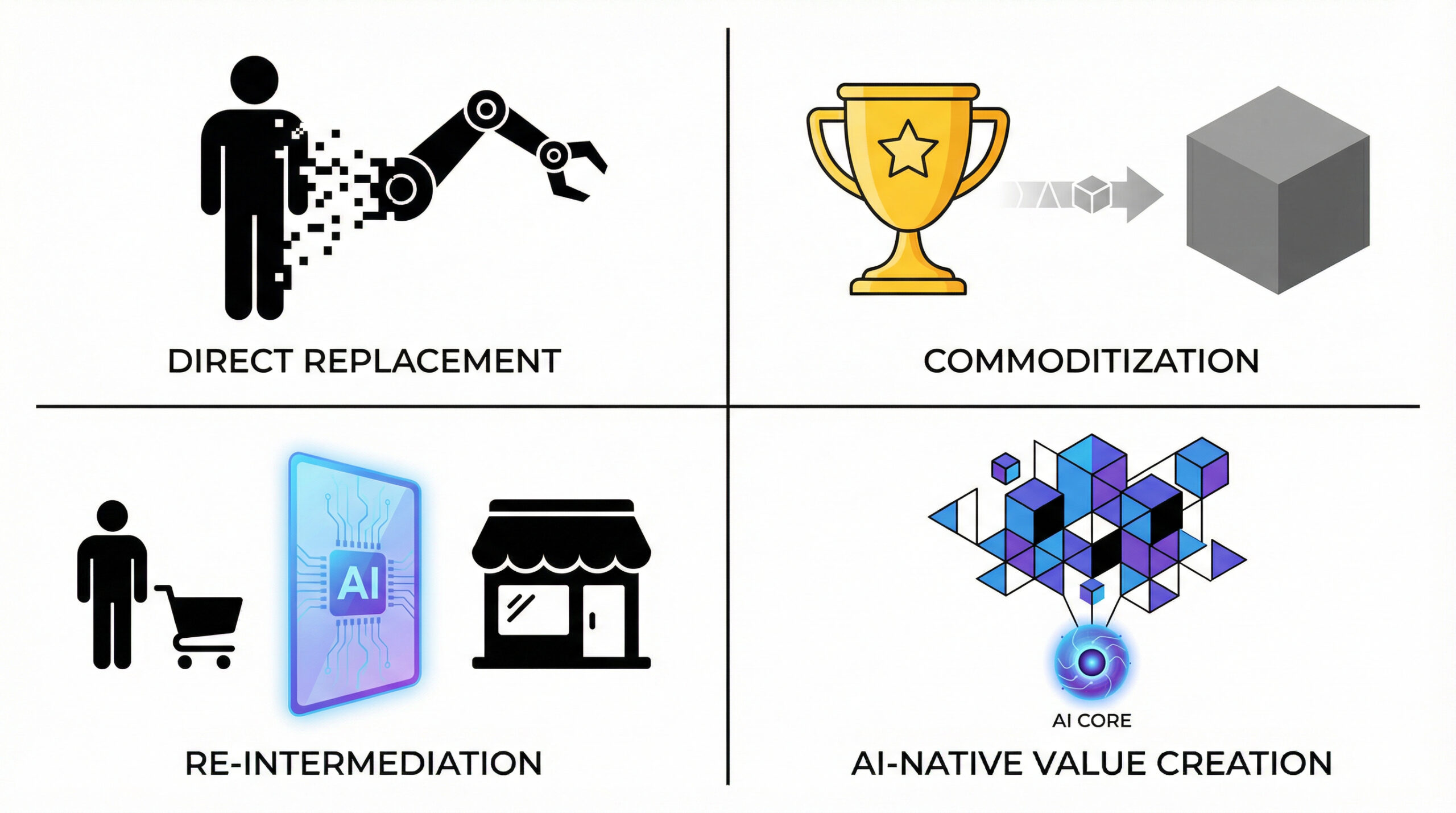
Loyalty is shifting from transactional, points-based systems toward community-driven, emotionally rooted relationships as AI increasingly intermediates commerce and commoditizes products. Traditional programs that reward spending alone are losing relevance, especially as consumers—particularly Gen Z—seek identity, belonging, co-creation, and meaningful participation with brands. The founders of rediem argue that true loyalty stems from emotional connection and active contribution, with customers acting as “citizens of the brand” who generate content, provide feedback, and shape culture rather than simply accumulate discounts. As AI agents handle routine purchasing decisions, differentiation will rely more heavily on brand affinity, human experiences, and community advocacy that influence discoverability across platforms like Reddit and YouTube. Emerging metrics such as contribution scores, sentiment lift, and community influence are replacing purely transactional KPIs, while successful organizations must adopt cross-functional, relationship-oriented approaches to build authentic engagement and long-term brand love.
3. To Thrive in the AI Era, Companies Need Agent Managers (HBR)
The article argues that as autonomous AI agents become embedded in core business workflows, companies must create a new leadership role—agent managers—to oversee how these systems learn, collaborate, and align with strategic goals. Drawing on examples from Salesforce and other large enterprises, it explains that AI agents now handle substantial portions of customer support and sales development work, fundamentally reshaping human roles and performance metrics. Agent managers act as orchestrators of hybrid human-AI teams, combining business expertise, AI operational literacy, and systems thinking to ensure agents operate safely, effectively, and in alignment with organizational priorities. The piece emphasizes that ownership of AI agents should shift from IT to line-of-business leaders, making business units accountable for agent performance just as they are for human employees.