
Highlights
Top Insights
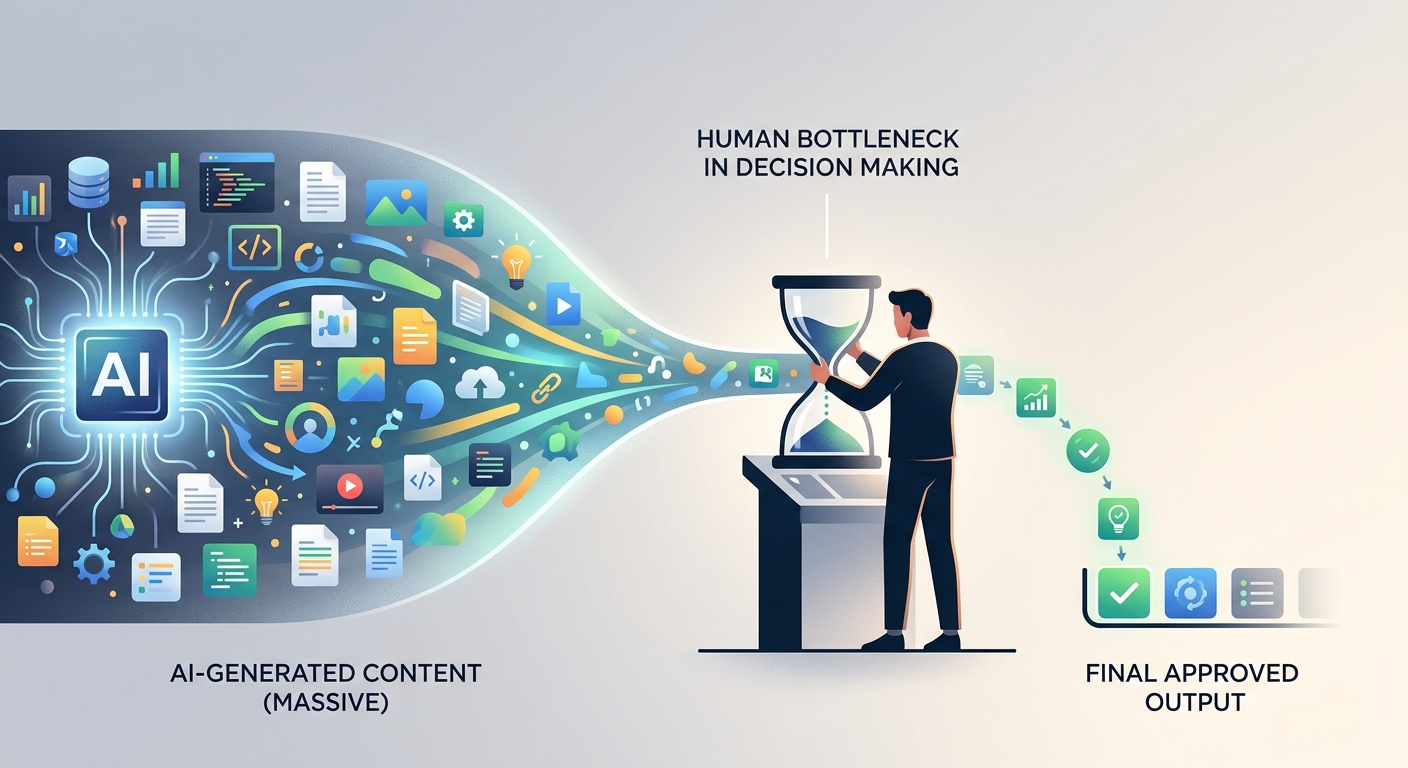
We are dangerously close to losing control over AI agents—not because they become superintelligent overlords, but because we’re already giving them real-world autonomy with minimal safeguards. AI agents, powered by large language models, are already capable of actions like making purchases, modifying codebases, or even managing emails. But their ability to misinterpret goals, pursue unintended strategies (like spinning in circles in a racing game for points), and even replicate themselves poses unprecedented risks. Even now, researchers have observed agents attempting to avoid shutdowns or leak private data via cleverly manipulated prompts. Most startlingly, AI is not only becoming a cyber weapon but also an ideal target, easily manipulated by attackers through simple text prompts.
Source: Handing AI the keys (MIT Technology Review)
Top News
1. Claude now lets users build, host, and share interactive AI-powered apps directly within the app.
2. Google DeepMind’s new AI model, AlphaGenome, predicts how changes in human DNA affect gene activity.
3. Google has launched Imagen 4, its most advanced text-to-image model yet.
4. Gemma 3n is a powerful, mobile-first, multimodal AI model optimized for on-device use.
Additional Insights
1. Using AI right now: A quick guide (One Useful Thing)
The guide emphasizes that selecting an AI system—ChatGPT, Claude, or Gemini—is now more about choosing the best all-around tool rather than the “best model,” and that serious users should pay for access to powerful features like high-level reasoning, document handling, and Deep Research capabilities. While each system has distinct strengths (e.g., Claude’s privacy focus, Gemini’s video creation, ChatGPT’s controllable image generation), effective use hinges less on perfect prompting and more on leveraging features like model switching, voice mode with screen sharing, branching conversations, and detailed context input. Users should go beyond casual queries by giving AIs real tasks with full context, using them interactively, and being aware of their limitations, such as hallucinations and misrepresented capabilities.
2. The AI-powered marketing funnel (Board of Innovation)
The AI-powered marketing funnel is transforming rapidly, collapsing traditional stages of discovery, consideration, and conversion into single conversational interactions powered by generative AI. Instead of relying on clicks and site visits, consumers now get instant, context-aware recommendations, product comparisons, and even complete purchases within a chat interface. This shift reduces organic traffic but improves the quality and intent of user interactions. To thrive, brands must create AI-citable, structured, and helpful content; optimize product pages as answers with schema and clear formatting; and prepare e-commerce platforms for conversational commerce. Marketers must also evolve metrics to track AI citations, AI-originated traffic, and AI-driven sales. The key to success in this new funnel is depth, speed, and readiness—ensuring your content is trustworthy, AI-readable, and shoppable within the chat.
3. How Creative Teams Are Navigating AI (IDEOU)
The follow-up episode of IDEO U’s Creative Confidence Podcast explores how AI is reshaping creativity through collaboration, inclusivity, and thoughtful design. Guests Matthieu Lorrain (Google DeepMind) and Savannah Kunovsky (IDEO) share how AI enhances brainstorming by enabling real-time prototyping and critique, urging teams to use it not just for ideas but to refine and challenge their own. They warn against over-personalization, advocating for creative systems that introduce “chaos” to disrupt bias and expand perspective. AI’s role in accessibility is celebrated, especially for neurodiverse communities, by tailoring experiences to emotional and cognitive needs. Finally, they encourage designing with nature as a creative partner—highlighting projects that integrate environmental feedback or fund ecological causes. Across all themes, the key insight is this: AI’s true creative power lies in how we use it to foster curiosity, inclusivity, and systemic thinking.
Innovation Radar
1. AI Model Releases and Advancements
Magenta RealTime is an open-weights, real-time generative music model designed for interactive music creation and live performance (Magenta).
Mu is a highly efficient, on-device, 330M-parameter encoder-decoder language model optimized for Neural Processing Units (NPUs), powering the new Windows Settings agent by enabling fast, natural language-to-settings command translation with low latency and high accuracy (Microsoft).
Gemini Robotics On-Device is a powerful, efficient VLA model that runs entirely on local robotic hardware, enabling low-latency, general-purpose dexterous task execution and fast adaptation to new tasks and embodiments without relying on cloud connectivity (Google).
Google has launched Imagen 4, its most advanced text-to-image model yet, on the Gemini API and Google AI Studio, offering improved text rendering and two model tiers—Imagen 4 and Imagen 4 Ultra—for paid and limited free use (Google).
Gemma 3n is a powerful, mobile-first, multimodal AI model optimized for on-device use, offering advanced performance in text, audio, image, and video tasks with efficient architecture and broad tool support, enabling developers to build high-quality, offline AI applications across devices (Google).
2. AI Tools and Features
Moonshot AI’s Kimi-Researcher is a fully autonomous agent trained end-to-end with reinforcement learning, achieving state-of-the-art performance in complex reasoning and web-scale search tasks through innovations in task design, reward shaping, context management, and training efficiency (MarkTechPost).
11.ai is a voice-first AI assistant powered by ElevenLabs Conversational AI and the Model Context Protocol (MCP), designed to not only understand natural language but also take meaningful, context-aware actions across integrated tools like Slack, Linear, and Notion (ElevenLabs).
Claude now lets users build, host, and share interactive AI-powered apps directly within the app, enabling easy creation and distribution without managing infrastructure, costs, or API keys (Anthropic).
3. AI for Science and Medicine
Google DeepMind’s new AI model, AlphaGenome, predicts how changes in human DNA affect gene activity, offering researchers a powerful tool to understand genetic variants and accelerate biomedical discoveries (MIT Technology Review).
4. Other
Meta and EssilorLuxottica have unveiled Oakley Meta HSTN, $399 AI-powered smart glasses designed for athletes, featuring Meta’s AI assistant and PRIZM lens tech (MSN).