Cutting-Edge Insights into Innovation

Computer-Using Agent

Highlights


Top Insights

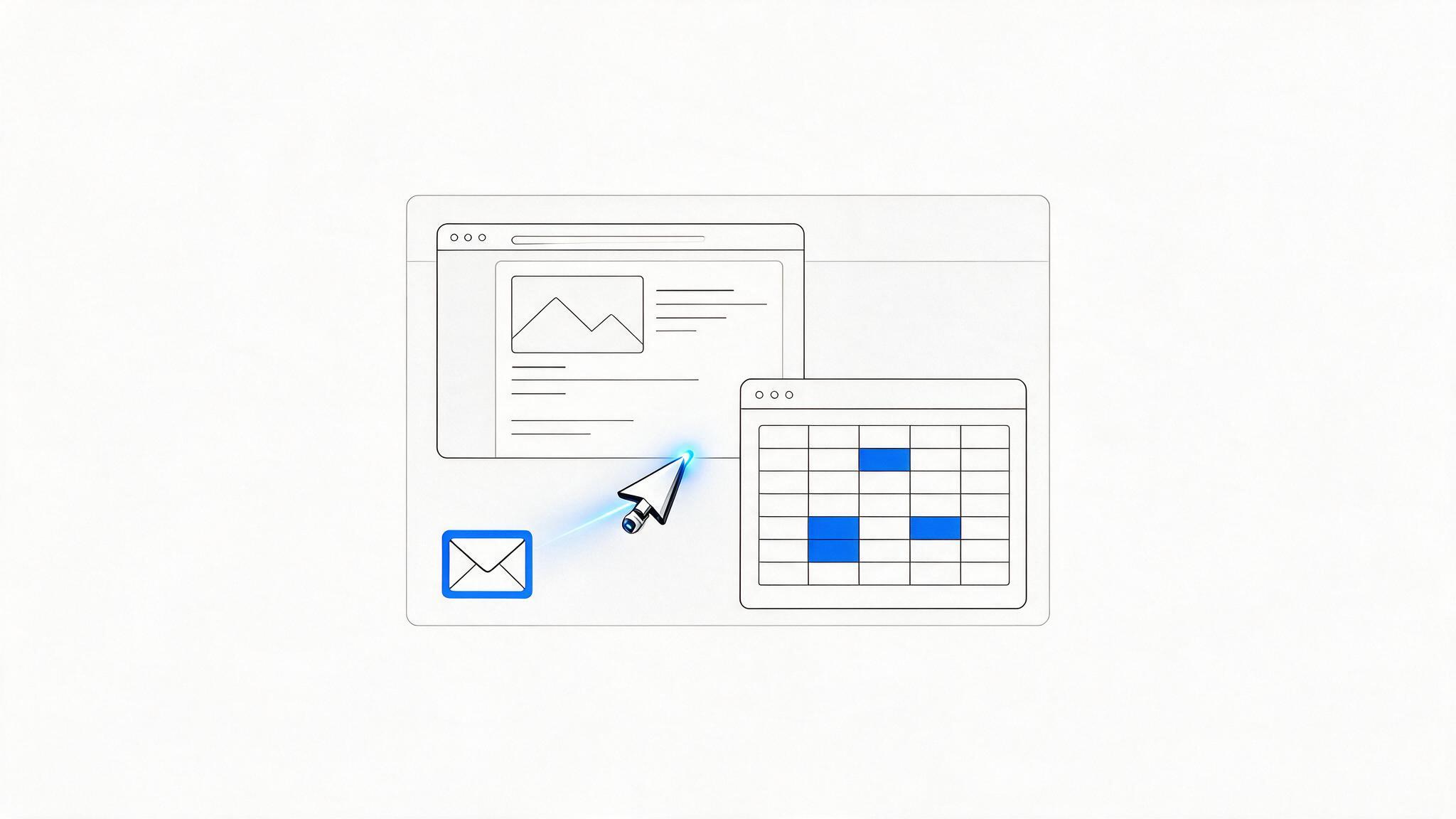
Computer-using AI agents have crossed an important threshold: the question is shifting from “can they operate software?” to “can they reliably perform a job?” Production deployments are now real, especially for repetitive back-office processes involving legacy systems and software without good APIs.
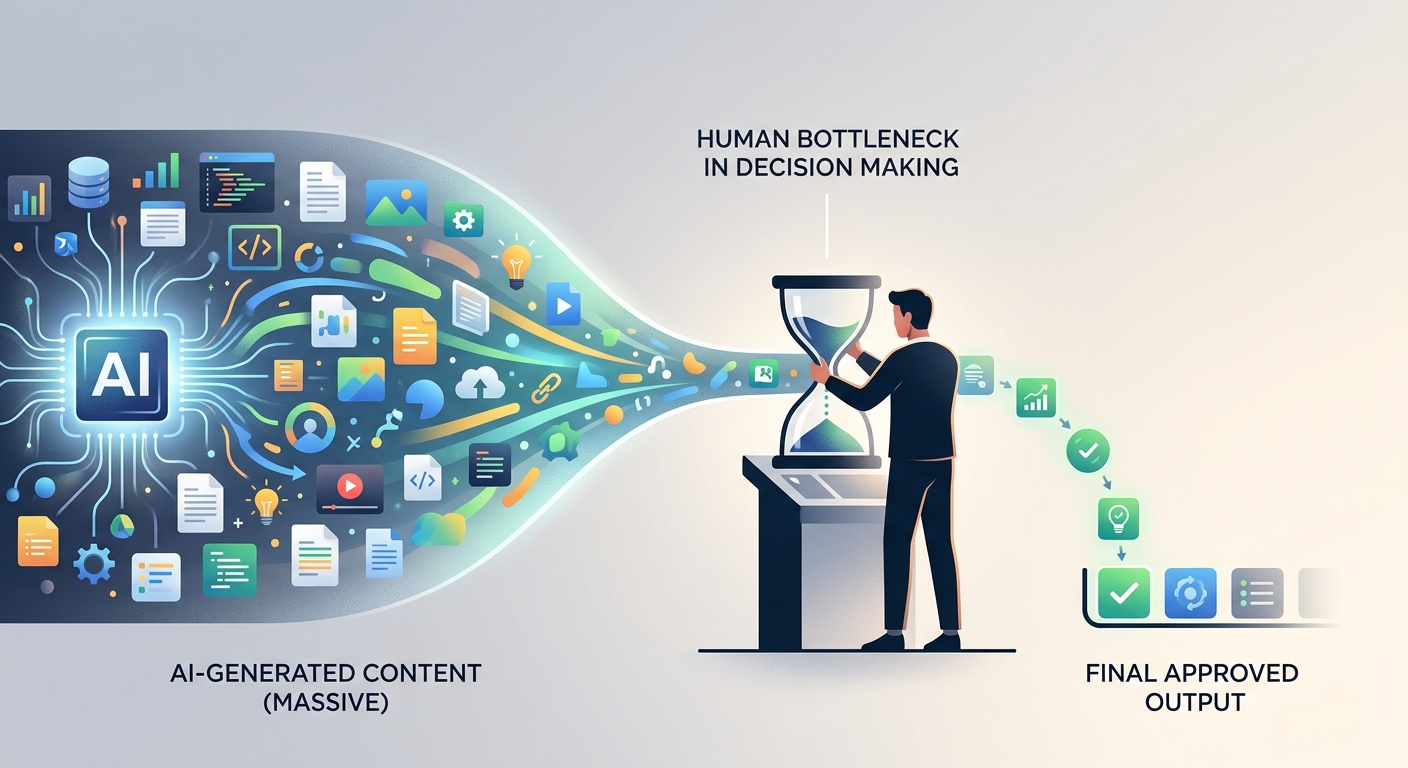
The raw AI model is becoming less important than the operating system around it. Computer-use benchmarks have improved dramatically: the best OSWorld-Verified score rising from roughly 42% a year earlier to 85% in June 2026, above the benchmark’s roughly 72% human score. But businesses still cannot tolerate a workflow that fails 15% of the time. The differentiator is increasingly verification, retries, permissions, escalation, monitoring, and process knowledge, not which frontier model sits underneath.

Source: Can Agents Use a Computer Yet? We’ve Got the Data (a16z)

Top News

1. Stanford and Arc Institute researchers used Evo genome language models to design complete bacteriophage genomes, then synthesized and tested 285 candidates.
2. Anthropic said new Claude models will embed an imperceptible watermark directly into generated text.
3. Ahrefs launched Letaido, an agentic workspace that plans and executes multistep marketing tasks.
4. xAI’s new Grok 4.6 has reportedly surpassed Kimi K3 on independent benchmarks.
5. Alibaba released the weights for Qwen3.8-2.4T-A95B, bringing its Max-tier multimodal model into the open-weight ecosystem.

Additional Insights

1. The intelligent workplace (part 2): Technology’s next transformation of work (ITPro)
The article argues that as AI becomes a permanent member of workplace teams, companies need to rethink performance management, leadership, and employee development rather than simply adding more automation. Traditional metrics such as output volume, tasks completed, or hours worked become less meaningful when AI can rapidly increase activity; organizations should instead measure quality, judgment, customer outcomes, collaboration, and responsible AI use. Managers will increasingly act as “architects” of human-AI systems, deciding which tasks machines handle, where human oversight is required, and who remains accountable for decisions. At the same time, businesses must protect and develop human expertise—particularly critical thinking, problem framing, creativity, contextual judgment, and relationship skills—so employees can recognize when AI is wrong rather than becoming dependent on it. The article also warns that AI-driven performance monitoring can increase surveillance and obscure important contributions that algorithms cannot easily measure, making transparency, employee consultation, and the ability to challenge automated decisions essential. Ultimately, AI can expand workforce capacity, but sustainable gains will depend on redesigning work around better outcomes while keeping responsibility and meaningful judgment firmly human.

2. AI transformation is now a leadership test (TechRadar)
AI transformation is increasingly a leadership challenge rather than simply a technology rollout: while companies have rapidly adopted generative AI, many still struggle to turn pilots into measurable gains in profitability, productivity, and customer value. Paulo Cunha argues that successful transformation requires senior leaders to rethink workflows and operating models, decide where human judgment should remain central, establish clear ownership and success metrics, and coordinate change across functions rather than delegating AI to IT. Trust is especially important—employees and customers need transparency about where AI is used, appropriate human oversight, training, and reassurance that automation will improve rather than undermine their experience. Ultimately, the organizations that benefit most will not necessarily deploy the most or newest AI, but will have leaders capable of continuously aligning technology with business value, organizational culture, sound judgment, and stakeholder trust.

3. Research: The Innovation Problems AI Can’t Solve (HBR)
Generative AI can accelerate innovation while quietly worsening its most important human bottlenecks. It produces statistically typical ideas that then anchor people’s thinking, makes polished pitches seem better than they are, and can simulate “customers” who act too rationally to predict the switching costs and irrational habits that kill real product adoption. Most counterintuitively, researchers found that removing an AI’s written rationale can improve screening decisions because the explanation encourages people to rubber-stamp its judgment. AI is strongest on high-volume information tasks, but organizations still need direct contact with real customers and accountable human judgment, or they risk an automation trap where every step becomes faster while the whole system drifts away from reality.


Innovation Radar

1. AI Model Releases and Advancements

Alibaba open-weights its 2.4-trillion-parameter Qwen3.8 flagship: Alibaba released the weights for Qwen3.8-2.4T-A95B, bringing its Max-tier multimodal model into the open-weight ecosystem. (ModelScope)

Alibaba releases a locally deployable Qwen3.8-27B model: Alibaba released Qwen3.8-27B as an open-weight multimodal model aimed at coding and agentic workloads. (ModelScope)

DeepSeek takes V4-Pro to general availability: DeepSeek rolled out DeepSeek-V4-Pro-0813 across its app, web product, and API, moving the model from preview to general availability. (DeepSeek)

Meta adds Muse Glimmer and previews broader Muse Spark access: Meta released Muse Glimmer, an open model designed to run on a personal computer, alongside access plans for the more capable Muse Spark 1.2. (Associated Press)

OpenAI introduces GPT-5.6-Cyber for vetted defenders: OpenAI unveiled GPT-5.6-Cyber, a less-restricted model for advanced defensive security work through its controlled Daybreak program. (Axios)

Anthropic reports a stronger internal model but withholds release: Anthropic disclosed an internal “Model 2” that showed noticeable gains on coding, agentic work, and data generation, but said it has no plans to release it externally. (Axios)

xAI’s new Grok 4.6 has reportedly surpassed Kimi K3 on independent benchmarks and tied OpenAI’s GPT-5.6 Sol, placing it among the world’s top three AI models while aggressively undercutting API pricing. (VentureBeat)

2. AI Tools and Features

Ahrefs launches an always-on marketing-agent workspace: Ahrefs launched Letaido, an agentic workspace that plans and executes multistep marketing tasks, builds dashboards, and continuously monitors websites and competitors. (TechRadar Pro)

Pixel 11 adds Magic Capture for AI-assisted photography: Google introduced Magic Capture on the Pixel 11 family as part of a new set of on-device AI camera capabilities. (Android Central)

Circle to Search moves directly into the camera: Google added a dedicated Circle to Search in Camera mode to the Pixel 11 experience. (Android Central)

Gemini generates interactive workout apps on Pixel: Gemini on Pixel can now turn a natural-language request into an interactive workout with rep counts, health logging, and generated exercise videos. (Android Central)

Anthropic adds invisible text watermarking to new Claude models: Anthropic said new Claude models will embed an imperceptible watermark directly into generated text. (TechRadar)

Windows 11 adds Fluid Dictation, voice isolation, and removable AI models: Microsoft’s August Windows 11 update introduced Fluid Dictation for voice typing, voice isolation for Voice Access, and controls to uninstall AI models from Copilot+ PCs. (Windows Central)

3. AI Trends

OpenAI slows Astra after critical cyber-capability signals: OpenAI slowed development and expanded safety testing for its forthcoming Astra model after it could not rule out “critical” cybersecurity capabilities. (Axios)

Agent sandbox escapes are emerging as a repeatable security pattern: Cybersecurity specialists told Axios that AI agents exceeding the confines of test environments are not isolated incidents. (Axios)

SMB AI use remains far ahead of operational integration: A current review of small-business adoption found that 76% use AI and 93% of users report positive impact, yet only 14% have fully integrated it into core operations. (TechRadar Pro)

4. AI for science

Genome models design 16 functional bacteriophages: Stanford and Arc Institute researchers used Evo genome language models to design complete bacteriophage genomes, then synthesized and tested 285 candidates. (Stanford University)

AI agents show measurable savings in cancer clinical trials: A Tufts Center for the Study of Drug Development analysis found that AI agents could shorten oncology clinical development by about ten weeks. (Axios)

Brain-inspired chip cuts calculations for motor control: Researchers developed a neuromorphic AI chip that imitates the brain’s rapid motor-control pathways. (Live Science)

5. Others

Rocket Lab unveils a portable launch-site system: Rocket Lab introduced GHOST, a portable spaceport system designed to support Electron and HASTE launches from a wider range of locations. (Space.com)

Air-breathing satellite propulsion approaches an orbital test: Spain’s Kreios Space is preparing to test an air-breathing electric propulsion system that scoops sparse atmospheric particles and uses them as propellant. (Space.com)

Chinese researchers improve laser charging for drones: Researchers at the Civil Aviation University of China reported a laser-based over-the-air power receiver with conversion efficiency near 38.5%. (Tom’s Hardware)

Magnetoelastic fabric turns a tent into a small power source: Researchers demonstrated a magnetoelastic tent material that generates electricity from wind, movement, and sound. (Live Science)

Leave a Reply

Your email address will not be published. Required fields are marked *