Highlights
Top Insights
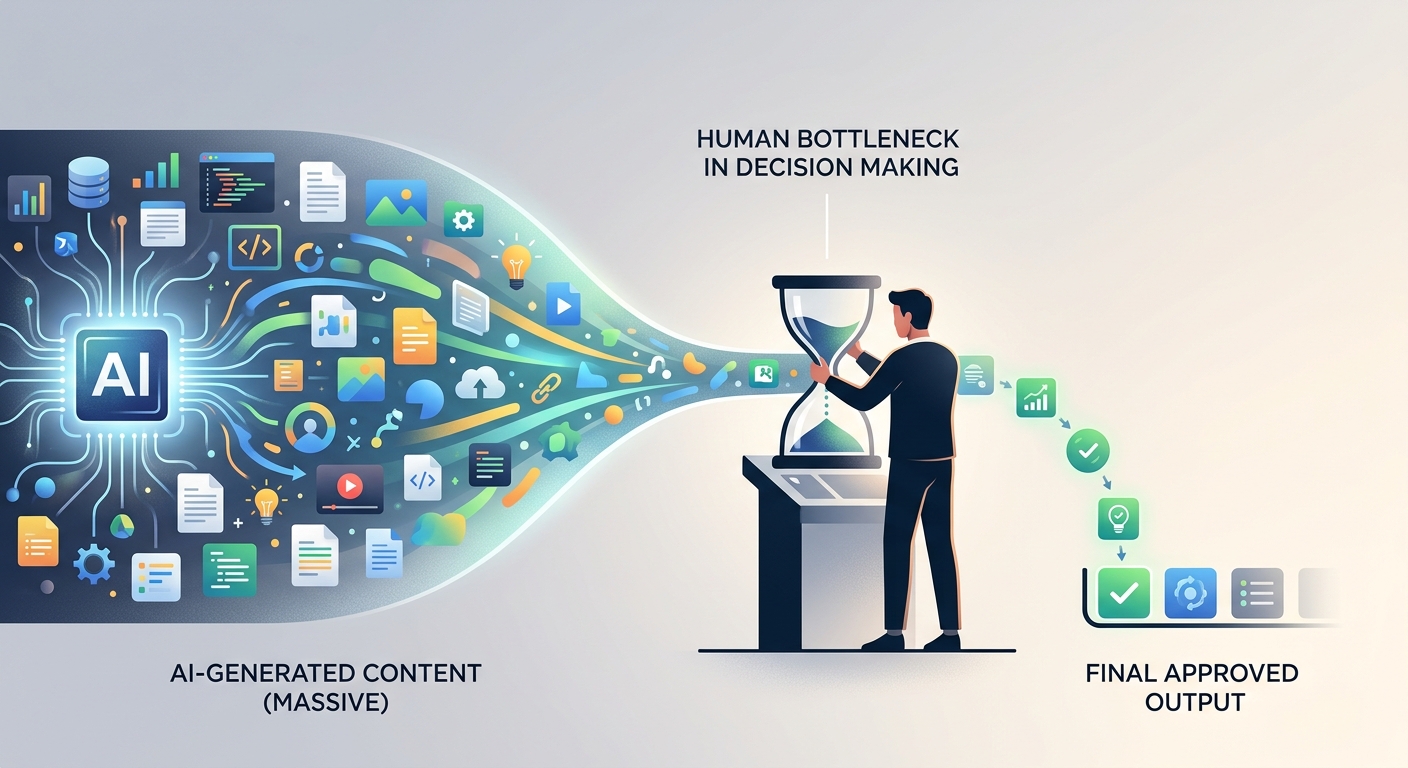
Miro finds that 64% of knowledge workers mainly use AI for information retrieval or task assistance. Only 17% have reached partly or fully autonomous workflows. Meanwhile, organizations are already moving beyond pilots and embedding AI into formal processes. This reveals a disconnect between technology deployment and workforce readiness.
Miro highlights a shift toward AI workhubs: environments where people, AI agents, organizational data, and collaborative work come together. This goes beyond a chatbot or personal copilot. The potential value lies in connecting human judgment, shared context, and AI execution within the same workflow.
Source: Why Is AI Accelerating Work but Not Improving It (Miro)
Top News
1. Tencent launched Hy4 with new visual understanding and stronger long-context, tool-use, and long-horizon agent capabilities.
2. OpenAI began a limited rollout of GPT-6 Rosalind Research for approved biology, drug-discovery, and translational-medicine customers.
3. CrowdStrike added an AI Kill Switch to Falcon Guardian that can terminate a rogue agent.
4. Synthesia launched a ChatGPT plugin that turns prompts and common business files into editable avatar videos.
5. ServiceNow added a Hiring Assistant to EmployeeWorks that handles requisition-to-offer tasks conversationally.
6. A Nature study introduced AutoDNA, an autonomous biomolecular laboratory that coordinated more than 20 instrument types and over 11,000 steps.
Additional Insights
1. Will AI Grant Reviews Make Science More Conservative (Nature)
A recent study raises concerns that using artificial intelligence to evaluate research grant applications could inadvertently discourage scientific innovation by favoring conventional ideas over groundbreaking proposals. Researcher Diogo Machado analyzed 139 grant applications submitted to the Austrian Science Fund using OpenAI’s GPT-4o model, finding that AI-generated funding recommendations agreed with human reviewers only 60% of the time and systematically disadvantaged proposals rated highly for novelty. This bias may arise because large language models are trained to recognize established patterns, making them less effective at identifying the potential of unconventional scientific approaches.
2. When AI Makes Unacceptable Decisions Feel Normal (Wharton)
Wharton researcher Cornelia Walther warns that the greatest danger of widespread AI adoption may not be incorrect answers, but the gradual erosion of independent human judgment and ethical awareness. As AI becomes embedded in workplace and personal decisions, users can shift almost imperceptibly from using it as a thinking aid to allowing it to frame problems, evaluate options, and shape conclusions. Research suggests that repeated reliance on AI can reduce critical-thinking effort, reinforce cognitive biases, and make ethically questionable recommendations appear routine, particularly when they are presented alongside numerous plausible, data-driven decisions. This creates an organizational paradox: humans remain formally accountable while increasingly surrendering the judgment needed to exercise meaningful oversight.
3. AI Reality Check The AI Growth Dividend Is at Stake (PwC)
Despite growing concerns about job displacement, cybersecurity threats, excessive spending, and disruption to traditional software businesses, PwC argues that AI is already delivering measurable economic benefits through increased productivity, revenue, and profitability. According to PwC’s research, 44% of CEOs report financial benefits from AI, while companies investing heavily in AI demonstrate EBITDA growth advantages of up to 19 percentage points in certain industries and shareholder returns 21% above sector peers. However, sustaining these gains requires moving beyond isolated AI pilots and cost-cutting initiatives toward enterprise-wide transformation, redesigned workflows, innovative products, and new revenue opportunities. A central challenge is trust: organizations must address risks associated with autonomous AI agents, cybersecurity vulnerabilities, operational dependencies, and unclear accountability through robust governance, continuous evaluation, security controls, and transparent oversight.
4. Turning executive judgment into organizational intelligence: Leveraging AI in CEO leadership (McKinsey)
AI’s greatest opportunity for CEOs lies not in automating tasks but in capturing, codifying, and scaling executive judgment into organizational intelligence. Much of a leader’s most valuable knowledge—how they evaluate trade-offs, challenge assumptions, prioritize decisions, and navigate uncertainty—remains undocumented and difficult to transfer. The article introduces the concept of “Executive AI,” a system built around five capabilities: directing leadership attention toward critical priorities, codifying tacit decision-making knowledge, augmenting real-time decisions, providing AI-powered strategic sparring, and continuously learning from outcomes. By making executive reasoning accessible throughout an organization, companies can improve decision quality, accelerate execution, strengthen leadership development, and preserve institutional knowledge during succession.
Innovation Radar
1. AI Model Releases and Advancements
- OpenAI released GPT-6 Cyber for authorized vulnerability discovery, exploit reproduction, and remediation through its tightly controlled Daybreak Red access program. (OpenAI)
- Thinking Machines Lab introduced Inkling 2 Small, a 594-billion-parameter multimodal mixture-of-experts model available for inference and fine-tuning through Tinker ahead of a planned open-weights release. (Thinking Machines Lab)
- Tencent launched Hy4 with new visual understanding and stronger long-context, tool-use, and long-horizon agent capabilities across its cloud and workplace products. (Tencent)
- Cognition released SWE-2 Flash in Devin Desktop and CLI as a software-engineering model reported to run three times faster at one-fifth the price of SWE-2. (Cognition)
- Ricursive Intelligence released Ripple-65B Preview, an Apache 2.0 dense model trained on 12 trillion tokens for agentic coding and efficient local or hosted deployment. (Ricursive Intelligence)
- Deep Principle released Hydrogen-1.0, an MIT-licensed scientific model based on GLM-5.3 and post-trained on research data, laboratory records, and discovery trajectories. (Deep Principle)
- Researchers introduced Axion 1.0, fully open agent foundation models whose weights, data pipeline, prompts, verification methods, and training code are all released for reproduction. (arXiv)
- OpenAI began a limited rollout of GPT-6 Rosalind Research for approved biology, drug-discovery, and translational-medicine customers in Work, Codex, and the API. (OpenAI)
2. AI Tools and Features
- OpenAI released Images 2.6 with 50% faster generation, GIF creation, more consistent edits, API image markup, SVG export, and separate speed- and quality-focused models. (OpenAI)
- Anthropic added message threads in public beta so long-running Claude agents can send only new turns while recent conversation state is retained server-side. (Anthropic documentation)
- CrowdStrike added an AI Kill Switch to Falcon Guardian that can terminate a rogue agent, block relaunch, cut network access, and log the containment action. (CrowdStrike)
- Kong launched AI Cost Management to attribute model and agent spending to business units, applications, users, and customers while adding budgets, alerts, and optimization controls. (Kong)
- OpenAI made GPT-5.6 Cyber available to approved Daybreak Red customers in AWS GovCloud US-East through Amazon Bedrock for authorized security research. (OpenAI)
- Synthesia launched a ChatGPT plugin that turns prompts and common business files into editable avatar videos and can run from scheduled or event-triggered workflows. (Synthesia)
- ServiceNow added a Hiring Assistant to EmployeeWorks that handles requisition-to-offer tasks conversationally alongside other role-specific HR productivity assistants. (ServiceNow)
- Canva launched Affinity for iPad, combining sketching, vector, photo, and layout tools in one file while offering optional Canva AI editing features to premium users. (Canva)
3. AI Trends
- Menlo Ventures estimated enterprise AI deployment spending reached $176.8 billion by September 2026 as agent traffic on OpenRouter grew 37-fold after surpassing human-driven traffic. (Menlo Ventures)
- METR found Anthropic’s capabilities work is probably advancing at roughly twice its historical rate, largely through AI assistance, while noting substantial uncertainty and redacted evidence. (METR)
- The Bank of England said firms report modest AI productivity gains so far but expect an average annual boost of about 0.9 percentage points over the next three years. (Bank of England)
- OpenAI reported an autonomous Linux-kernel pipeline that reproduced 1,724 vulnerabilities and produced 948 privilege-escalation exploits plus candidate patches in a $1.2 million run. (OpenAI)
- A Chinese industry report cited by 36Kr said inference data volume has overtaken training data volume as daily token calls exceeded 175 trillion by June 2026. (36Kr)
- The United Kingdom’s cybersecurity chief warned that AI-enabled attacks on critical infrastructure are likely by 2028, compressing the preparation window for essential-service operators and suppliers. (Associated Press)
4. AI for science
- A Nature study introduced AutoDNA, an autonomous biomolecular laboratory that coordinated more than 20 instrument types and over 11,000 steps across DNA synthesis, storage, sequencing, and mutation detection. (Nature)
- Anthropic’s biology team used Claude across sequence search, experimental design, isolation, and microscopy to report the first three-dimensional structure of a prokaryotic vault-like particle in a preprint. (Anthropic)
- OpenAI reported progress using its models for CAD, simulation, circuit-board, mechanical, and electrical engineering workflows, including design-evaluation work with Mazda. (OpenAI)
- Hugging Face launched Project ProtoStar to improve the documentation, structure, and reuse of publicly funded scientific datasets, models, and code for AI research. (Hugging Face)
- Researchers introduced an extensible platform that reproduces computational quantum-science results and exposes verified workflows to AI scientists through the Model Context Protocol. (arXiv)
5. Others
- Blue Origin announced a GS3 third stage for high-energy New Glenn missions and a new 715,000-pound-thrust Northstar booster engine using liquid oxygen and liquefied natural gas. (Blue Origin)
- Researchers built a compact titanium-nitride superinductor and quantum sensor inside a commercial 22-nanometre CMOS process, improving readout sensitivity while reducing footprint. (Nature Electronics)
- Researchers developed an in-situ hybrid protective layer for lithium-metal anodes that is designed to suppress dendrites and stabilize contact with sulfide solid electrolytes. (Science China Press)
- Researchers traced a key ambient-degradation pathway in mixed-cation perovskites and produced cells with 26.37% efficiency that retained 96.47% of performance after 2,200 test hours. (Nature Communications)
- A Chinese AI data center deployed a commercial 800-volt direct-current power system intended to cut conversion stages, losses, and equipment footprint in dense computing facilities. (Tom’s Hardware)







Leave a Reply