Highlights
Top Insights
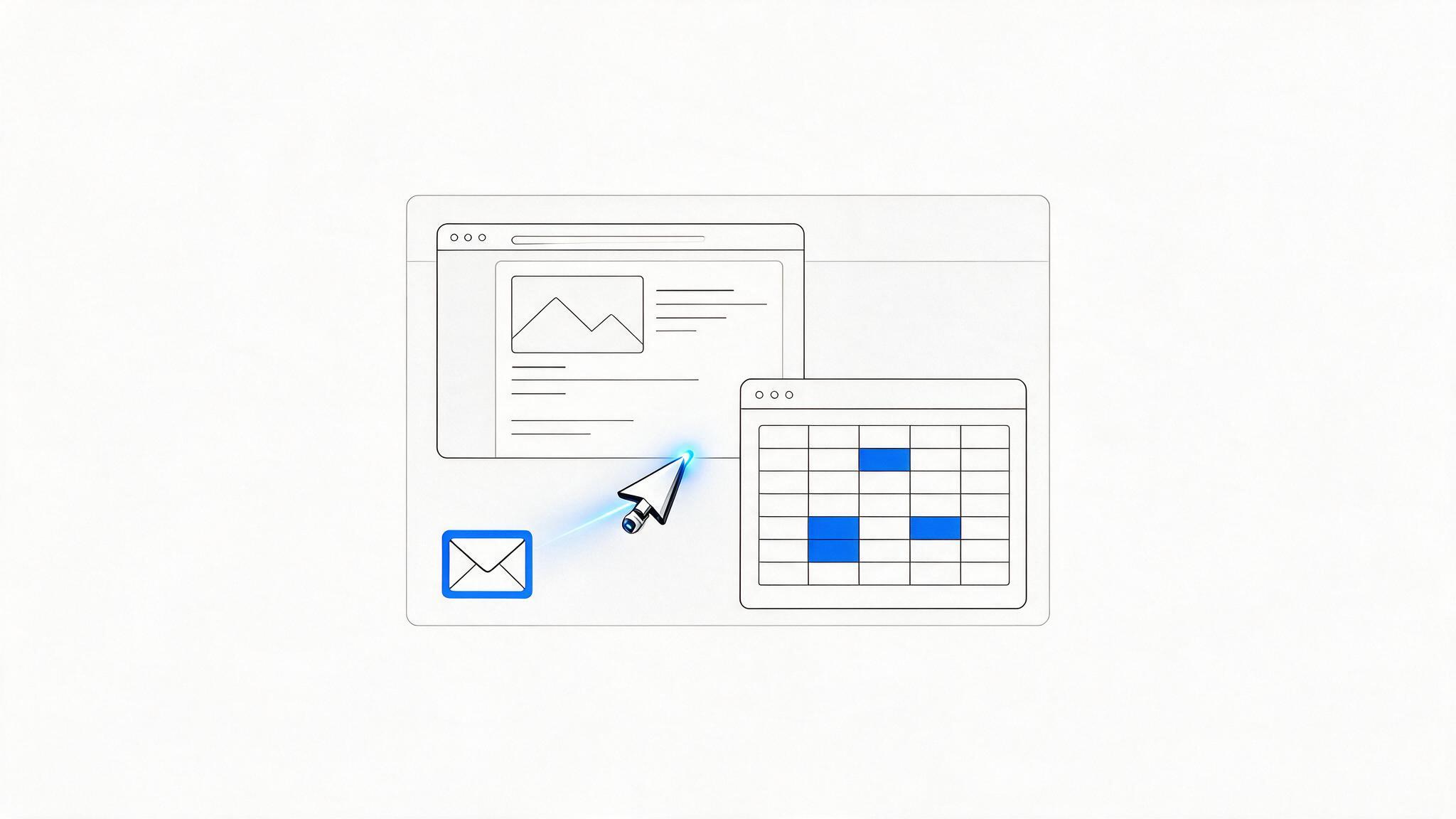
Computer-using AI agents have crossed an important threshold: the question is shifting from “can they operate software?” to “can they reliably perform a job?” Production deployments are now real, especially for repetitive back-office processes involving legacy systems and software without good APIs.
The raw AI model is becoming less important than the operating system around it. Computer-use benchmarks have improved dramatically: the best OSWorld-Verified score rising from roughly 42% a year earlier to 85% in June 2026, above the benchmark’s roughly 72% human score. But businesses still cannot tolerate a workflow that fails 15% of the time. The differentiator is increasingly verification, retries, permissions, escalation, monitoring, and process knowledge, not which frontier model sits underneath.
Source: Can Agents Use a Computer Yet? We’ve Got the Data (a16z)
Top News
1. Stanford and Arc Institute researchers used Evo genome language models to design complete bacteriophage genomes, then synthesized and tested 285 candidates.
2. Anthropic said new Claude models will embed an imperceptible watermark directly into generated text.
3. Ahrefs launched Letaido, an agentic workspace that plans and executes multistep marketing tasks.
4. xAI’s new Grok 4.6 has reportedly surpassed Kimi K3 on independent benchmarks.
5. Alibaba released the weights for Qwen3.8-2.4T-A95B, bringing its Max-tier multimodal model into the open-weight ecosystem.
Additional Insights
1. The intelligent workplace (part 2): Technology’s next transformation of work (ITPro)
The article argues that as AI becomes a permanent member of workplace teams, companies need to rethink performance management, leadership, and employee development rather than simply adding more automation. Traditional metrics such as output volume, tasks completed, or hours worked become less meaningful when AI can rapidly increase activity; organizations should instead measure quality, judgment, customer outcomes, collaboration, and responsible AI use. Managers will increasingly act as “architects” of human-AI systems, deciding which tasks machines handle, where human oversight is required, and who remains accountable for decisions. At the same time, businesses must protect and develop human expertise—particularly critical thinking, problem framing, creativity, contextual judgment, and relationship skills—so employees can recognize when AI is wrong rather than becoming dependent on it. The article also warns that AI-driven performance monitoring can increase surveillance and obscure important contributions that algorithms cannot easily measure, making transparency, employee consultation, and the ability to challenge automated decisions essential. Ultimately, AI can expand workforce capacity, but sustainable gains will depend on redesigning work around better outcomes while keeping responsibility and meaningful judgment firmly human.
2. AI transformation is now a leadership test (TechRadar)
AI transformation is increasingly a leadership challenge rather than simply a technology rollout: while companies have rapidly adopted generative AI, many still struggle to turn pilots into measurable gains in profitability, productivity, and customer value. Paulo Cunha argues that successful transformation requires senior leaders to rethink workflows and operating models, decide where human judgment should remain central, establish clear ownership and success metrics, and coordinate change across functions rather than delegating AI to IT. Trust is especially important—employees and customers need transparency about where AI is used, appropriate human oversight, training, and reassurance that automation will improve rather than undermine their experience. Ultimately, the organizations that benefit most will not necessarily deploy the most or newest AI, but will have leaders capable of continuously aligning technology with business value, organizational culture, sound judgment, and stakeholder trust.
3. Research: The Innovation Problems AI Can’t Solve (HBR)
Generative AI can accelerate innovation while quietly worsening its most important human bottlenecks. It produces statistically typical ideas that then anchor people’s thinking, makes polished pitches seem better than they are, and can simulate “customers” who act too rationally to predict the switching costs and irrational habits that kill real product adoption. Most counterintuitively, researchers found that removing an AI’s written rationale can improve screening decisions because the explanation encourages people to rubber-stamp its judgment. AI is strongest on high-volume information tasks, but organizations still need direct contact with real customers and accountable human judgment, or they risk an automation trap where every step becomes faster while the whole system drifts away from reality.