
Highlights
Top Insights
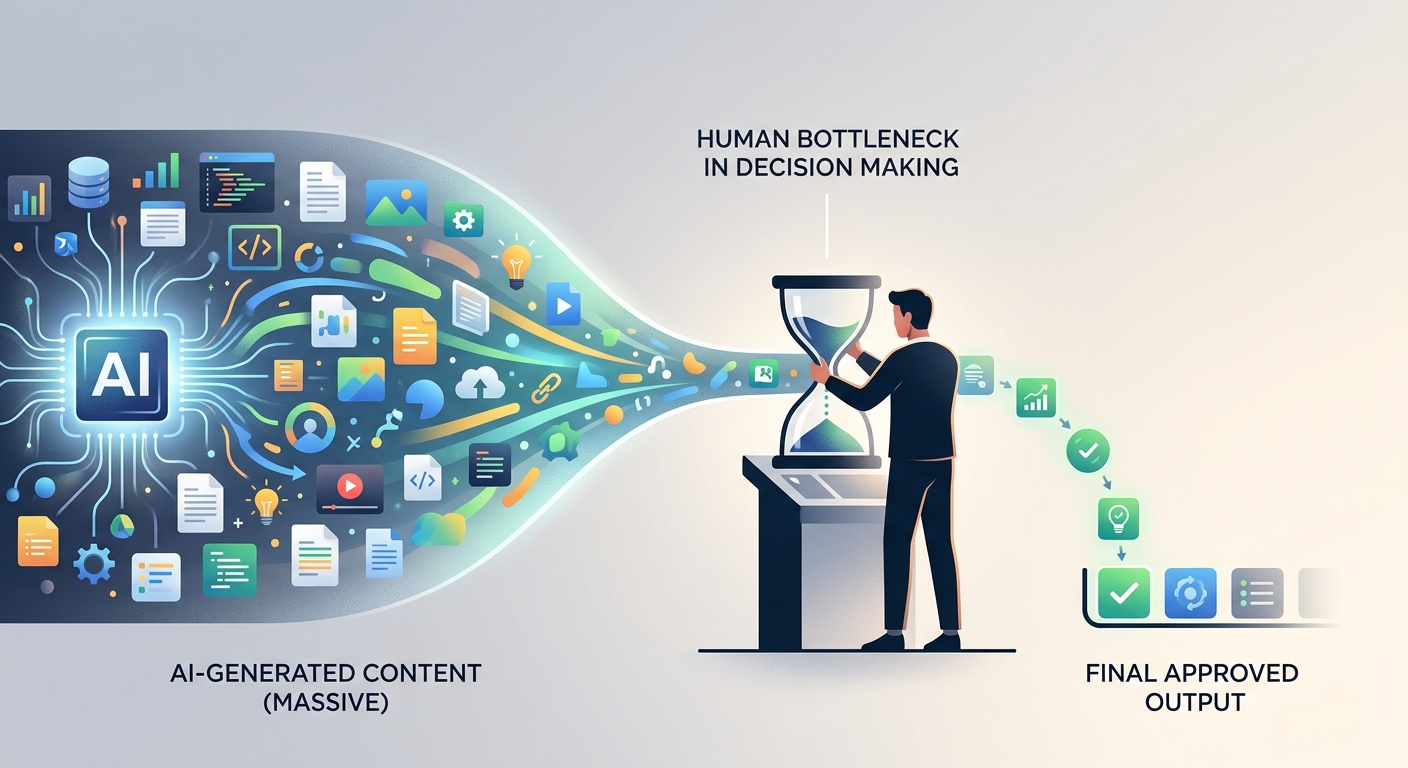
- Unlike traditional software, which functions as a static tool under direct human command, agentic AI can reason, plan, and take actions, such as updating records, issuing refunds, or routing approvals, autonomously.
- This autonomy introduces operational risks, including unpredictable behavior and unclear responsibility when errors occur. These agents must be treated as “digital employees” rather than mere software installations.
- This mindset shift requires organizations to give each agent a defined identity, limited authority, and access only to trusted sources of information. Successful scaling depends on the creation of clear controls and audit trails that make the agent’s decisions explainable.
Source: To Scale AI Agents Successfully, Think of Them Like Team Members (HBR)
Top News
1. Google introduced Gemini 3.1 Flash Live as a real-time multimodal voice model for lower-latency audio dialogue and tool use.
2. A paper found that prompting a model to act like an expert can reduce its performance.
3. Microsoft added Copilot more deeply to Power Apps so users can query data, generate charts and summaries with Code Interpreter.
4. Anthropic launched Claude Code Channels to let developers send Telegram, Discord, or iMessage events into a running Claude Code session.
5. Nature described The AI Scientist as a system that generates research ideas, runs experiments, analyzes results, and writes papers.
Additional Insights
1. How algorithmic data deserts exclude consumers (Ideas Made to Matter)
A profound strategic risk for companies in non-AI industries is “algorithmic exclusion” caused by data deserts. Data deserts are markets or populations where low-quality, fragmented, or sparse data makes it impossible for AI systems to produce accurate predictions. This invisibility creates a failure condition where AI systems, now used to shortlist job candidates or approve loans, simply cannot “see” certain groups.
2. Five Barriers CEOs Must Overcome for AI Impact (BCG)
The realization of AI value is currently hindered by five specific barriers that CEOs must actively dismantle. Despite 90% of companies experimenting with AI, only 5% are generating sustained P&L impact. This “impact gap” is driven by a lack of transformation discipline rather than technical failures. One surprising insight is that AI value is often second-order and fragile. It improves judgment and productivity, but those gains do not automatically translate to financial impact unless the organization deliberately captures them through restructured headcount or increased throughput.
3. Nvidia GTC 2026: AI Becomes the Operating Layer (Bain)
The 2026 Nvidia GTC conference highlighted that the economics of AI have reached a tipping point where inference is the primary driver of growth. The Vera Rubin platform delivers 10 times higher inference throughput per watt at one-tenth the cost per token. The “build vs. buy” calculus has also shifted. Model-agnostic platforms are now seen as more durable investments than those locked into a specific frontier model. Furthermore, the emergence of the Nvidia Agent Toolkit and NemoClaw (an enterprise reference design built on the OpenClaw framework) provides companies with a “controlled operating environment” for agents. This allows for the scaling of agent pilots across thousands of locations without introducing the unacceptable risks associated with unmonitored machine-speed execution.
4. As AI becomes cognitive infrastructure, policy-makers must govern for resilience (WEF)
AI is no longer just an automation tool; it has become “cognitive infrastructure”—the default layer through which humans plan, search for information, and evaluate risk. This shift carries profound long-term risks, including “cognitive offloading,” where consistent delegation to AI weakens human analytical depth and situational awareness. Leaders must be wary of the “Illusion of Accuracy,” as humans are psychologically predisposed to equate fluent, structured AI output with truth. Furthermore, the “narrowing of thought patterns” caused by the prompt-and-response model can reduce the cognitive flexibility required for innovation. The strategic challenge for 2026 is ensuring that AI serves as a “reasoning partner” rather than a substitute for capability, reinforcing rather than replacing human judgment.
Innovation Radar
AI Model Releases and Advancements
- Google introduced Gemini 3.1 Flash Live as a real-time multimodal voice model for lower-latency audio dialogue and tool use through the Gemini Live API (Google).
- Cohere launched Transcribe as an open-source automatic speech recognition model for enterprise use and said it tops Hugging Face’s Open ASR leaderboard while supporting 14 languages (Cohere).
- Tencent AI Lab open-sourced Covo-Audio, a 7B end-to-end audio language model designed for continuous audio input, audio output, spoken dialogue, and real-time reasoning (MarkTechPost).
- NVIDIA’s Nemotron-Cascade-2-30B-A3B paper introduced an open 30B mixture-of-experts model with about 3B active parameters at inference and a focus on strong agentic and reasoning performance (arXiv).
- Luma Labs released Uni-1 as an autoregressive image model built to reason through intent and layout before generating images (MarkTechPost).
- Intercom announced Fin Apex 1.0 as a customer-support model optimized for resolution rate, lower hallucination rates, and faster responses in support workflows (Intercom).
- Google Research published TurboQuant as a method for extreme vector compression, including KV-cache compression for large language model inference, while preserving benchmark performance (Google Research).
- A paper highlighted by 36Kr found that prompting a model to act like an expert can reduce factual accuracy in retrieval tasks and presented PRISM as a routing approach that applies persona behavior only when useful (36Kr).
AI Tools and Features
- Microsoft previewed a Power Pages Copilot CLI plugin that works with GitHub Copilot CLI and Claude Code to generate, configure, and deploy websites from natural-language prompts (Microsoft).
- Microsoft added Copilot more deeply to Power Apps so users can query data, generate charts and summaries with Code Interpreter, and trigger Microsoft 365 actions from inside model-driven apps (Microsoft).
- Google released an open-source Colab MCP server that lets compatible agents create, edit, and execute code in Colab runtimes (GitHub).
- LlamaIndex introduced LiteParse as a local-first document parsing tool for AI agents with layout-aware extraction and bounding-box information (LlamaIndex).
- The open GitAgent project proposed a git-native, framework-agnostic standard for packaging, versioning, and moving AI agents across tools (GitHub).
- Anthropic launched Claude Code Channels to let developers send Telegram, Discord, or iMessage events into a running Claude Code session (Anthropic).
- Cloudflare introduced Dynamic Workers in open beta as an isolate-based sandbox for running short-lived agent-generated code faster and with lower overhead than containers (VentureBeat).
- Amazon said NVIDIA’s Nemotron 3 Super is now available in Amazon Bedrock, giving customers access to a 70B-parameter model for text generation, reasoning, summarization, and code tasks without managing infrastructure (AWS).
- AWS released the Nova Forge SDK to help developers fine-tune and customize Amazon Nova foundation models on company data and deploy the resulting models through Bedrock (AWS).
AI for Science
- MIT researchers used generative AI to interpret Wi-Fi signals and reconstruct images of objects hidden behind walls or around corners (MIT).
- Nature described The AI Scientist as a system that generates research ideas, runs experiments, analyzes results, writes papers, and performs peer review (Nature).
- A Nature Neuroscience study reported that a generative AI model trained on neural data predicted how brain injuries disrupt consciousness and identified damage patterns linked to potential treatments (Nature Neuroscience).
- Meta released TRIBE v2, a brain-encoding model designed to predict fMRI responses across video, audio, and text stimuli (MarkTechPost).
Other
- Visa launched Agentic Ready, a framework for banks to test AI-agent-initiated payments using tokenization and biometric checks (PYMNTS).
- BAIC unveiled a sodium-ion EV battery prototype that it says delivers about 450 kilometers of range and can recharge in about 11 minutes (Electrek).
- Researchers in Australia built a proof-of-concept quantum battery that charges faster as it scales by exploiting collective quantum effects (ScienceDaily).
- Ars Technica reported on NASA’s concept for using nuclear propulsion ideas involving Gateway as part of a path toward Mars missions (Ars Technica).
- Nature reported that antimatter was transported for the first time outside a laboratory environment in the back of a CERN truck (Nature).
- Nature reported that researchers revived so-called zombie cells after a genome transplant, opening new possibilities for synthetic biology (Nature).