Highlights
Top Insights
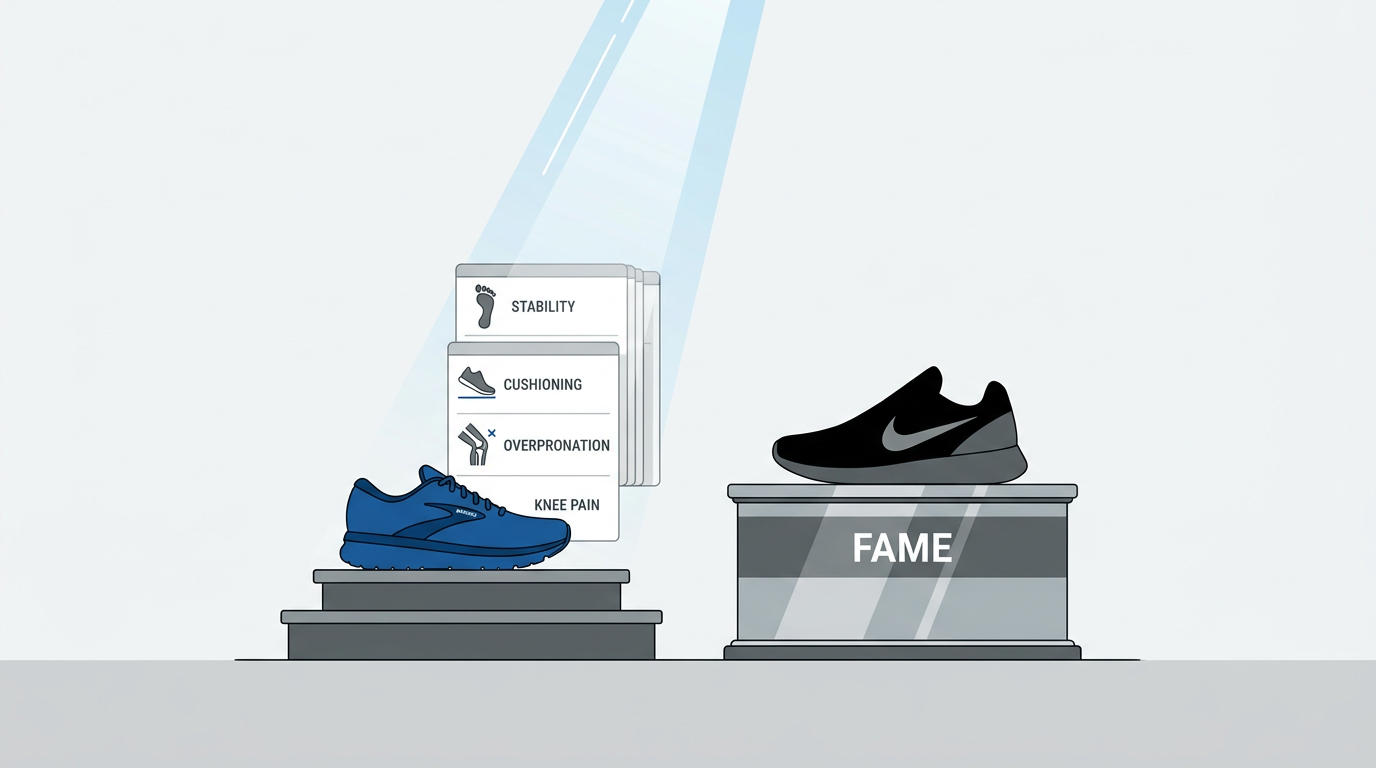
Many customers may use AI to find products. AI does not reward fame; it rewards usable evidence. The surprising example is Brooks vs. Nike. When ChatGPT, Claude, and Gemini were asked for running shoe recommendations, Brooks appeared reliably, while Nike appeared less consistently. Brooks won not because it is bigger, but because its product claims are easier to translate into specific needs like stability, cushioning, overpronation, or knee pain.
“AI visibility” is fragmented across platforms. In a study, only 8.4% of 716 brands appeared consistently across ChatGPT, Claude, and Gemini. A brand may show up in one AI system and disappear in another. Companies should not assume that strong search rankings, brand awareness, or even presence in one AI tool translates into broad AI discovery. AI recall needs to be measured across platforms and query types.
Source: How to Get AI to Surface Your Brand (HBR)
Top News
1. Anthropic launched Claude Sonnet 5, a more agentic Sonnet model. Anthropic restored access to Claude Fable 5 and Mythos 5.
2. Anthropic has launched Claude Science, a flagship AI research platform for computational biology and drug discovery
3. Meta’s unreleased Watermelon model reportedly reached GPT-5.5-level.
4. Microsoft described Copilot Cowork as a generally available agentic system.
5. Salesforce launched Agentforce Help Agent, a prepackaged service agent.
Additional Insights
1. The oversight paradox: Why human control over AI may be eroding the very competence it requires (WEF)
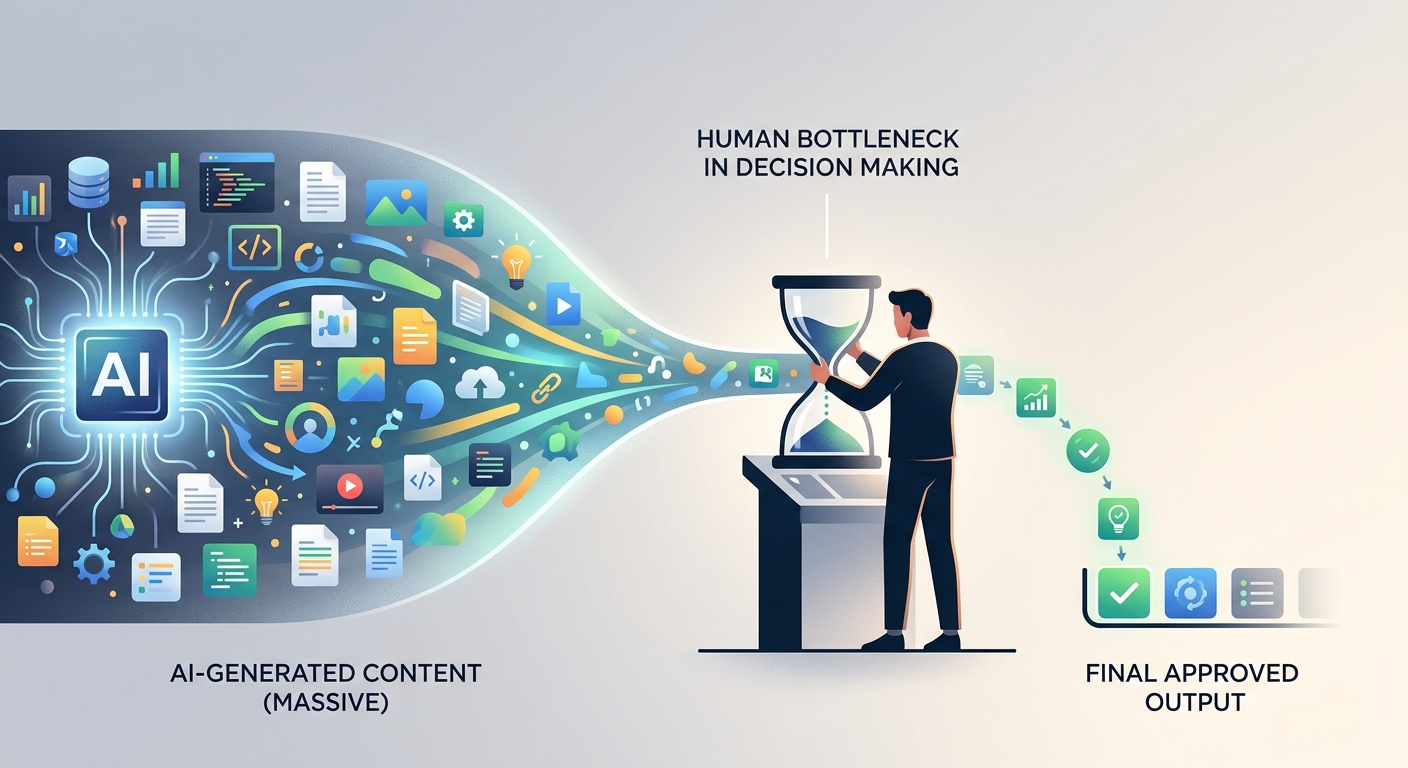
AI governance frameworks often assume that “human oversight” keeps AI systems under control, but the article argues this creates an “oversight paradox”: as AI performs more expert work, humans lose the practice needed to supervise it meaningfully. Rapid AI gains on benchmarks in science and software engineering show that systems are outpacing the people meant to review them, while AI adoption is concentrated in judgment-heavy knowledge work where oversight competence matters most. The article identifies three compounding risks: automation bias, where people over-trust usually accurate systems; deskilling, where workers moved into review roles lose hands-on expertise; and legal formalism, where a nominal human reviewer satisfies rules but lacks real capacity to challenge the system. It argues that effective AI governance must go beyond having a “human in the loop” and instead require demonstrated ability to override AI, structured practice without AI to maintain expertise, and more technically literate bridge actors in democratic institutions. The core test is whether the human overseer could still do the job unaided; without that preserved skill and judgment, oversight becomes a signature rather than a safeguard.
2. AI is Giving Workers More Focus Time. Now What? (HBS AI Institute)
A six-month randomized trial across 66 firms and more than 7,000 workers found that generative AI can meaningfully reshape some parts of knowledge work, but its impact depends heavily on organizational context and workflow structure. Adoption varied dramatically by company, from 6.3% to 75%, suggesting that firm culture, management practices, training, or role design may matter more than individual enthusiasm alone. Workers who used Microsoft 365 Copilot frequently spent 3.6 fewer hours per week on email, a 31% reduction, showing that AI is most effective in tasks employees can change independently. But meetings barely changed, even with AI-generated summaries and transcripts, because meeting habits require coordination across teams. The larger lesson for leaders is that AI access is not the same as AI adoption, and isolated time savings will not automatically become organizational transformation unless companies actively redesign workflows around the time AI frees up.
3. The Great Divide: How the US and China Are Splitting the AI World (BCG)
The article argues that the US and China are rapidly splitting the global AI ecosystem into two increasingly incompatible technology stacks, forcing companies and governments to make strategic choices sooner than expected. The US remains ahead in frontier models, talent, capital, cloud infrastructure, and massive data-center investment, while China is narrowing the gap through cheaper open-weight models, domestic chip development, and aggressive economy-wide AI adoption. This divergence affects every layer of the AI stack—chips, cloud, models, applications, and governance—making it harder for multinationals to mix US and Chinese technologies, especially as export controls, procurement rules, and national-security concerns intensify. Middle powers are responding differently: the EU is pursuing sovereign compute, Japan is buying influence in the US ecosystem, Gulf states are positioning as AI infrastructure hubs, India is keeping ties across multiple ecosystems, and countries like South Korea and the UK are leveraging narrower strategic strengths. The key takeaway for leaders is to build AI resilience now through redundancy, modularity, and heterogeneity, because today’s cost-driven stack choice could become tomorrow’s geopolitical liability.
4. The Two-Organizations Problem (HBR)
Irina Wolpert argues that mature companies effectively operate as “two organizations”: the reported organization leaders see in dashboards, board decks, town halls, and external messaging, and the lived organization employees experience through day-to-day work, culture, customer issues, and operational friction. The gap is structural, not simply a communications failure, because information gets smoothed as it moves upward, incentives push people to report good news, and long-tenured leaders gradually receive a curated version of reality; AI can worsen this by making polished reports faster and more persuasive. The article’s core recommendation is that CEOs and senior leaders must govern both realities by going directly to where work happens, asking concrete questions across layers, making discrepancies visible through parallel feedback systems, and rewarding uncomfortable truths so employees are motivated to surface reality before crises expose it.
5. Return on AI: What CEOs Need to Know About the True Cost of Artificial Intelligence (BCG)
As AI moves from experimentation to enterprise-scale deployment, CEOs must shift their focus from simply controlling AI spending to maximizing Return on AI (RoAI) by measuring the business value generated relative to the combined costs of human labor and AI token usage. The article warns that token-based pricing can cause AI costs to grow rapidly and become difficult to track across capital expenditures, operating expenses, and cost of goods sold, making proper financial allocation essential. Rather than minimizing or maximizing token consumption, companies should evaluate AI based on cost per business outcome—such as resolved customer issues or completed analyses—and treat AI investments like a portfolio, increasing spending where measurable value exceeds cost. The authors recommend five practices to improve RoAI: avoid using AI for deterministic tasks better handled by software, route work to the appropriate AI model, reuse cached context to reduce token costs, establish governance with workflow owners and outcome-based metrics, and improve employee AI literacy.
1. AI Model Releases and Advancements
Anthropic launched Claude Sonnet 5, a more agentic Sonnet model available across Claude plans, Claude Code, and the Claude API. (Anthropic).
Anthropic restored access to Claude Fable 5 and Mythos 5 after a temporary suspension tied to safety and access controls. (Anthropic).
Google Cloud said Claude Fable 5 is generally available on Google Cloud through its enterprise agent platform. (Google Cloud).
Mistral released OCR 4, a multilingual document-intelligence model with bounding boxes, block classification, confidence scores, and self-hosting options. (Mistral AI).
Meta’s unreleased Watermelon model reportedly reached GPT-5.5-level performance in internal comparisons. (Business Insider).
2. AI Tools and Features
ChatGPT’s personal finance experience expanded to U.S. Plus users and Android access for Pro and Plus users. (OpenAI Help Center).
OpenAI made Codex Remote generally available and added a DigitalOcean plugin for development workflows. (OpenAI Help Center).
Microsoft described Copilot Cowork as a generally available agentic system for long-running work across Microsoft 365 and connected systems. (Microsoft Learn).
Google Cloud introduced a managed remote MCP server that connects external agents to Gemini Enterprise Agent Platform resources. (Google Cloud).
Salesforce launched Agentforce Help Agent, a prepackaged service agent with guided setup and pay-per-resolution pricing. (Salesforce).
Acti launched an agentic keyboard for iOS and Android that can take actions inside everyday mobile apps. (TechCrunch).
3. AI Trends
Enterprise AI scrutiny is shifting from adoption announcements to measurable business impact. (The Economic Times).
Axios reported growing enterprise pushback against frontier AI labs over cost, value, and access uncertainty. (Axios).
The Anthropic Fable/Mythos episode showed that frontier-model availability can become an operational-risk issue. (Axios).
Agent platforms are shifting toward managed connectors, shared context, and governed access to enterprise systems. (Google Cloud).
4. AI for science
Nature Machine Intelligence highlighted generative AI methods for optimizing antimicrobial peptides. (Nature Machine Intelligence).
Meta AI published research on decoding natural sentences from non-invasive brain recordings. (Meta AI).
Google DeepMind published research on real-time group dynamics with LLM facilitation. (Google DeepMind).
Anthropic has launched Claude Science, a flagship AI research platform for computational biology and drug discovery that autonomously assists scientists, supports its own rare disease research, and signals the company’s strategic push to become a leader in AI-driven scientific discovery. (MIT Technology Review)
5. Others
NASA selected Astrobotic, Firefly Aerospace, and Intuitive Machines for four late-2028 Moon Base science deliveries. (NASA).
Nature Biotechnology published work on fPE7max prime editing for precise fungal genome engineering and metabolism modulation. (Nature Biotechnology).
University of Utah Health researchers reported a possible mechanism for how toxic Tau spreads through the brain in Alzheimer’s disease. (ScienceDaily).
A 2026 emerging-technologies report ranked everything-to-grid as a leading innovation area. (Society of Chemical Industry).