


Highlights
Top Insights
In a company, AI reduced one task from 10 days to 1 day, yet the customer still waited 10 days because approvals and surrounding processes hadn’t changed. The company captured value only when it redesigned the entire workflow. Leaders should distinguish between making a task faster and changing the economics or customer outcome of a process. The latter is where enterprise value appears.
We should ask “If we designed this process today assuming AI existed, what would we eliminate?”
Source: Look Past Productivity to Get Real Value from AI (BCG)
Top News
1. OpenAI released GPT-6 Astra for multistep professional work.
2. Anthropic introduced Claude Fable 5.1 for broad coding and knowledge work.
3. Google launched Gemini 3.8 Flash for coding and agentic reasoning.
4. Alibaba released Qwen3.8-Max-0902 with stronger engineering-scale coding.
5. Tencent open-sourced Hy4 preview, a 770-billion-parameter mixture-of-experts model.
Additional Insights
1. 10 levers for shaping generative AI that truly improves worker performance (Ideas Made to Matter)
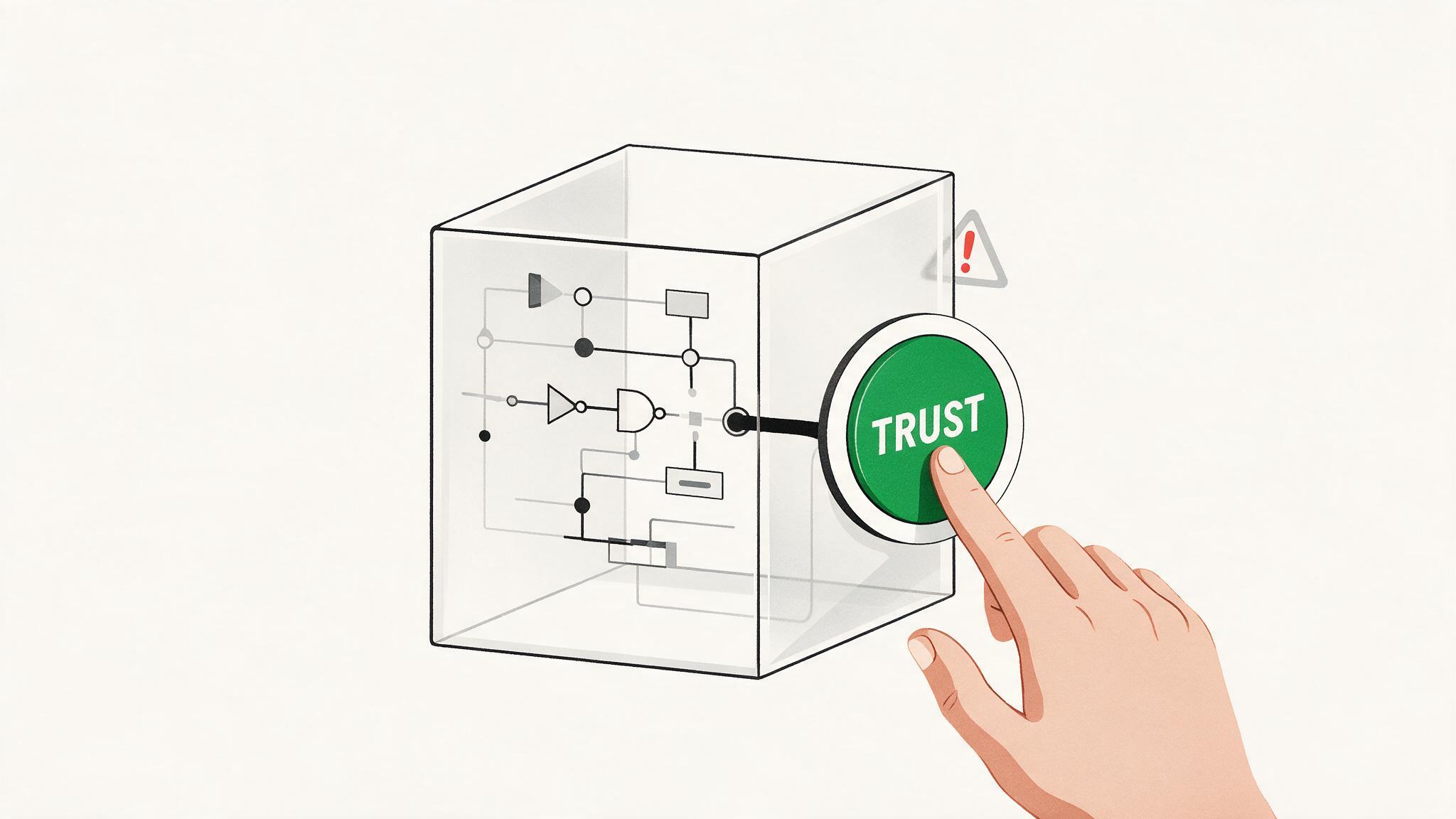
MIT Sloan’s article argues that generative AI improves work only when organizations deliberately design how it is deployed, rather than simply using it to automate tasks faster. Drawing on research across more than 20 companies, the authors identify three common failure modes—disuse, misuse, and overuse—and propose 10 “levers” for better outcomes: gather evidence before scaling, recognize that workers use AI differently, help employees learn when to trust AI, automate drudgery rather than meaningful work, use AI to promote learning instead of cognitive offloading, preserve teamwork and mentoring, design interfaces that support situational awareness, continue investing in domain expertise, keep humans accountable for AI-generated work, and use productivity gains to create new and richer work. The central takeaway is that successful AI adoption should optimize not only efficiency, but also quality, learning, collaboration, expertise, accountability, and employee growth.
2. Designing physics experiments with artificial intelligence (Nature)
AI is emerging as a powerful tool for designing physics experiments, moving beyond simple parameter optimization toward creating entirely new experimental configurations that can rival or outperform human-designed setups. The review frames this challenge as searching a vast space of possible hardware designs under real-world constraints and identifies four core requirements: constructing flexible design spaces, developing fast and accurate simulators, converting scientific goals into computable objectives, and using AI methods capable of exploring both discrete and continuous choices. It emphasizes key trade-offs among computational efficiency, practical feasibility, interpretability, and reliability, while arguing that future cross-domain simulators and large collections of experimental objectives could enable AI to discover unconventional experimental concepts beyond human intuition, potentially opening new ways to investigate fundamental physics and the Universe.
3. What Happens When AI Starts Doing Business with AI? (HBR)
The HBR article argues that as autonomous AI agents increasingly transact and negotiate with other AI agents, companies will need explicit governance rules defining what those agents can access, decide, and execute. In a controlled simulation involving 160 governance runs and 2,560 observations, the authors tested information disclosure, agent autonomy, reputation signals, and structured interaction protocols: richer machine-readable information helped agents find better counterparties, greater autonomy helped them advance opportunities toward commitment, and reputation signals improved prioritization, while overly rigid interaction protocols actually reduced engagement and deal progression. Real-world examples such as Amazon blocking Perplexity’s purchasing agent versus Tencent selectively allowing outside assistants to interact with WeChat illustrate the strategic choice companies face. The authors recommend defining clear levels of AI authority, experimenting within bounded environments, supplying agents with structured data and reputation signals, and establishing explicit points where decisions must be handed back to humans.
4. From AI Assistant to Executive Partner: The Next Executive Phase of Human–AI Leadership (CMR)
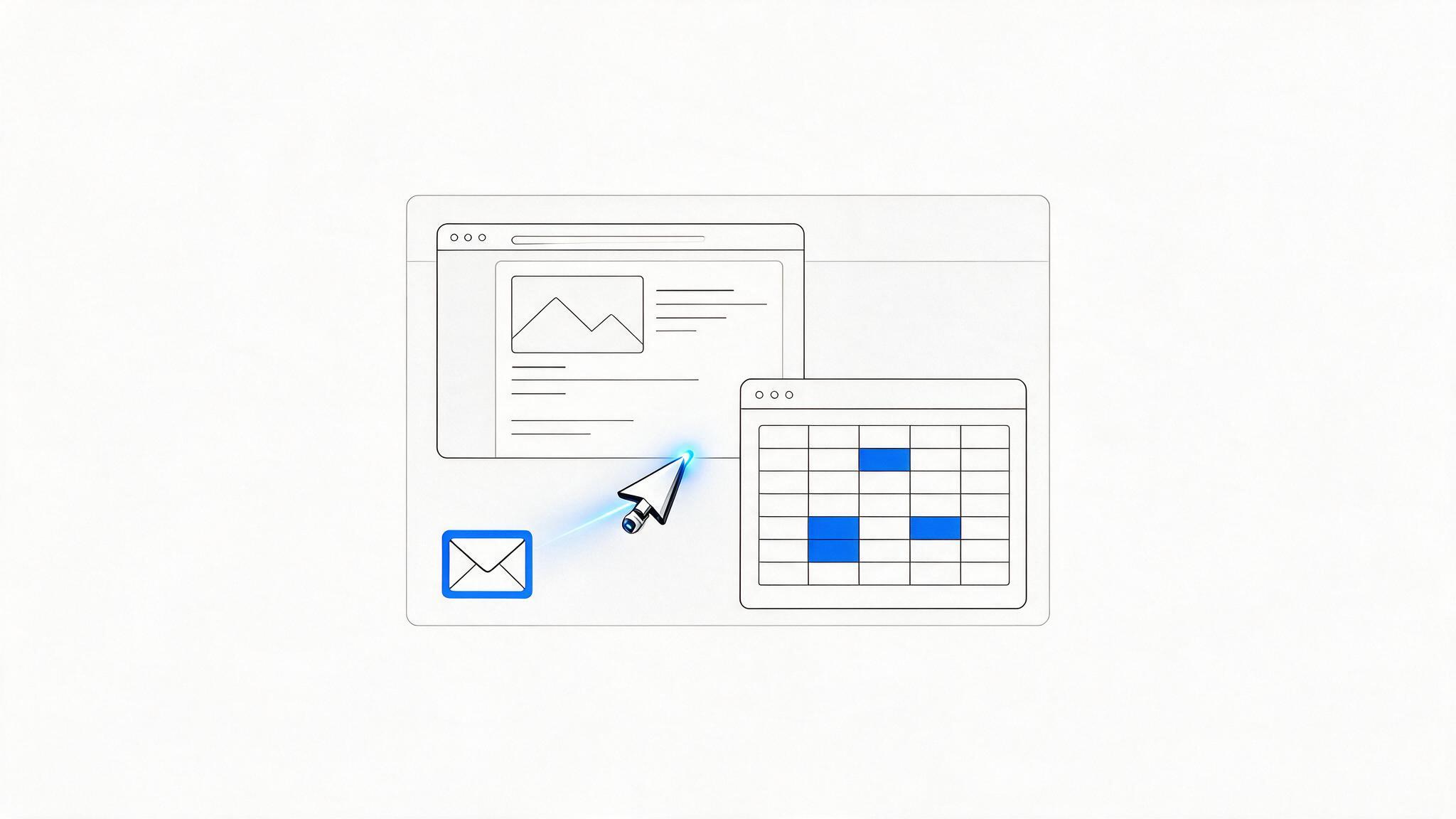
The article argues that agentic AI is evolving from an executive assistant into an active executive partner, capable of coordinating complex workflows, decomposing goals, synthesizing real-time information, and increasingly making or executing routine decisions with limited human intervention. This creates a leadership challenge less about deploying technology and more about redesigning organizations: executives must explicitly determine which decisions AI can make autonomously, where human judgment remains mandatory, and how accountability and governance work across hybrid human-AI systems. Moderna illustrates the emerging model, delegating repeatable decisions and coordination to AI while keeping consequential, judgment-heavy decisions human-led, alongside redesigning roles around outcomes and workflow orchestration. The authors propose four priorities for leaders: architect machine-augmented decision-making with clear autonomy boundaries; build adaptable AI toolchains and reasoning stacks; create hybrid teams in which AI handles analytical and execution work while humans emphasize judgment, creativity, and relationships; and foster an agile culture that treats AI as a collaborator rather than merely a productivity tool. The central takeaway is that competitive advantage will come not simply from adopting increasingly autonomous AI, but from redesigning strategy, governance, roles, workflows, and culture so human judgment and machine agency can operate effectively together.
5. Building an enduring futuring system (IDEO)
IDEO argues that organizations need to turn futures thinking from a specialist activity into an enduring organizational capability. Rather than acting as a predictor, a futurist-in-residence (FIR) should build the organization’s ability to continuously sense change, explore multiple plausible futures, challenge assumptions, and translate uncertainty into better decisions. IDEO describes four stages: the futurist begins as an explorer, scanning signals and creating provocative future scenarios; becomes a translator, connecting those insights to strategy, investment, talent, and risk; shifts into a builder, embedding repeatable practices such as signal reviews, scenario stress tests, and futures training into everyday workflows; and ultimately serves as a catalyst, enabling teams and leaders to practice foresight independently. The key measure of success is therefore somewhat paradoxical: a great futurist eventually makes their centralized role unnecessary because futures thinking becomes distributed throughout leadership, HR, innovation, planning, governance, and performance systems. The broader takeaway is that becoming “future-fit” requires more than occasional foresight exercises—it requires an organizational operating system of routines, incentives, language, knowledge-sharing, and decision practices that continually help the company adapt to uncertainty.



Leave a Reply