Highlights
Top Insights
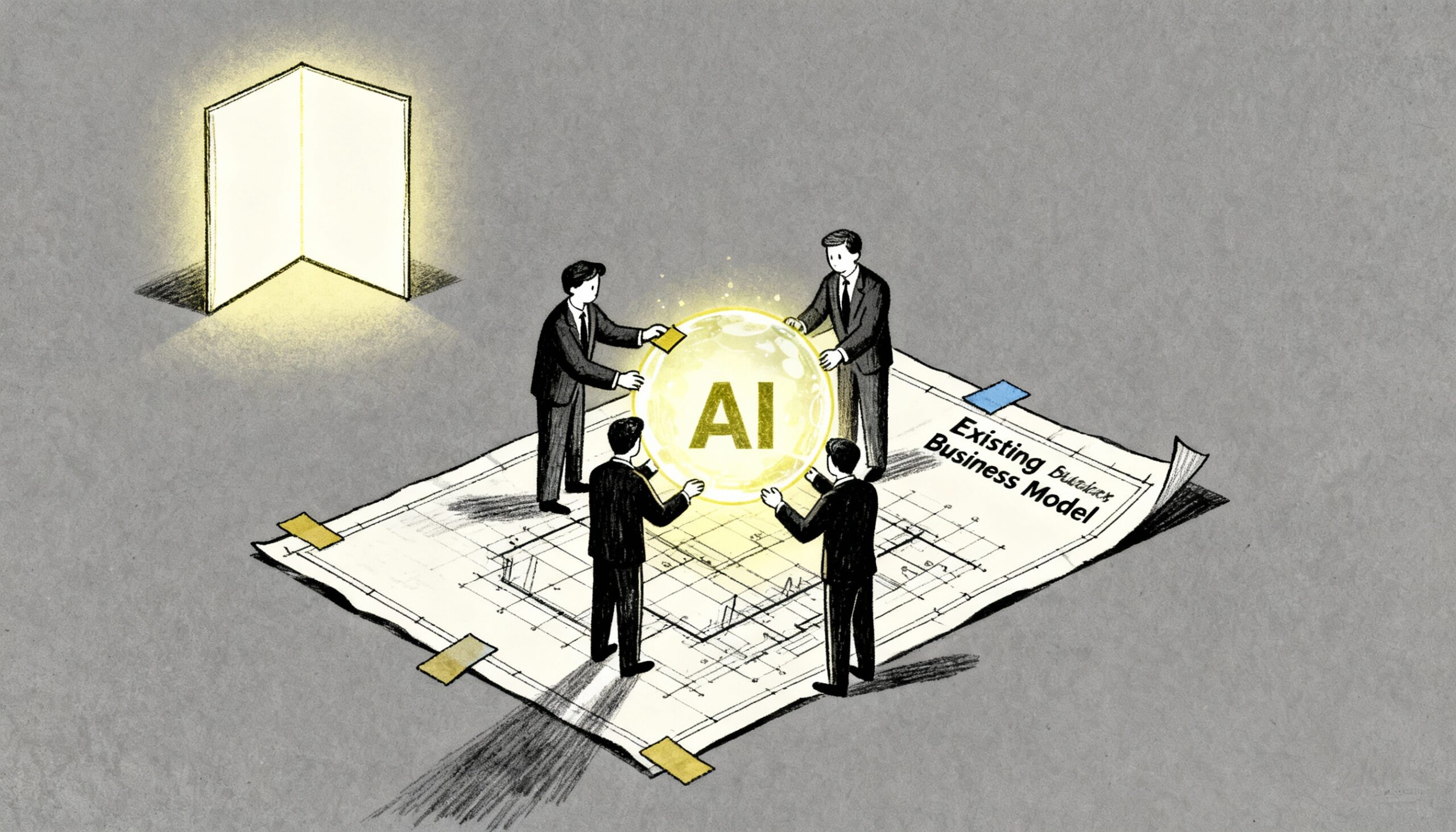
1. Most leaders treat AI as an “add-on” to automate existing processes.
2. True advantage comes from reinvention, not bolt-on adoption: leaders must rethink where value will shift, redeploy core capabilities toward those new profit pools, and invest in the complements: ecosystems, governance, infrastructure.
3. The standout example is Shutterstock, which didn’t try to beat generative AI at making images. Instead, it:
Repositioned itself as a governance engine for trust, authorship, and rights.
Built complements like rights-cleared training data, contributor compensation models, and legal indemnification frameworks.
Source: What Executives Get Wrong About AI (HBR Digital Article)
Top News
1. Baidu’s new multimodal ERNIE 5.0 model reportedly matches GPT-5 and Gemini 2.5 Pro in several aspects.
2. GPT-5.1 is a faster, more efficient, and more capable evolution of GPT-5.
3. ChatGPT is piloting group chats in select regions, letting multiple people collaborate with each other and ChatGPT.
4. Marble is introduced as a powerful multimodal 3D world-generation and editing model.
5. Google introduced Private AI Compute to enable running Gemini models in the cloud, while keeping data private.
Additional Insights
1. From Words to Worlds: Spatial Intelligence is AI’s Next Frontier (Fei-Fei Li)
Fei-Fei Li argues that the next major leap in AI will come from spatial intelligence—the ability for machines to understand, reason about, and generate coherent physical and virtual worlds. While today’s large language models excel with text, they lack grounded knowledge of space, physics, and interaction. Li describes “world models” as the emerging foundation for this capability: generative, multimodal, and interactive systems that can create consistent 3D environments, interpret diverse sensory inputs, and predict how actions change the world. She highlights World Labs’ early progress with Marble, a model that enables creators to build and explore persistent 3D worlds. Spatial intelligence, she argues, will unlock breakthroughs across creativity, robotics, science, healthcare, and education—not to replace humans but to augment our imagination, productivity, and care. This frontier, she writes, is essential for building AI that truly partners with people and enhances human flourishing.
2. Agentic Commerce is the first real test of AI’s power (Board of Innovation)
Agentic commerce marks a major inflection point where AI stops acting as a tool and becomes the underlying infrastructure of how businesses operate and markets function. Instead of optimizing old workflows, autonomous agents now discover, compare, negotiate, and buy on behalf of people—compressing customer journeys, reshaping visibility, and shifting competition from capturing human attention to earning machine inclusion through high-quality, interoperable data. This transition forces companies to unlearn legacy assumptions and redesign their systems, content, governance, and decision-making for a world where AI is a co-actor, redefining how value is created, how consumers are reached, and how organizations grow.
Innovation Radar
1. AI Model Releases and Advancements
Baidu’s new multimodal ERNIE 5.0 model launches as a proprietary system that reportedly matches or beats GPT-5 and Gemini 2.5 Pro in document, chart, and multimodal understanding (VentureBeat). Baidu has open-sourced a highly efficient multimodal MoE model, ERNIE-4.5-VL-28B-A3B-Thinking, which it claims outperforms Google’s Gemini 2.5 Pro and OpenAI’s GPT-5-High on key visual and document benchmarks (VentureBeat).
GPT-5.1 is a faster, more efficient, and more capable evolution of GPT-5, offering adaptive reasoning, improved coding performance, and new developer tools like apply_patch and shell (OpenAI).
Weibo’s new open-source VibeThinker-1.5B model demonstrates that a small, low-cost LLM can outperform vastly larger systems—including DeepSeek-R1—on math and code reasoning tasks (VentureBeat).
Holo2 introduces lightweight, multi-platform computer-use models that deliver state-of-the-art UI localization and strong navigation at significantly lower cost than previous Surfer 2–based agents (H Company).
2. AI Tools and Features
Google’s new File Search Tool for the Gemini API is a fully managed, low-cost RAG system that automates storage, chunking, embedding, vector search, and citation injection to let developers easily ground Gemini models in their own documents for faster, more accurate, and scalable retrieval-augmented applications (Google). Google’s new Private AI Compute lets powerful Gemini cloud models deliver more helpful, personalized AI while keeping all user data securely private and inaccessible to anyone, including Google (Google). NotebookLM’s latest update adds Deep Research for automated, high-quality source gathering and expands support to more file types like Sheets, Drive URLs, images, PDFs, and Word docs (Google). SIMA 2 is a Gemini-powered AI agent that can reason, converse, and learn autonomously to perform complex tasks across diverse 3D virtual worlds (Google).
Samsung’s Vision AI Companion turns the TV into a shared, conversational hub that provides interactive answers, recommendations, and household assistance through natural, multi-agent AI (Samsung).