

Highlights
Top Insights
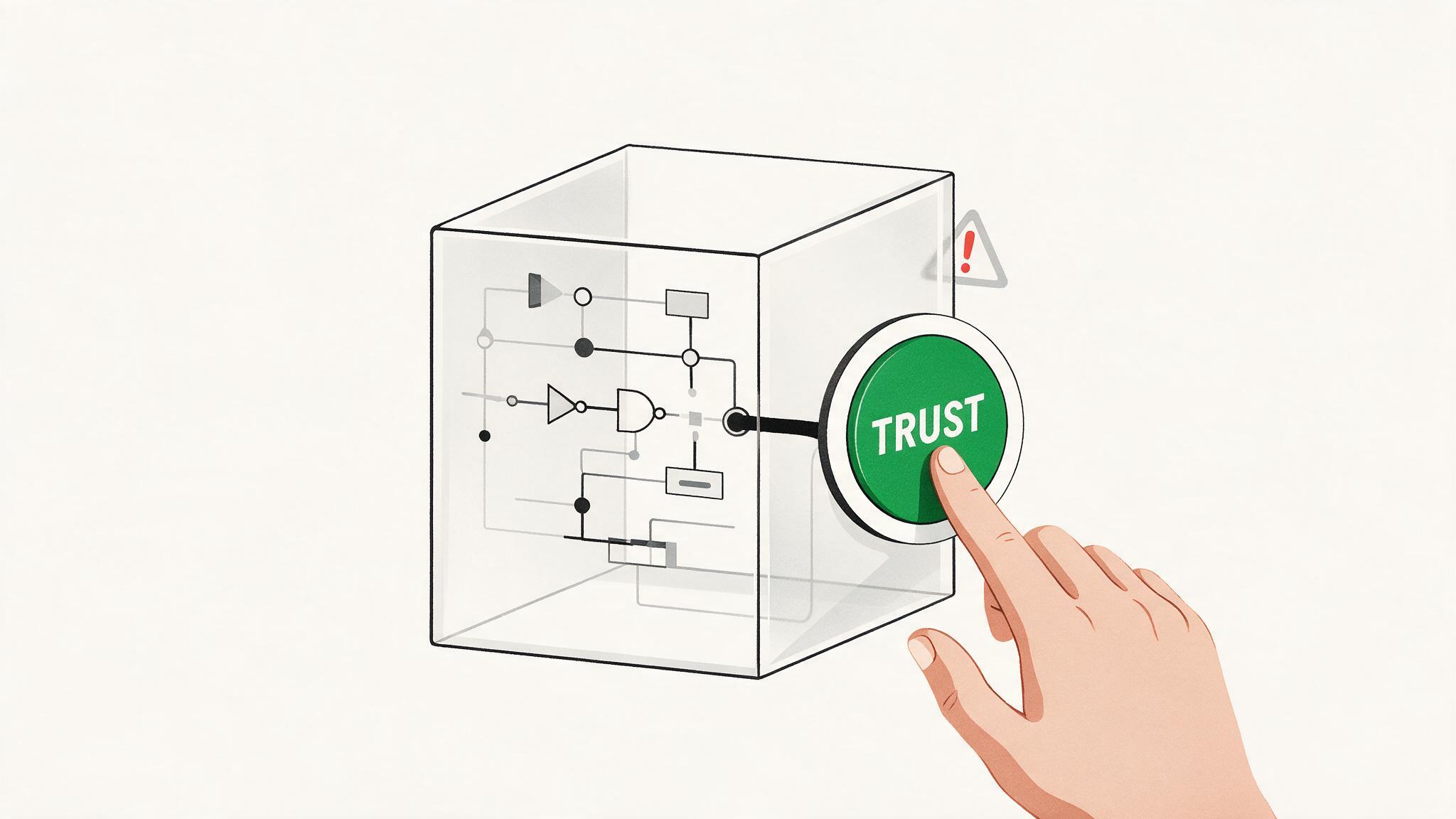
Even accurate AI can produce disappointing business results if its output is presented badly or inserted into the wrong workflow. In an experiment with 150 professional loan specialists, a properly calibrated yes/no AI recommendation produced better and faster decisions than showing workers the full probability score.
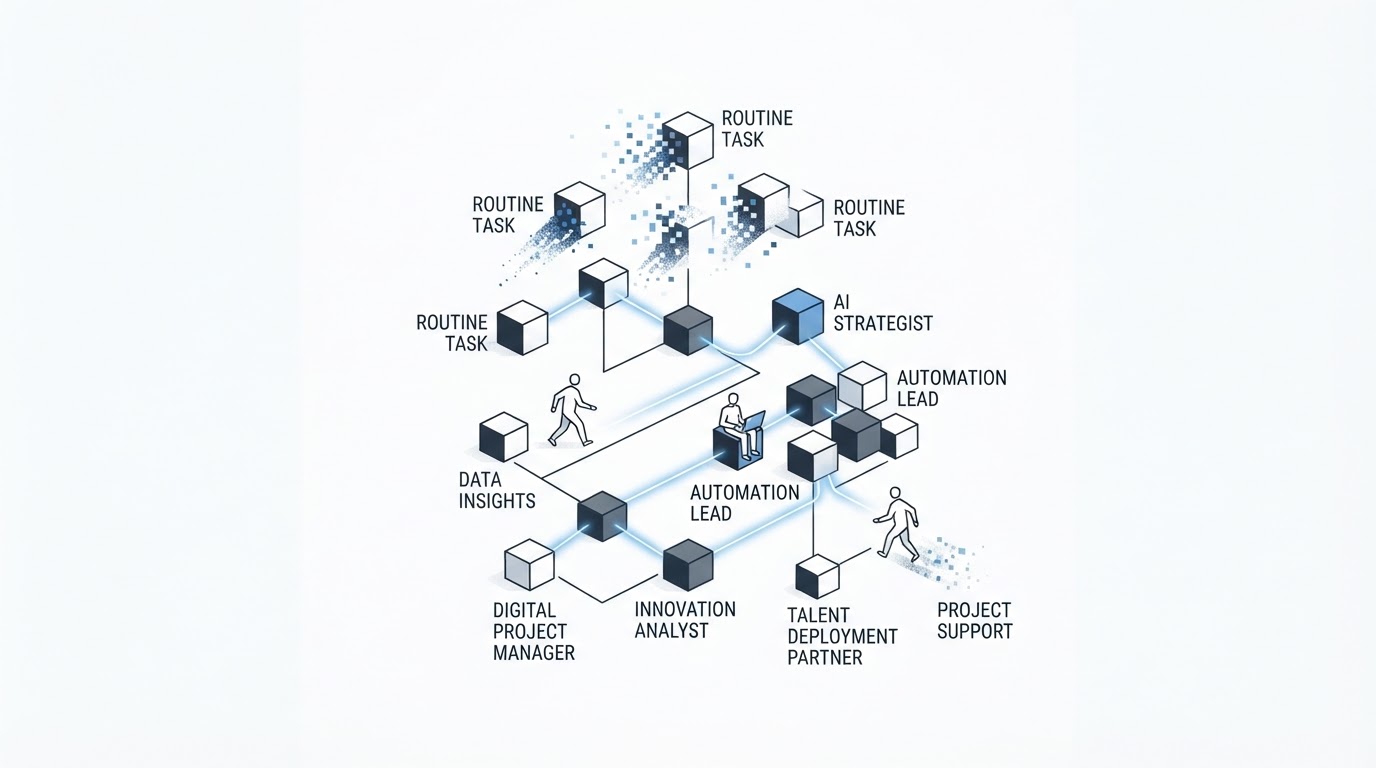
AI changes the bundle of tasks inside jobs, which means organizations need mechanisms for moving people and responsibilities around. But managers may resist releasing talented employees to other teams, lack authority to redesign roles, or simply lack visibility into where AI has changed work.
The organizational winners may not simply be companies adopting AI fastest. They may be companies capable of continually recomposing jobs and redeploying talent as AI absorbs individual tasks.
Source: What 3 new MIT Sloan professors have learned about AI — and what they want to know (MIT Sloan School of Management)
Top News
1. Google released Gemini 3.8 Live and Gemini 3.8 Live Extended Thinking for near-real-time voice interaction, visual grounding.
2. Alibaba launched Qwen3.8-Omni-Flash, a one-million-token model that natively processes text, images, audio, and video.
3.Salesforce and NVIDIA announced Koa, a Nemotron-based reasoning model post-trained for multi-step CRM workflows in Agentforce. Salesforce introduced job-ready agents across major business functions and longer-horizon Agentforce capabilities.
4. Anthropic launched Claude Code Projects in beta to coordinate persistent parallel cloud coding sessions.
5.Google Labs expanded CC into a shared household agent that can organize calendars and tasks, process selected information, and take permissioned actions for up to six members.
6. OpenAI began testing Sponsored Agents in ChatGPT Ads and added prompt-based ad creation.
7. Salesforce unveiled AIforce, a live interface layer that brings governed Salesforce data, workflows, and actions into third-party or custom AI experiences.
Additional Insights
1. Research: Gen AI Is Collapsing Creative Processes (HBR)
A yearlong study of senior creatives in television and media finds that generative AI can dramatically accelerate brainstorming and visualization, but it can also collapse the traditional creative process by jumping directly from an idea to a polished-looking output. That compression removes intermediate stages—sketching, experimentation, discussion, iteration, and technical reality-checking—where teams historically developed ideas and applied specialized expertise. The result can be convincing concepts that obscure practical flaws; the article illustrates this with an AI-generated advertising image whose physically impossible lighting was approved by a client and then handed to a production team expected to reproduce it in reality. The broader lesson is that organizations should treat gen AI as a tool for expanding and exploring ideas rather than allowing its polished outputs to prematurely settle creative decisions: preserving human critique, iteration, and domain expertise remains essential even when AI makes producing compelling concepts much faster.
2. Cutting the Coordination Tax: How Agentic AI Can Reshape Workflows (McKinsey)
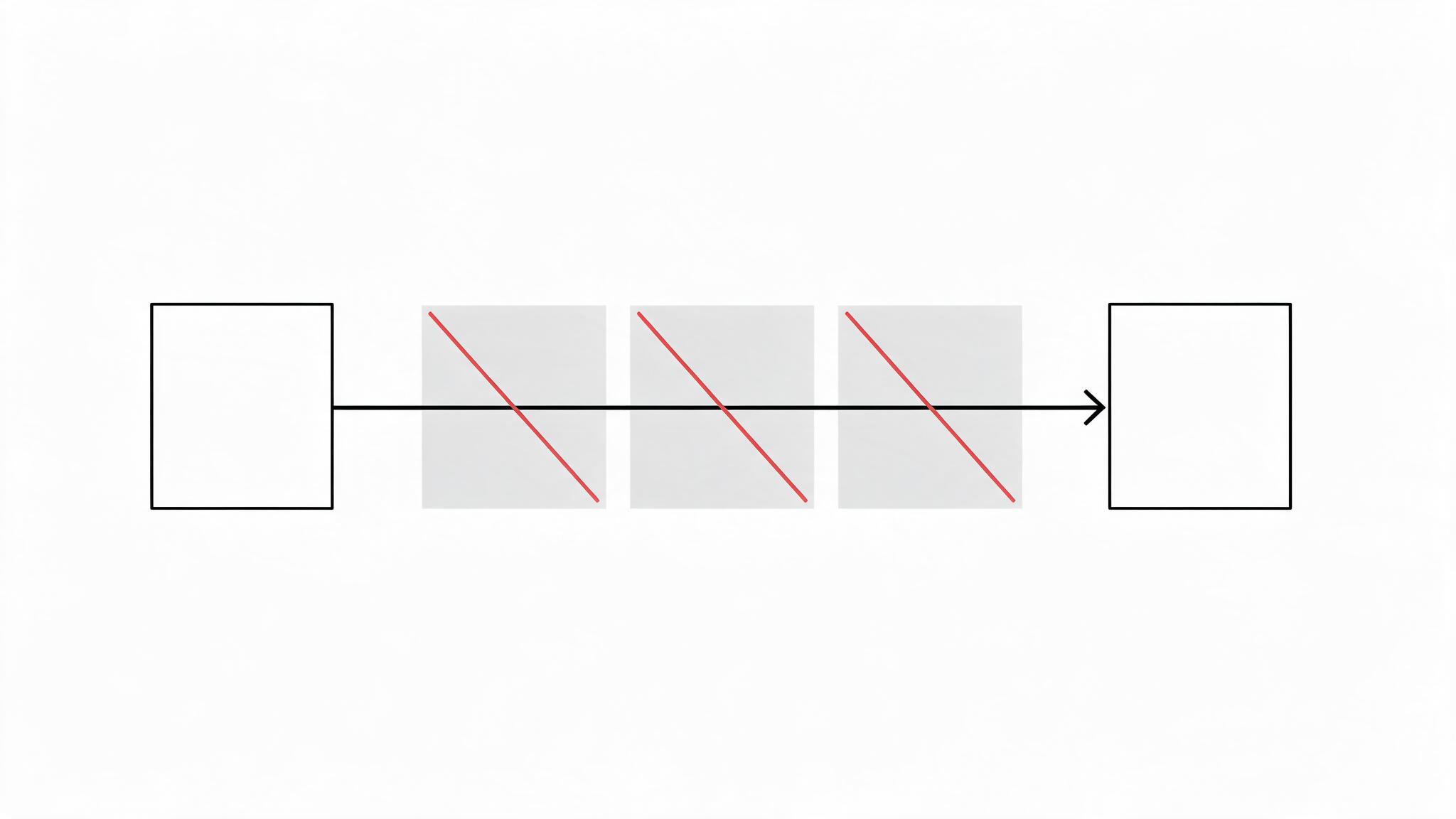
The biggest enterprise opportunity for agentic AI is not making individual tasks faster, but eliminating the hidden “coordination tax” at the handoffs between teams, functions, and systems—where people spend substantial time verifying information, reconciling conflicting constraints, securing approvals, routing work, and waiting. Although 80% of surveyed respondents say AI has improved individual productivity, only 37% report any EBIT impact, suggesting task-level copilots alone often fail to translate into enterprise value. McKinsey estimates coordination consumes roughly 35–60% of work time in knowledge-intensive organizations; in one industrial workflow, actual processing took only 12–24 hours while handoffs added 9–18 days, creating an estimated $140–$240 million annual cost through working capital, underused capacity, and missed revenue. Agentic AI can attack these interfaces by autonomously verifying, reconciling, and routing routine work while escalating genuine exceptions to humans; one manufacturer’s redesign shortened planning from 30 days to three and made 80% of planning touchless.
3. How AI Creates a Capability Mirage (Sloan Management Review)
Generative AI can create a “capability mirage”: employees and organizations may appear increasingly competent because AI produces polished work, while the underlying human skills, judgment, and critical thinking needed to produce and evaluate that work quietly deteriorate. This is particularly dangerous because AI breaks the traditional connection between quality of output and capability of the person producing it; less-experienced workers may neither recognize AI errors nor realize their own skills are weakening, while managers lose visibility into who actually knows what. That opacity can also undermine team trust and accountability, especially when employees conceal how much AI contributed to their work.
4. Reimagining Research Papers as Interactive and Reliable AI Agents (Nature)
This Nature paper introduces Paper2Agent, a framework that automatically converts scientific papers, and their associated code, data, supplementary materials, and workflows, into interactive AI agents that researchers can query in natural language. Instead of requiring scientists to decipher repositories, install dependencies, and manually reproduce analyses, Paper2Agent builds standardized Model Context Protocol (MCP) servers containing executable tools, resources, and workflow instructions, then automatically tests those tools against the original research outputs to improve reliability and reproducibility.
5. When AI Disruption Never Ends (Sloan Management Review)
Rory McDonald and Will Drover argue that AI is creating “steady-state disruption”: unlike earlier technological shifts that eventually stabilized, AI capabilities are advancing in overlapping, accelerating waves, meaning organizations cannot simply sprint through a transformation and wait for a new normal. Treating every model release as another urgent change initiative risks chronic overload, burnout, and “change fatigue,” so leaders need to optimize for organizational endurance as well as speed. The authors recommend shifting the burden of continuous adaptation away from individual employees and into organizational design through three practices: establish a permanent AI function responsible for tracking, translating, and prioritizing developments rather than relying on temporary committees; operate on two cadences, allowing fast-moving teams to experiment and ship AI capabilities frequently while slower teams focus on durable infrastructure and longer-term investments; and embed continuous learning directly into everyday work rather than relying on occasional training programs.
6.How AI Enters the Real World (36Kr)
AI entering the physical world requires far more than stronger models: it demands an integrated system spanning hardware, data, engineering, operations, product design, customer workflows, and organizational capability. Drawing on Neolix’s growth from roughly 10,000 to more than 20,000 autonomous vehicles, Zhao You says commercialization shifts the optimization target from impressive technical performance to lower per-task operating costs, reliability, safety, SLA fulfillment, and ultimately positive unit economics; at scale, long-tail cases become routine and organizational execution becomes a major differentiator. Moqi Intelligence’s Lin Tianwei sees autonomous driving as an important template for embodied AI: the difficult “last 1%” is sustained operation without human intervention, enabled by measurable reliability standards and fast data-feedback loops. Yet robotics is harder because hardware and tasks are less standardized and robots must physically manipulate diverse, deformable, or otherwise unpredictable objects.
Innovation Radar



Leave a Reply