Cutting-Edge Insights into Innovation

Productivity Gains Are Not A Strategy

Highlights


Top Insights
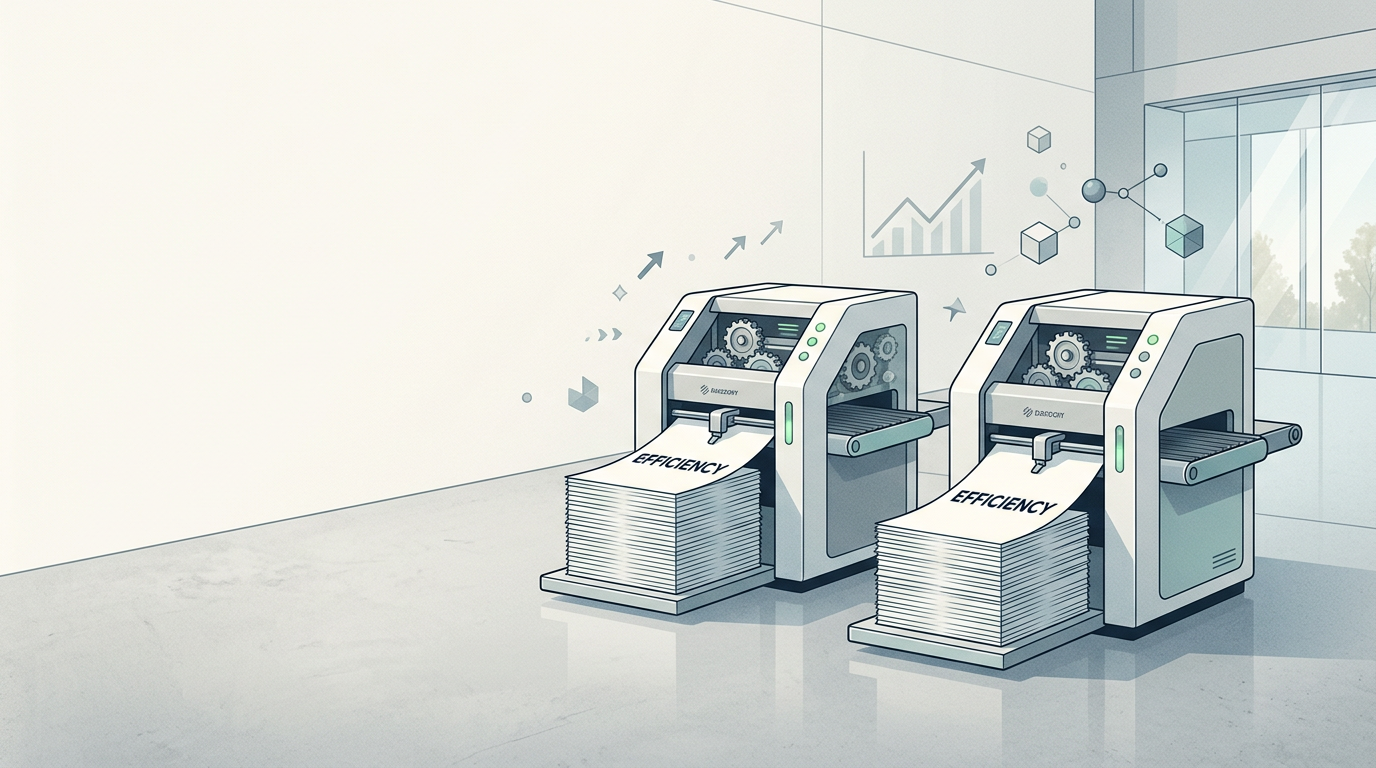
  1. Most companies are using similar large language models to automate work or improve efficiency. That creates short-term gains, but not durable advantage.
  2. Economies of scale is a major AI moat. Work that used to require variable labor, claims handling, customer service, underwriting, actuarial analysis, marketing operations, can increasingly be converted into reusable infrastructure: data pipelines, models, workflows, governance, and feedback loops.
  3. As AI reduces the cost of digital intelligence, scarce physical assets—logistics networks, field equipment, power access, regulated infrastructure, distribution footprints, and installed bases—become stronger sources of differentiation when paired with AI.

Source: From AI table stakes to AI advantage: Building competitive moats (McKinsey)

Top News

1. Thinking Machines Lab previewed Interaction Models that process audio, video, and text as continuous, time-aware streams.
2. Google launched Gemini Intelligence for Android with multi-step app automation.
3. Amazon launched Alexa for Shopping across its app, website, and Echo Show.
4. OpenAI launched ChatGPT for Excel and Google Sheets globally.
5. Anthropic launched Claude for Small Business with connectors and ready-to-run workflows.

Additional Insights

1. It’s Hard to Use AI as a Team. These 3 Practices Can Help. (HBR)
The article argues that using generative AI effectively in team meetings requires deliberate “team-AI chemistry,” because teams often default to treating AI like an individual chat tool, give it only a static role, and let it steer the discussion. Based on a five-month experiment with 60 managers across 12 companies, the authors recommend three practices: engage AI as a team by introducing members’ roles and expertise; use AI’s flexibility by assigning it shifting roles such as critic, customer, stakeholder, or storyteller; and maintain collective ownership by pausing to debate prompts, evaluate outputs, and keep the team—not the AI—in control. When teams applied these practices, engagement rose, collaboration improved, and participants reported higher-quality outcomes, showing that AI can strengthen teamwork only when integrated intentionally into meeting agendas, prompts, and post-session reviews.

2. The agentic enterprise: Where should humans stay in the loop? (Board of Innovation)
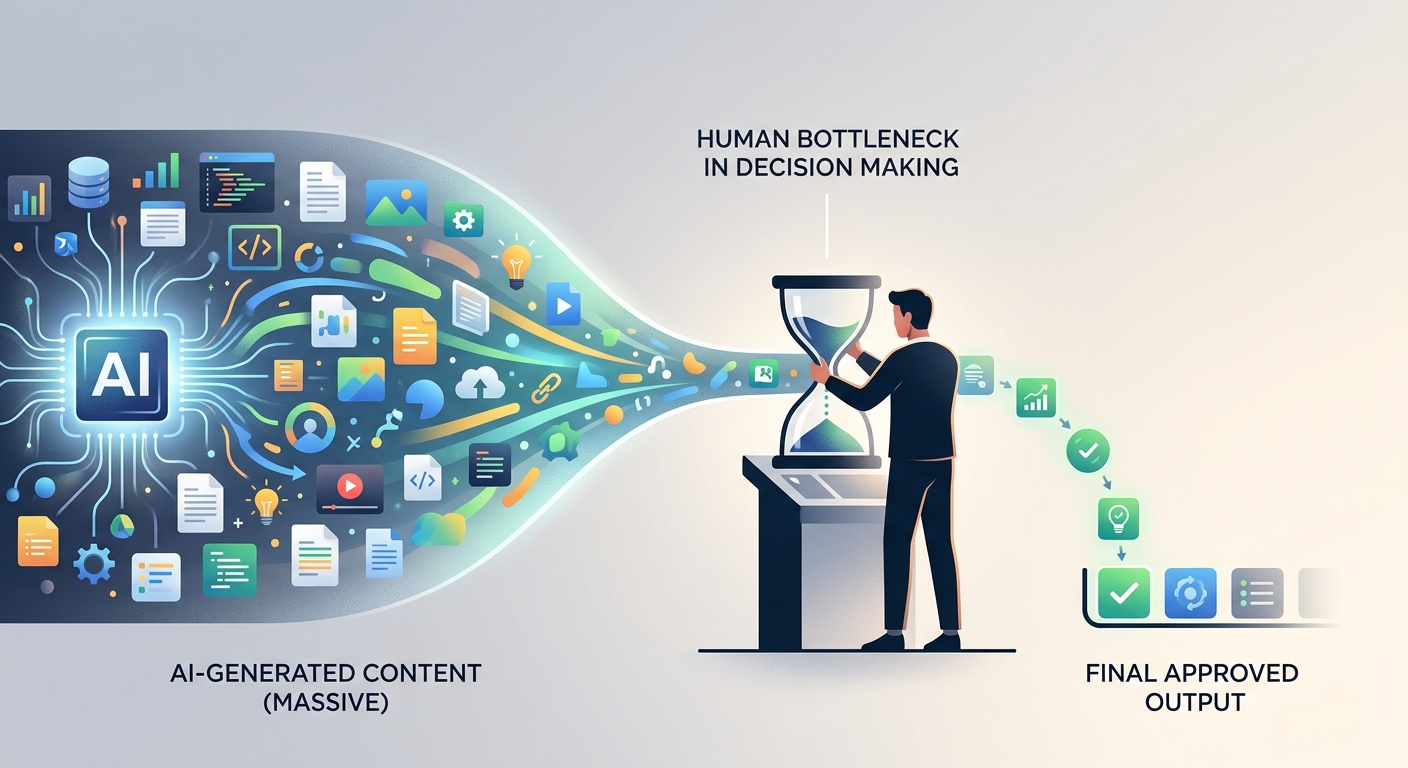
The article argues that “human-in-the-loop” governance is often applied reflexively to AI workflows, creating bottlenecks that preserve the very coordination overhead agentic AI is meant to eliminate. Its key insight is that human review should not be the default; it should be reserved for moments where human judgment materially changes outcomes, defines organizational values, handles empathy or nuance, or prevents expensive and irreversible mistakes. Routine approvals with very high pass rates are framed as “confirmation theater,” especially when they slow work without improving quality. The article recommends auditing AI-enabled workflows by asking whether reviewers meaningfully change outputs, what the real cost of mistakes is, and whether review is still teaching the system or merely delaying it. The broader message is that competitive advantage will come from deliberately designing checkpoints around risk, reversibility, and expertise rather than placing humans everywhere out of fear.

3. The CEO’s Guide to Physical AI (BCG)
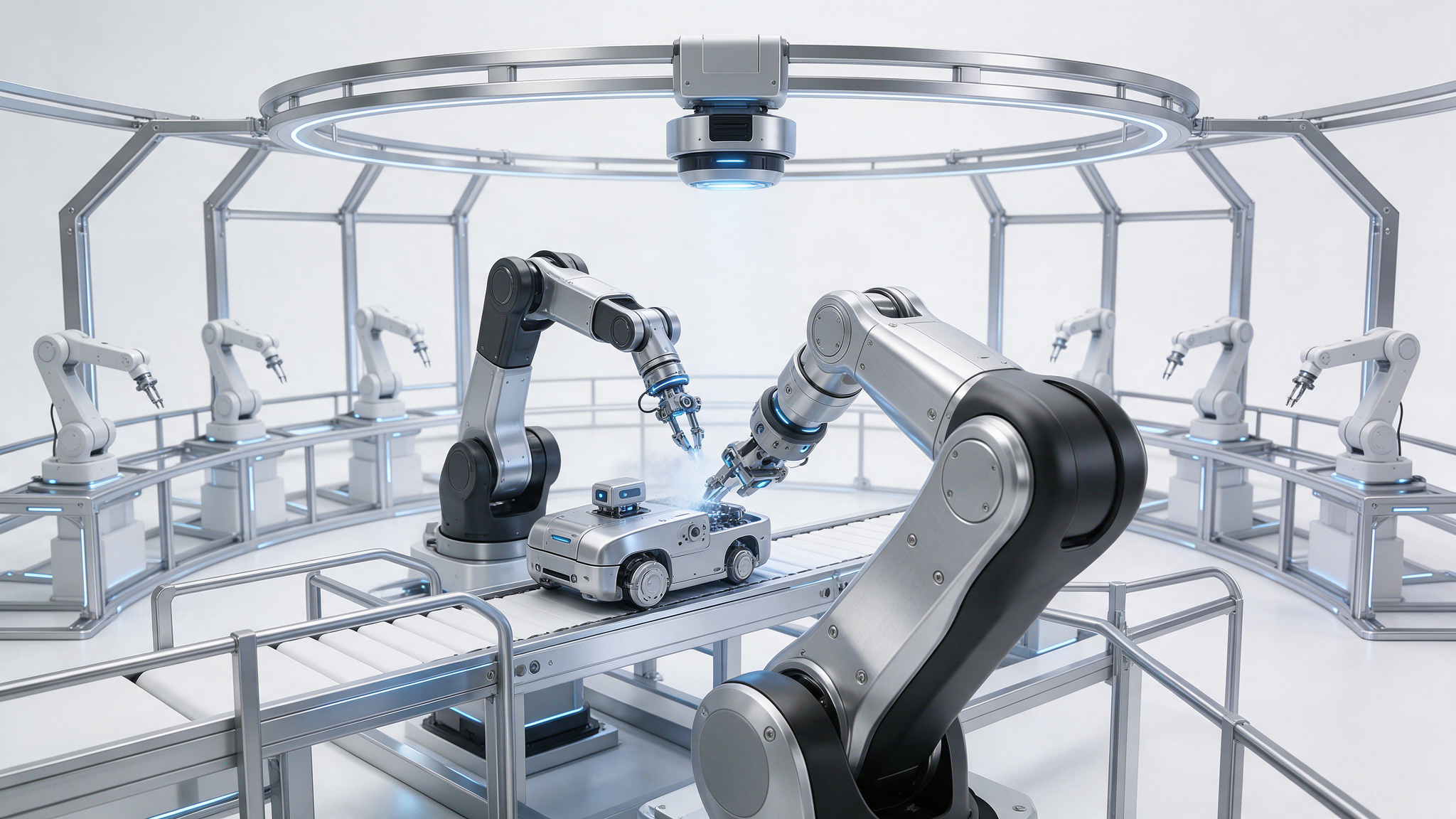
Physical AI is making robotics far more practical for CEOs by expanding automation into variable tasks once considered too costly, reducing robot training engineering time by about 70%, increasing automatable work scope by roughly 50%, and shortening payback periods from five to seven years to one to three years. The article argues that leaders should act now by reassessing operational inefficiencies, redesigning workflows around partial automation, planning the right tech architecture before engaging vendors, preparing workers for roles in supervising and integrating robots, and putting strong safety, cybersecurity, and vendor governance in place. The main message is that companies that thoughtfully deploy physical AI today can build efficiency, scale, and know-how that slower competitors may struggle to match.


Innovation Radar

 
1. AI Model Releases and Advancements

Thinking Machines Lab previewed Interaction Models that process audio, video, and text as continuous, time-aware streams, pointing toward assistants that can support live service desks, coaching, training, operations, and frontline support more naturally (Thinking Machines Lab).

Oracle said NVIDIA Nemotron 3 Nano Omni is available on OCI Enterprise AI as a fully open-source multimodal model that can reason across video, audio, images, and text within a managed enterprise deployment environment (Oracle).

Fastino Labs open-sourced GLiGuard, a 0.3B safety and moderation model designed to deliver competitive guardrail performance with much lower latency and cost than larger moderation models (arXiv).

Nous Research published Token-Superposition Training, a pretraining method that reports up to a 2.5x reduction in total pretraining time at 10B scale without changing the model architecture used at inference (arXiv).

NVIDIA’s Star Elastic release shows one checkpoint containing 30B, 23B, and 12B reasoning variants with zero-shot slicing, enabling more flexible cost-and-latency tradeoffs for production reasoning workloads (Hugging Face).

Mozilla reported that Claude Mythos Preview helped identify hundreds of Firefox security bugs, showing a production-grade example of frontier-model gains translating into measurable cybersecurity hardening (Mozilla).

2. AI Tools and Features

Google launched Gemini Intelligence for Android with multi-step app automation, web-content summarization and comparison, improved autofill, spoken-thought drafting through Rambler, and natural-language widget generation for recent Samsung and Pixel devices (Google).

Google announced Gemini in Chrome on Android with article summarization, question answering, image customization, and an auto-browse feature that can handle errands such as booking parking or updating orders while requiring confirmation for sensitive steps (Google).

Amazon launched Alexa for Shopping across its app, website, and Echo Show, combining conversational search, product comparisons, year-long price history, scheduled actions, cart automation, and web-wide buying assistance for U.S. customers (Amazon).

Anthropic introduced financial-services agent templates for tasks including pitch building, earnings review, valuation review, general-ledger reconciliation, month-end close, statement auditing, and KYC screening across familiar office artifacts (Anthropic).

OpenAI added Codex preview access inside the ChatGPT mobile app, allowing users to supervise live project context, approvals, screenshots, terminal output, diffs, and test results from iOS or Android (OpenAI).

OpenAI launched ChatGPT for Excel and Google Sheets globally as a sidebar experience for building, updating, and understanding spreadsheets in place across trackers, budgets, formulas, scenarios, and multi-tab files (OpenAI).

Anthropic launched Claude for Small Business with connectors and ready-to-run workflows for tools such as QuickBooks, PayPal, HubSpot, Canva, DocuSign, Google Workspace, and Microsoft 365 (Anthropic).

SAP introduced the Autonomous Enterprise, combining SAP Business AI Platform, an autonomous suite for core operations, SAP Knowledge Graph, and Joule Studio to ground agents in business entities, processes, and governance (SAP).

Meta launched Incognito Chat with Meta AI on WhatsApp and the Meta AI app, saying conversations are processed in a secure environment that even Meta cannot access and that chats disappear by default (Meta).

3. AI Trends

Ramp’s AI Index reported that Anthropic overtook OpenAI in U.S. business adoption among Ramp customers, suggesting business buyers are increasingly favoring tools that fit coding and workflow-automation needs (Ramp).

Alibaba opened the full Taobao and Tmall catalog of more than 4 billion products to the Qwen app, adding AI-agent skills for order management, logistics, and after-sales service as conversational commerce expands (Alibaba).

Nature reported that rising AI costs in scientific labs are prompting sharper scrutiny of ROI, usage limits, price hikes, and reliability in AI deployments (Nature).

Salesforce’s Summer 2026 release emphasized multi-agent orchestration, Slack-first workflows, real-time data activation, AI-powered customer engagement, and more than 50 specialized IT-service agents (Salesforce).

Google DeepMind outlined an AI-enabled pointer concept that uses context, pointing, and speech so users can act on content directly across apps and webpages instead of copying information into a separate AI window (Google DeepMind).

4. AI for Science

Google DeepMind published an AlphaEvolve impact update describing how its Gemini-powered coding agent is being applied to advanced algorithms, computational infrastructure, and broader optimization problems (Google DeepMind).

Nature highlighted researchers’ use of AI in the hunt for new antibiotics, emphasizing AI’s role in narrowing large search spaces within antimicrobial-resistance research (Nature).

Nature reported a sharp rise in fabricated citations in biomedical papers since 2023, underscoring the need for stronger verification and provenance controls in AI-assisted scientific writing (Nature).

5. Other

Nature reported that an antiviral pill has been shown for the first time to prevent COVID-19 after household exposure, a result that could help protect vulnerable populations and improve workforce-continuity planning (Nature).

Nature spotlighted a large city-level map of fossil-fuel emissions and green-policy outcomes, providing richer location intelligence for sustainability reporting, logistics, facility planning, and city partnerships (Nature).

A Nature paper described ligand manipulation to reduce interfacial losses in perovskite solar cells, addressing a key barrier to higher-performance photovoltaic materials (Nature).

Leave a Reply

Your email address will not be published. Required fields are marked *