
Cutting-Edge Insights into Innovation

Use AI to Grow

Highlights


Top Insights

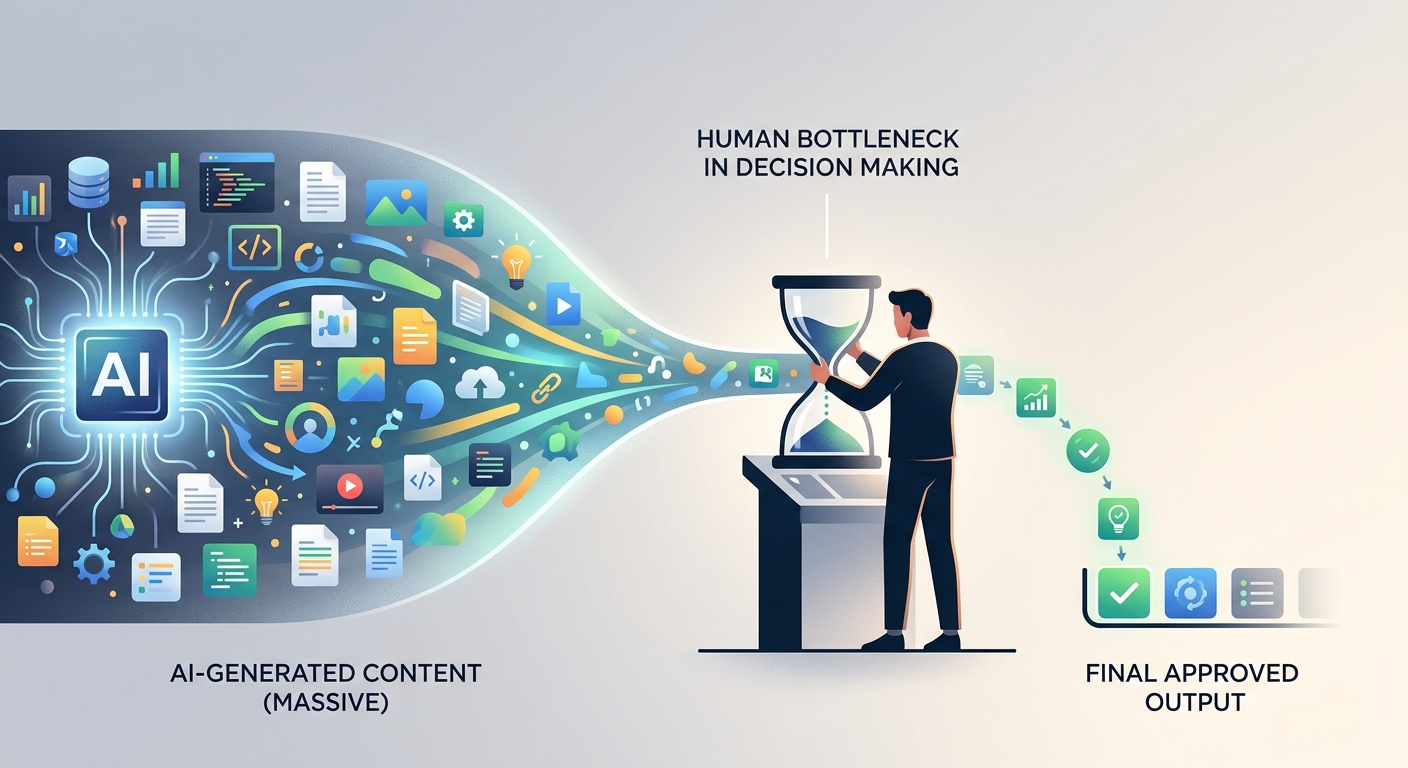
Most executives focus AI investments on reducing costs, improving productivity, and automating work. While those benefits are real, they have natural limits. Revenue growth, by contrast, has no ceiling and is often valued much more highly by investors.

In some experiments in wealth management, AI generated and tested marketing concepts, leading to significantly higher ad performance. The reported field results showed roughly a threefold increase in marketing effectiveness.

AI can make sophisticated services available to customers who previously could not afford them. Examples include financial advice, healthcare, education, and legal services. Many firms are currently using AI to compete for the same customers. The larger opportunity may be using AI to serve entirely new customer segments.

Source: Companies Are Using AI for Efficiency. They Should Use It to Grow. (HBR)

Top News

1. NVIDIA launched Cosmos 3, an open world foundation model for physical AI that combines vision reasoning, world generation, and action prediction.
2. Mistral launched Vibe, a unified agent with Work, Code, and Chat modes plus skills, workflows, connectors, and coding surfaces.
3. MiniMax released M3, the first open-weight model to combine frontier coding ability, a 1-million-token context window, and native multimodality.
4. OpenAI began rolling out Dreaming, a new ChatGPT memory-synthesis system designed to improve freshness, continuity, and relevance. OpenAI added Windows Computer Use to Codex, letting eligible users have Codex see, click, type, and be steered remotely while working on local projects.
5. Microsoft announced Microsoft IQ for enterprise agent context and previewed Scout, a personal work agent for proactive meeting and scheduling tasks.
6. Zoom has launched an AI Productivity Suite (Canvas, Slides, Sheets, and Paper).

Additional Insights

1. How AI is Transforming Scientific Discovery While Keeping Humans at the Center (HAI)

At Stanford HAI’s 2026 AI+Science conference, researchers argued that AI is transforming scientific discovery much as the telescope and microscope once did, enabling scientists to uncover patterns, generate hypotheses, design experiments, and accelerate breakthroughs across fields from climate science and biology to neuroscience and mathematics. Examples included AI climate models running thousands of times faster than traditional simulations, AI-designed genome-editing systems and antibacterial viruses, brain “digital twins,” and autonomous research agents that successfully created improved COVID-targeting antibodies. Despite these advances, speakers emphasized that human scientists remain essential for deciding which questions matter, interpreting results, validating findings, and making creative leaps beyond predictable patterns. The conference also highlighted challenges ahead, including a peer-review system strained by a potential flood of AI-generated research and concerns that overreliance on AI could erode scientific skills and training. The consensus was that while AI will dramatically expand what science can achieve, the future of discovery depends on preserving human judgment, education, and stewardship at the core of the scientific process.

2. The 5 faces of human readiness for AI adoption – and how to work with them (WEF)
The article argues that the biggest barrier to successful AI adoption is not the technology itself but the gap between executive enthusiasm and employee concerns. It identifies five employee “AI readiness” archetypes—enthusiasts, curious users, cautious users, skeptics, and those opposed to AI—each requiring different engagement strategies. The authors find that many organizations experience “frontstage compliance” (public acceptance) alongside “backstage resistance” (private skepticism and avoidance), which limits AI’s real-world impact. To improve adoption, they recommend prioritizing cultural change and transparency over purely technical deployment, designing “pro-worker” AI that augments rather than replaces human work, and directly addressing employee fears about job security, ethics, human connection, and cognitive skill erosion. The central message is that AI initiatives succeed when organizations treat workers as emotional and social participants in change, using AI to enhance human capabilities rather than simply automate tasks.
 

 4. Your AI Budget Is Growing. Your Returns Aren’t. Here’s Why. (Bain)
Many companies continue increasing AI investments despite repeatedly missing expected returns because the core challenge is organizational rather than technological. Bain & Company’s survey of 951 firms found that while many targeted double-digit cost reductions, nearly 40% achieved less than 10% savings, yet 90% still plan to raise AI spending. The authors identify three main causes: business cases assume levels of AI autonomy that rarely exist in practice, companies often fund new AI initiatives using savings that never fully materialized from prior automation efforts, and persistent data access and integration problems remain the biggest obstacle to scaling AI. The firms that outperform are not those with better technology, but those that treat data governance, workflow redesign, accountability, and operating-model transformation as executive priorities. The article recommends redesigning processes before automating them, validating AI investment assumptions against actual results, establishing clear governance ownership, using AI to improve data workflows rather than waiting for perfect data infrastructure, adapting employee roles to work alongside AI agents, and measuring enterprise-level outcomes rather than isolated program metrics. Overall, the authors conclude that sustainable AI value comes from organizational change and disciplined execution, not simply larger technology budgets.


5. Why companies should use AI to influence entire workflows, not just complete simple tasks (WEF)

The article argues that companies will get far more value from AI when they use it to transform entire business workflows rather than applying it only to isolated tasks. While large language models can generate content, analyze information, and improve productivity, their true business impact comes when they operate within AI-powered platforms that connect outputs to trusted organizational data, governance controls, and business processes. The author emphasizes that trust is the critical requirement for scaling AI: if AI relies on fragmented, low-quality, or context-free data, it simply produces inaccurate results faster. To address this, organizations should build a strong data foundation and use integrated platforms that (1) provide AI with business context, (2) reduce manual work and process friction, (3) embed governance, transparency, and auditability directly into workflows, and (4) protect sensitive customer and employee information by reducing reliance on unapproved “shadow AI” tools. Governance, Risk, and Compliance (GRC) functions are highlighted as a proving ground because they require traceable, defensible outputs tied to source data. The central conclusion is that competitive advantage will not come from AI’s speed alone, but from an organization’s ability to keep AI-generated outputs connected to trusted data, governance standards, and operational workflows, enabling confident and accountable decision-making.


Innovation Radar

 
1. AI Model Releases and Advancements

Microsoft introduced seven in-house MAI models at Build 2026, led by MAI-Thinking-1 for reasoning and coding and supported by new image, speech, transcription, and code models. (Microsoft)

NVIDIA launched Cosmos 3, an open world foundation model for physical AI that combines vision reasoning, world generation, and action prediction. (NVIDIA)

NVIDIA introduced Alpamayo 2 Super, a 32-billion-parameter open reasoning vision-language-action model for level 4 robotaxi development. (NVIDIA)

Mistral announced Mistral for Industrial Engineering, an AI stack that combines physics models, engineering expertise, and robotics for industrial operations. (Mistral AI)

OpenAI updated GPT-5.5 Instant in ChatGPT and the API to improve readability, pacing, and practical-help quality while moving writing and coding away from canvas. (OpenAI Help Center)

MiniMax released M3, the first open-weight model to combine frontier coding ability, a 1-million-token context window, and native multimodality, topping the open-weight SWE-Bench Pro leaderboard at 59%. (Venture Beat)

2. AI Tools and Features

OpenAI began rolling out Dreaming, a new ChatGPT memory-synthesis system designed to improve freshness, continuity, and relevance. (OpenAI)

OpenAI added Windows Computer Use to Codex, letting eligible users have Codex see, click, type, and be steered remotely while working on local projects. (OpenAI Help Center)

ChatGPT added live job search and resume formatting features that surface roles and help tailor downloadable resumes. (OpenAI Help Center)

Meta launched Meta Business Agent and a Business Agent Platform for AI-powered customer interactions across WhatsApp, Messenger, and Instagram. (Meta)

Mistral released Search Toolkit, an open-source framework for production AI search pipelines spanning ingestion, retrieval, and evaluation. (Mistral AI)

Mistral launched Vibe, a unified agent with Work, Code, and Chat modes plus skills, workflows, connectors, and coding surfaces. (Mistral Docs)

Google Labs introduced Dreambeans, an experimental app that uses selected Google data to create finite personalized daily story collections. (Google)

Microsoft announced Microsoft IQ for enterprise agent context and previewed Scout, a personal work agent for proactive meeting and scheduling tasks. (Microsoft)

Zoom has launched an AI Productivity Suite (Canvas, Slides, Sheets, and Paper) that uses context from meetings, chats, and calls to automatically generate and maintain deliverables like proposals, reports, spreadsheets, and presentations, aiming to help teams move directly from conversations to completed work without rebuilding context across multiple tools (Zoom).

NVIDIA unveiled the RTX Spark — a 1-petaflop AI superchip co-designed with MediaTek for Windows PCs — enabling AI agents to run locally on laptops rather than relying on the cloud, with early devices from Microsoft and partners launching later in 2026. (NVIDIA Newsroom)

3. AI Trends

OpenAI published a Frontier Governance Framework covering safety, security, risk reporting, incident response, and alignment with emerging AI laws. (OpenAI)

SAFE launched AI Security Posture Management to monitor enterprise cyber risk and data exposure across major AI platforms. (PR Newswire)

AWS published guidance on securing multi-tenant AI agents with Bedrock AgentCore resource-based policies for SaaS providers. (AWS Security Blog)

South China Morning Post reported that Alibaba, Tencent, and peers are pivoting from chatbots toward embodied AI for robotics and physical-world systems. (South China Morning Post)

PNAS Nexus argued that AI, high-performance computing, and automated labs are creating platform science that can accelerate discovery while fragmenting cooperation. (PNAS Nexus)

4. AI for science

MIT and Harvard researchers showed that better inference and verification can help smaller AI agents ask better questions and outperform larger models in an uncertainty task. (MIT News)

OpenAI published a biodefense action plan for using advanced biology AI to improve threat detection, countermeasure development, and pandemic preparedness. (OpenAI)

A Materials Today Electronics review examined AI-driven prediction and manufacturability-aware design for electronic materials and devices. (Materials Today Electronics)

A Current Opinion in Chemical Engineering perspective mapped how AI can accelerate battery materials discovery, automated testing, lifetime estimation, and recycling. (Current Opinion in Chemical Engineering)

Researchers demonstrated an autonomous AI and robotics workflow that can move from target polymer properties to candidate recipes with fewer experiments. (Tech Briefs)

5. Others

Microsoft unveiled Majorana 2, a redesigned topological quantum chip, and said it now expects a scalable quantum computer by 2029. (Microsoft)

Atom Computing announced a full demonstration of quantum error correction using a toric code as part of neutral-atom quantum progress. (PR Newswire)

Xcimer Energy started operations for Phoenix, described as the world’s largest privately owned laser system and a prototype for industrial-scale laser fusion. (Xcimer Energy)

Solidion Technology announced a patented graphene-enabled extreme-climate battery design for space, lunar, and other harsh-environment applications. (PR Newswire)

Leave a Reply

Your email address will not be published. Required fields are marked *