
Highlights
Top Insights
1. Most companies do not extract real value at scale from AI.
2. Virtually absent from discussion in 2024, agentic AI already accounts for 17% of total AI value in 2025 and is projected to nearly double to 29% by 2028.
3. About 70% of AI’s potential value comes from sales, marketing, supply chain, pricing, and manufacturing.
4. AI isn’t just about cost savings: leaders are inventing new businesses. One consumer company deployed an AI-powered virtual beauty assistant across 20 markets, expecting $100M in new revenue.
Source: The Widening AI Value Gap (BCG)
Top News
1. DeepSeek has released V3.1-Terminus with stronger tool-use performance.
2. The new Claude Sonnet 4.5 is Anthropic’s most advanced and aligned AI model yet.
3. OpenAI has released Sora 2, a more physically accurate and controllable video-audio generation model.
4. ChatGPT now enables U.S. users to buy products directly in chat through Instant Checkout.
5. Microsoft announced “vibe working” in Microsoft 365 Copilot, introducing Agent Mode in Word and Excel.
Additional Insights
1. Real AI Agents and Real Work (One Useful Thing)
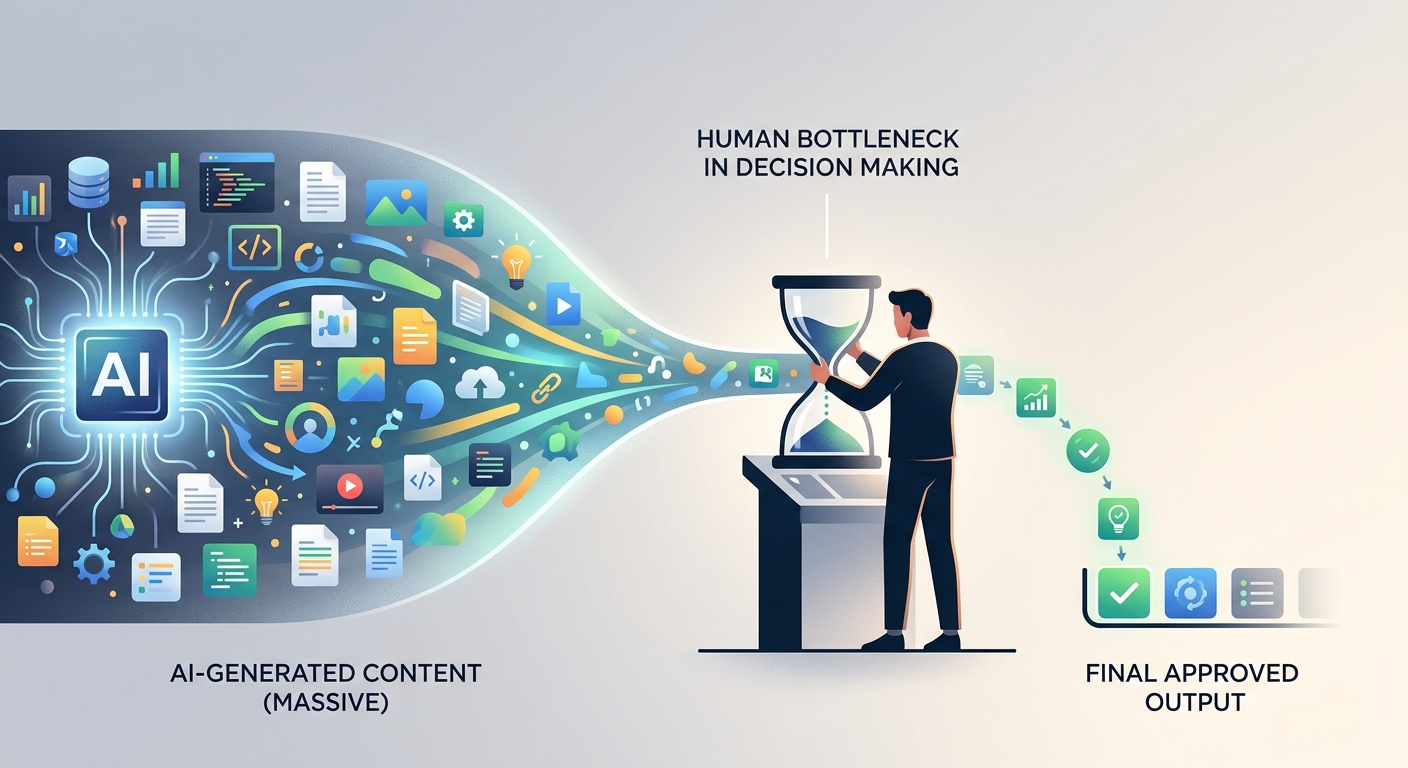
Recent experiments show AI models can nearly match experts across industries, with weaknesses mostly in formatting and instruction-following—areas improving rapidly. A striking example is AI’s ability to replicate academic research, a once labor-intensive process critical to addressing science’s replication crisis, now achievable at scale. This progress stems from advances in autonomous AI agents, which can plan, self-correct, and use tools with minimal human oversight, dramatically expanding the range of tasks they can complete. While this opens opportunities for transformative gains, such as faster, cheaper, and more reliable work, it also risks a flood of low-value outputs (like endless PowerPoints) if used uncritically. The key insight is that AI agents are powerful enablers, but their impact will depend less on their capabilities than on human choices about when and why to use them.
2. The change agent: Goals, decisions, and implications for CEOs in the agentic age (McKinsey)
The article argues that CEOs must act decisively to harness the potential of agentic AI—autonomous systems capable of planning, acting, learning, and collaborating—to unlock transformational business value. While many executives are stuck in a “trough of disillusionment” with early generative AI use cases, the real opportunity lies in reimagining workflows and operating models around agent-first systems. Early deployments show productivity and cost gains of 20–50%, but scaling impact requires bold leadership: building enterprise-wide fluency, redesigning workflows for agents, investing in data and governance, creating centralized “agent factories” to industrialize development, and embedding agent management into performance systems. CEOs must also manage the shift toward a hybrid human–agent workforce, where employees act as “agent leaders” and value streams, not siloed functions, drive organizational design. The long-term imperative is not just efficiency but redefining business models, customer experiences, and sources of differentiation in an “agentic age” where humans and AI work side by side to accelerate growth.
3. State of the Art of Agentic AI Transformation (Bain)
The report reveals that tech-forward enterprises have decisively moved from AI pilots to profit, achieving 10–25% EBITDA gains by deeply embedding AI in core workflows—proving that delay now poses real competitive risk. The real ROI drivers aren’t flashy AI models but disciplined process redesign and relentless data cleanup. As agentic AI emerges, enabling autonomous agents to reason, collaborate, and act across systems, companies face new challenges: from data silos and vendor walled gardens to security and interoperability limits. Despite lofty architectural visions, progress will likely be pragmatic and uneven, driven by fit-for-purpose, domain-specific builds rather than grand unified systems. The winning formula, the report argues, is to follow the proven playbook: move fast, stay flexible, and balance ambition with realism as the next wave of agentic AI reshapes enterprise workflows.
4. New Research Shows How an “Idea Marketplace” Can Boost Innovation (Harvard Business Review)
Most companies already possess the ideas needed for innovation but fail to harness them due to weak internal “idea marketplaces.” These marketplaces—systems for sharing, connecting, and advancing employee ideas—often suffer from silos, bureaucracy, and unsupportive cultures. Based on research with innovation leaders from major firms, the authors suggest strengthening these marketplaces by improving processes (like idea campaigns and review systems), flattening organizational structures to speed decision-making, and fostering cultures that reward openness and collaboration. Doing so can unlock hidden insights, boost productivity, and generate millions in untapped value.
Innovation Radar
1. AI Model Releases and Advancements
2. AI Tools and Features
ChatGPT now enables U.S. users to buy products directly in chat through Instant Checkout, powered by the open-source Agentic Commerce Protocol built with Stripe, marking the first step toward AI-driven shopping (OpenAI).
Lovable has launched Lovable AI and Lovable Cloud, no-code platforms built with Google Cloud’s Gemini models to let non-technical founders quickly create and scale AI applications (Tech EU).
Opera has launched its $19.99/month AI-centric browser Neon, which combines chatbot features, task automation, and repeatable “Cards” prompts to position itself as a power-user alternative in the emerging market of agentic browsers (TechCrunch).
Microsoft announced “vibe working” in Microsoft 365 Copilot, introducing Agent Mode in Word and Excel (with PowerPoint coming soon) and Office Agent in Copilot chat, enabling AI-powered human-agent collaboration to generate, refine, and orchestrate high-quality documents, spreadsheets, and presentations through conversational prompts (Microsoft).
Amazon has unveiled Alexa+, a next-generation AI-powered personal assistant free for Prime members, offering smarter, more conversational, and personalized capabilities across Echo, Kindle, Ring, Fire TV, and mobile devices to manage daily tasks, entertainment, shopping, and smart home control (Amazon).
Google’s new AI Mode in Search lets you explore, refine, and shop visually using natural language or images for more intuitive and personalized results (Google). Google is launching new AI-powered Nest Cams, a Nest Doorbell, affordable Walmart on devices, and a Google Home Speaker to bring Gemini’s advanced home intelligence, superior image quality, and smarter features to more households (Google).
Thinking Machines Lab announced Tinker, a flexible API and managed service for fine-tuning open-weight language models with low-level primitives, LoRA-based efficiency, and an accompanying open-source Cookbook, now in private beta for researchers and developers (Thinking Machines).
Claude is now integrated with Slack, letting users chat with Claude, pull context from Slack messages, and streamline work with AI-powered research, drafting, and coordination directly inside their workspace (Anthropic).