Highlights
Top Insights
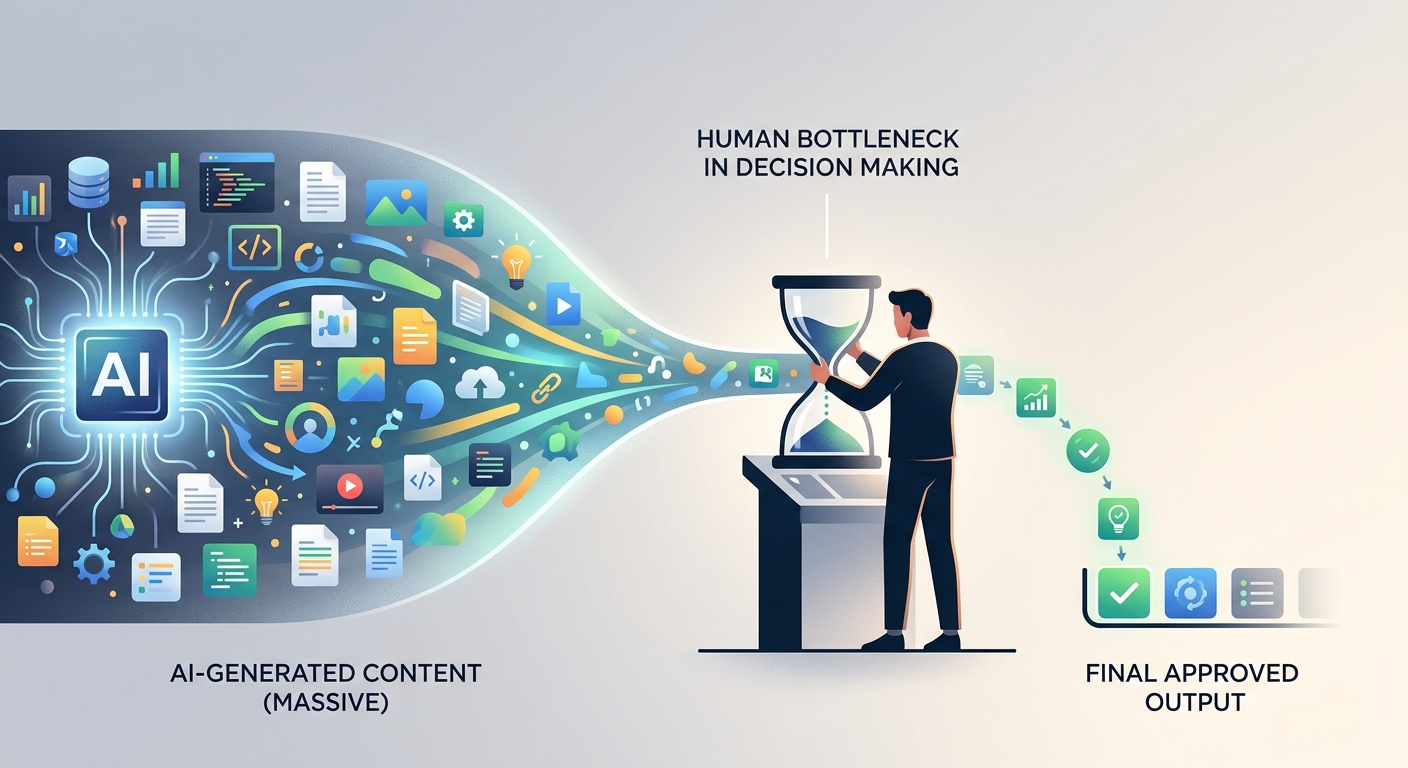
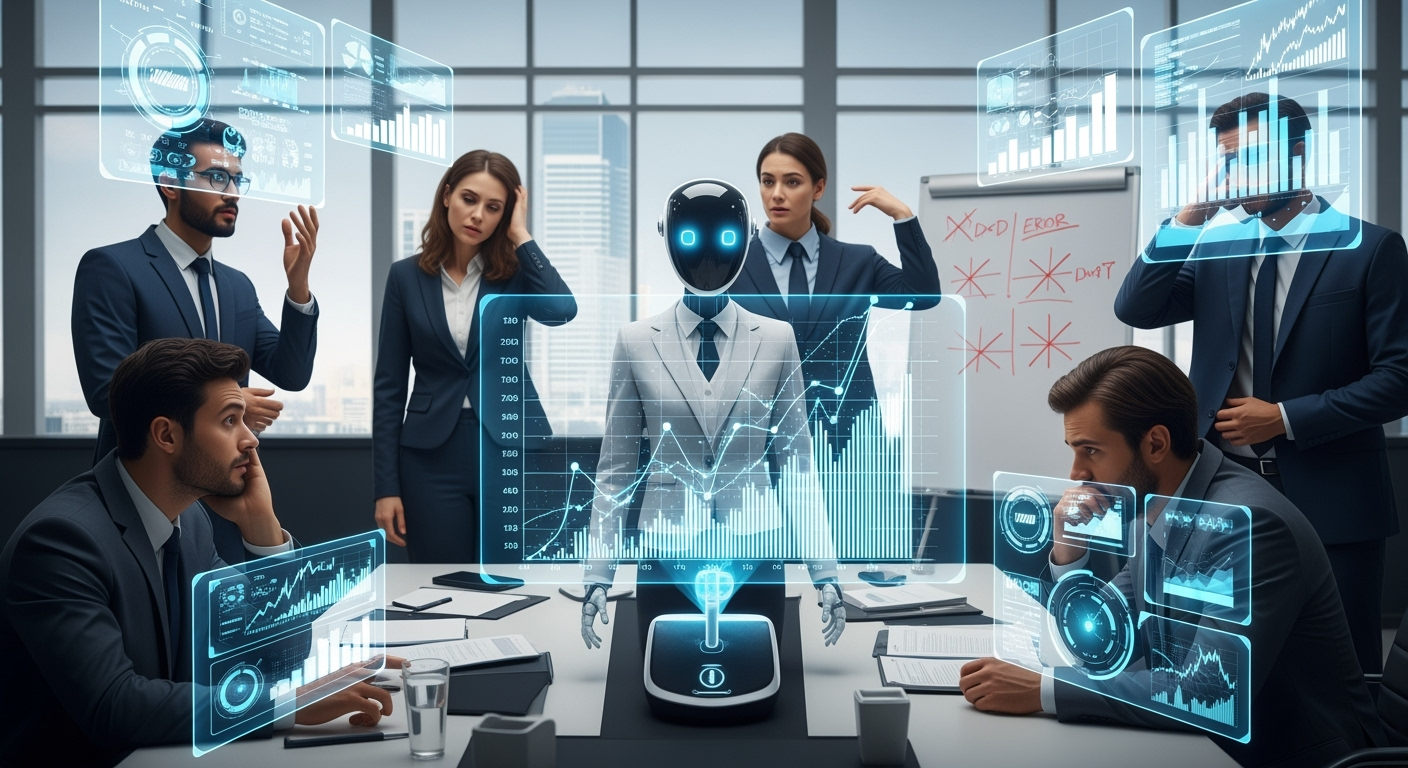
A study of over 300 executives revealed that those who consulted ChatGPT to predict Nvidia’s stock price became more optimistic and overconfident, ultimately making worse forecasts than those who discussed with peers. While both groups started with similar baseline estimates, the AI group raised their forecasts significantly, influenced by ChatGPT’s confident tone and detailed responses, which induced authority bias and an illusion of knowledge. In contrast, peer discussions encouraged skepticism, emotional checks, and social moderation, leading to more conservative and accurate predictions. The findings highlight that while generative AI can offer useful insights, it can also subtly distort decision-making, emphasizing the need for critical thinking, peer input, and organizational guidelines when using AI in high-stakes decisions.
Source: Executives Who Used Gen AI Made Worse Predictions (Harvard Business Review)
Top News
1. Several AI models, such as Hunyuan-A13B, the ERNIE4.5 model family, and two Pangu models, are open-sourced.
2. AI-powered virtual YouTubers are rapidly gaining popularity and generating millions in revenue.
3. Researchers at the Institute for Protein Design are using AI models to create synthetic proteins from scratch that could revolutionize biofuels, healthcare, and nanotechnology.
4. Microsoft’s AI Diagnostic Orchestrator (MAI-DxO) significantly outperforms human physicians in complex medical diagnosis.
5. Centaur is a foundation model of human cognition which accurately predicts and simulates human behavior across diverse psychological tasks.
Additional Insights
1. Don’t let hype about AI agents get ahead of reality (MIT Technology Review)
While AI agents show enormous promise—such as Google’s new assistant that autonomously completes complex tasks—they risk being undermined by hype, vague definitions, and unreliable behavior. The term “agent” is loosely applied to everything from simple automation to advanced systems, creating confusion and setting unrealistic expectations. Most current agents, powered by large language models, can be erratic and error-prone, making them risky in real-world or enterprise contexts. For agents to be truly useful, they must be built with structured safeguards, clear semantics, and cooperative protocols like Google’s A2A—though even that faces real limitations without shared context and aligned incentives. Ultimately, to avoid a backlash and ensure long-term success, developers must focus less on marketing buzz and more on reliability, transparency, and thoughtful system design.
2. Understanding the ‘Slopocene’: how the failures of AI can reveal its inner workings (Yahoo!)
The article explores the concept of the “Slopocene”—an era marked by the overproduction of flawed AI content—and argues that these imperfections are not just glitches but valuable insights into how AI systems function. Rather than avoiding AI’s failures, the author suggests deliberately “breaking” models through creative misuse to expose their inner workings, biases, and statistical underpinnings. This approach, dubbed “AI rewilding,” mirrors ecological restoration by reintroducing unpredictability and complexity that commercial optimization suppresses. Through hands-on experimentation, users can foster critical AI literacy, revealing how AI generates meaning, handles uncertainty, and maintains the illusion of coherence. Ultimately, embracing the Slopocene empowers people to engage thoughtfully with AI, maintaining agency in the face of increasingly persuasive and opaque technologies.
3. 3 archetypes: how companies approach AI adoption (Board of Innovation)
Companies are adopting AI in three strategic archetypes—Outward AI, Holistic AI, and Deep AI—each reflecting distinct ambitions and approaches to value creation. Outward AI organizations position AI as a core product or revenue enabler, monetizing it through AI-powered offerings like Tesla’s autonomous driving or OpenAI’s GPT models. Holistic AI firms embed AI enterprise-wide to drive cross-functional efficiency, resilience, and decision-making, as seen in companies like Amazon and Walmart. Deep AI adopters focus AI within a specific domain for maximum impact, such as Starbucks personalizing loyalty programs or John Deere optimizing agriculture. These archetypes help companies align AI strategy with business goals, focus investments, structure operations effectively, and build sustainable competitive advantage. Choosing the right archetype early ensures targeted, scalable, and ROI-driven AI adoption.
4. Will embodied AI create robotic coworkers? (McKinsey)
General-purpose robots powered by embodied AI are advancing rapidly, offering potential to work alongside humans across industries such as logistics, healthcare, and manufacturing. Unlike earlier robots confined to narrow tasks, these new systems can adapt to dynamic environments, aided by breakthroughs in foundation models, hardware dexterity, and sensor fusion. Humanoid and wheeled robots are becoming more agile, mobile, and safe, with increasing investment and government backing—especially in China. However, widespread adoption faces hurdles: high costs, limited battery life, immature supply chains, and complex integration with human workflows. Tasks requiring fine manipulation or long operational hours remain especially difficult. Despite the hype, current performance often falls short of expectations, and ROI can be slow. For executives, success will depend not on jumping in fast, but on strategic preparation—investing in data infrastructure, workforce upskilling, and ecosystem partnerships—while tracking practical progress in enabling technologies. If development continues steadily, the market could reach $370 billion by 2040, with early movers gaining a critical advantage.
Innovation Radar
1. AI Model Releases and Advancements
Alibaba has unveiled an upgraded version of its Qwen VLo AI model with advanced image generation and editing capabilities (MSN).
Tencent has open-sourced Hunyuan-A13B, a 13B active-parameter Mixture-of-Experts language model featuring dual-mode reasoning, 256K context support, and state-of-the-art performance on agentic and long-context benchmarks—all while maintaining high efficiency and broad deployment compatibility (MarkTechPost).
Baidu has open-sourced the ERNIE 4.5 model family, a suite of powerful, multimodal Mixture-of-Experts models with state-of-the-art performance in text and vision tasks, featuring scalable training, modality-specific fine-tuning, and deployment tools—all released under the Apache 2.0 license (Baidu). Baidu has launched an AI-powered video generator for businesses called MuseSteamer and significantly upgraded its search engine to include longer queries, voice, and image-based input (Reuters).
Huawei has open-sourced two of its Pangu AI models and related technology to boost adoption of its AI ecosystem globally, drive demand for its Ascend AI chips (CNBC).
2. AI Tools and Features
AI-powered virtual YouTubers like Bloo are rapidly gaining popularity and generating millions in revenue, thanks to advances in generative technology (CNBC).
Perplexity has launched Perplexity Max, its most advanced subscription tier offering unlimited Labs usage, early access to new features like the Comet browser, top-tier AI models, and priority support, aimed at power users needing maximum AI productivity (Perplexity).
3. AI for Science and Medicine
Researchers at the Institute for Protein Design are using AI models to create synthetic proteins from scratch that could revolutionize biofuels, healthcare, and nanotechnology by redesigning biological processes like photosynthesis, improving gene editing, and enabling molecular-scale machines (The Economist).
Mayo Clinic has developed an AI tool called StateViewer that can accurately identify nine types of dementia, including Alzheimer’s, from a single FDG-PET scan—improving diagnostic speed and accuracy, even in non-specialist clinics (Mayo Clinic).
Chai-2 is a groundbreaking zero-shot generative model that achieves high success rates in de novo antibody and protein binder design, dramatically accelerating molecular discovery by replacing traditional experimental screening with rapid, computational-first engineering (Chai Discovery).
Microsoft’s AI Diagnostic Orchestrator (MAI-DxO) significantly outperforms human physicians in complex medical diagnosis—solving 85% of challenging NEJM cases versus 20% by doctors—while also reducing diagnostic costs, highlighting the transformative potential of AI in augmenting clinical decision-making and improving healthcare efficiency (Microsoft).
Centaur is a foundation model of human cognition fine-tuned on a large-scale behavioral dataset (Psych-101), which accurately predicts and simulates human behavior across diverse psychological tasks, generalizes to new settings, aligns with neural activity, and aids in interpretable cognitive model discovery (Nature).
4. Other
A brain–computer interface has enabled a man with paralysis to produce real-time, expressive speech by decoding his neural activity into a personalized, intelligible synthetic voice (Nature).
Xiaomi’s new AI smart glasses outshine Ray-Ban Meta’s with double the battery life, real-time translation, hands-free camera use, and pay-by-glance functionality—all starting at $280 (Android Central).
Tesla claims to have completed its first fully driverless delivery of a Model Y SUV to a customer in Austin, Texas, without any human or remote operator involvement, amid ongoing scrutiny of its self-driving technology and growing competitive and political challenges (CNBC).
Amazon has deployed its one millionth robot and introduced DeepFleet, a new generative AI foundation model that boosts robotic fleet efficiency by 10%, aiming to accelerate deliveries, lower costs, and enhance workforce opportunities (Amazon).