Highlights
Top Insights
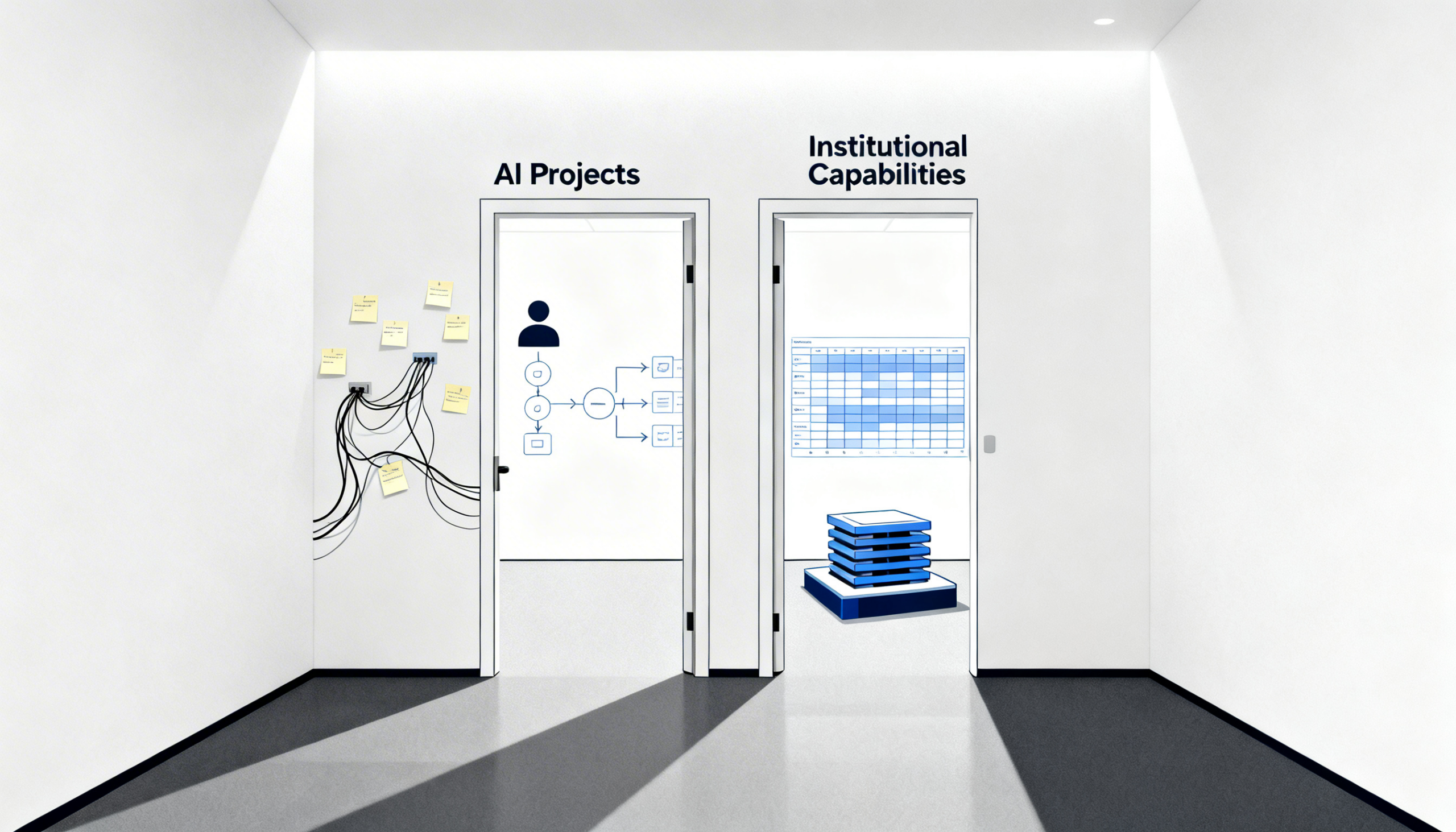
AI advantage is not about tech, it’s about capabilities built over time. The winners are not using different tools; they’re better at applying them repeatedly and at scale. Most companies are still thinking in terms of “AI projects.” Leaders should instead think in terms of institutional capabilities (talent, operating model, data, platforms).
Focus beats breadth: a few leverage points drive most value. Leading companies don’t pursue dozens of use cases: they double down on 1–3 high-impact domains tied to core economics.
If AI isn’t moving core financial metrics, it’s a distraction. This sets a much higher bar than most current AI programs.
AI performance is limited primarily by data accessibility and quality, not models.
Source: The AI transformation manifesto (McKinsey)
Top News
1. Microsoft released the Agent Governance Toolkit, an open-source framework for enforcing runtime control and safety policies on autonomous AI agents.
2. Meow introduced an agentic banking platform that allows AI agents to manage financial operations with built-in controls and approvals.
3. Anthropic launched Claude Managed Agents, a service that simplifies deploying production-grade AI agents with built-in orchestration and state management.
4. Meta introduced Muse Spark as a new flagship model designed to power faster and more personalized AI experiences across its ecosystem.
5. Anthropic previewed its Mythos model for defensive cybersecurity, capable of identifying thousands of zero-day vulnerabilities in software systems.
6. Z.ai released GLM-5.1, a model optimized for long-horizon agentic tasks that can operate independently for extended multi-hour workflows.
Additional Insights
1. Managers and Executives Disagree on AI-and It’s Costing Companies (HBR)
Organizations have rapidly committed to AI with strong usage, investment, and early optimism, yet fewer than 10% are realizing meaningful value at scale, largely due to a critical disconnect between senior executives and middle managers. Executives tend to overestimate ROI, adoption speed, and workforce enthusiasm, while middle managers, operating in the “messy middle” of execution, experience AI’s limitations, workflow disruptions, and added burdens more directly, leading to more cautious and grounded views. This misalignment slows transformation because strategy and vision from the top fail to translate into operational reality below, especially as managers lack time, resources, and involvement in shaping AI initiatives. The article argues that successful AI adoption depends less on additional investment and more on closing this leadership gap by aligning perspectives, reducing managerial burden, co-creating implementation strategies, and building feedback loops that reflect real-world execution challenges.
2. Rebuilding trust with AI (IDEO)
Declining trust in banks and health insurers is less about the use of data itself and more about how that data is used, highlighting that people accept AI when it delivers clear, personal value rather than opaque profit-driven outcomes. It reframes AI as a potential trust-building bridge through “predictive empathy” and “clarifying complexity,” enabling institutions to anticipate needs, simplify decisions, and demonstrate the reasoning behind recommendations. Rather than replacing human relationships, AI should enhance confidence by making guidance transparent, contextual, and interactive. Incumbent institutions hold a key advantage due to their rich longitudinal data, which can be transformed into genuinely helpful insights, shifting relationships from transactional to supportive. Ultimately, rebuilding trust requires a new contract where AI is used to advocate for individuals’ success, making financial and health systems more humane, understandable, and aligned with user well-being.
3. How GenAI robots are reshaping services (HBR)
Gen AI–powered robots are transforming service industries by combining conversational intelligence, real-time learning, and physical action, enabling more personalized, adaptive, and scalable customer interactions in real-world environments. Unlike earlier scripted robots, these systems leverage LLMs, behavioral models, and agentic AI to understand context, make decisions, and continuously improve through observation and feedback, allowing them to handle complex, dynamic tasks across sectors like healthcare, hospitality, and retail. However, adoption remains constrained by high costs, technical limitations, and human resistance, especially in emotionally sensitive contexts. Successful deployment requires focusing on high-value, repeatable use cases, designing natural and reliable human-robot interactions, positioning robots as augmenting rather than replacing workers, and establishing strong governance around ethics, safety, and continuous learning. Ultimately, while still early-stage, gen AI robots offer a path to delivering consistent, efficient, and personalized physical services at scale, provided organizations manage implementation complexity and maintain trust.
4. How dangerous is Mythos, Anthropic’s new AI model? (The Economist)
Mythos’ danger stems from a very specific and immediate capability: autonomously discovering long-hidden, critical software vulnerabilities, including one that had gone unnoticed for 27 years, across major systems . Even more striking is the unusual industry response, where direct competitors like Google and major players like Apple are collaborating with Anthropic before public release, signaling that the threat is taken seriously beyond typical AI hype . The model also creates an unexpected geopolitical twist, potentially neutralizing governments’ stockpiled cyberweapons by exposing “zero-day” exploits, which could shift power dynamics in cybersecurity . Finally, the situation reveals a paradox: while framed as a safety initiative, Anthropic stands to profit significantly by charging a premium for access, suggesting that managing AI risk is quickly becoming both a security imperative and a major business model.
5. How to Reap Compound Benefits From Generative AI (Sloan Management Review)
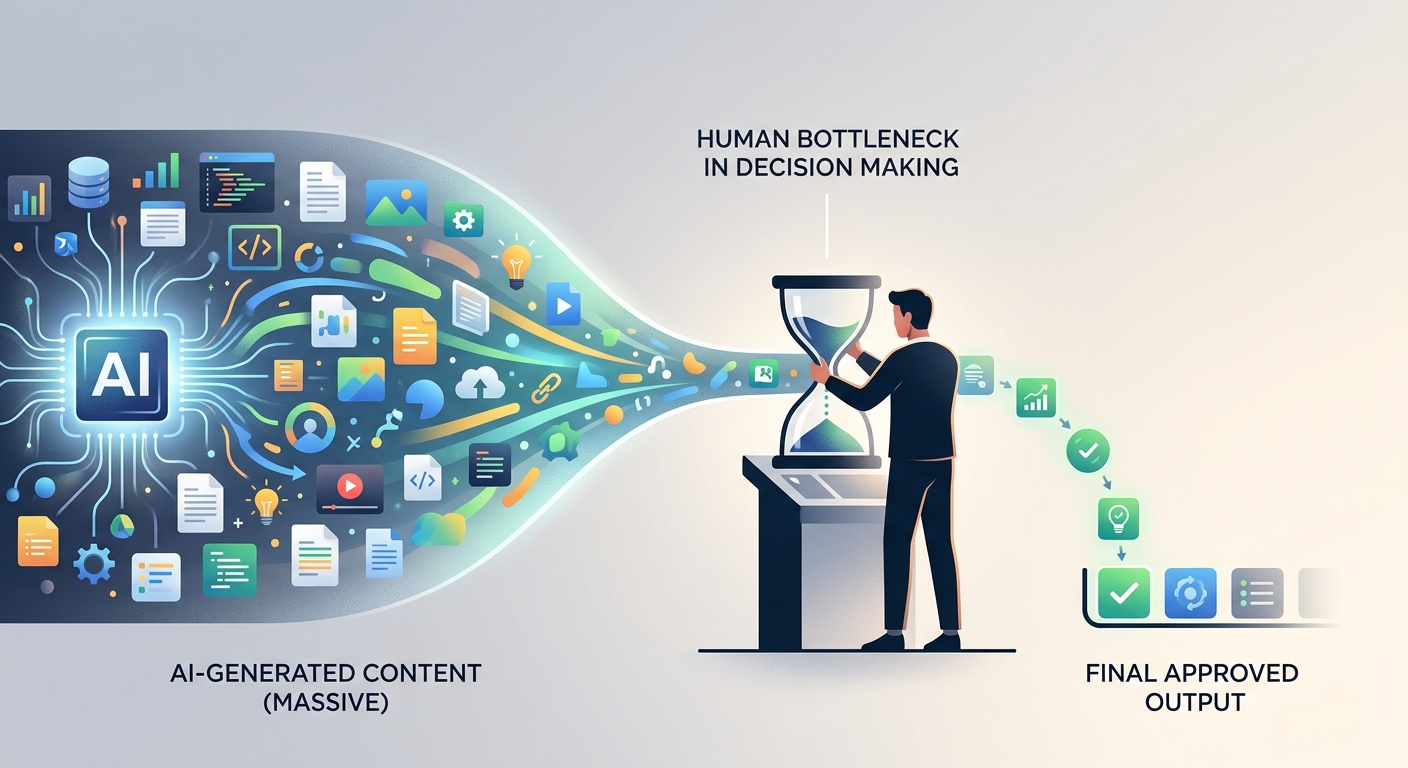
Organizations unlock real value from generative AI not by producing more outputs faster, but by systematically learning from each interaction. The key shift is from treating AI as a throughput tool to treating it as a capability that improves over time through a feedback loop of verification, evaluation, and learning capture. While AI makes generating drafts, code, and ideas cheap, the true bottleneck and opportunity lie in interpreting outputs, identifying what works or fails, and embedding those insights into future use. Companies that build structured feedback systems and preserve domain expertise are far more likely to achieve strong financial returns, yet most still underinvest in this learning infrastructure. The core insight is that AI-driven advantage compounds only when organizations turn individual interactions into shared, reusable knowledge, creating a continuous cycle where each iteration becomes smarter than the last.
Innovation Radar
1. AI Model Releases and Advancements
Meta introduced Muse Spark as a new flagship model designed to power faster and more personalized AI experiences across its ecosystem. (Meta)
Anthropic previewed its Mythos model for defensive cybersecurity, capable of identifying thousands of zero-day vulnerabilities in software systems. (TechCrunch)
Z.ai released GLM-5.1, a model optimized for long-horizon agentic tasks that can operate independently for extended multi-hour workflows. (Z.ai)
Arcee launched Trinity-Large-Thinking, an open-weight reasoning model designed for multi-step agent workflows with enterprise customization. (VentureBeat)
Netflix open-sourced VOID, a framework that removes objects from video while preserving realistic downstream physical interactions. (GitHub)
Meta published EUPE, a compact universal vision encoder designed to deliver strong multi-task performance for edge deployments. (GitHub)
2. AI Tools and Features
AWS added cross-account safeguards to Bedrock Guardrails, enabling centralized enforcement of AI safety policies across organizations. (AWS)
GitHub introduced Copilot Autopilot and enhanced agent controls in VS Code to support more autonomous coding workflows with permission management. (GitHub)
OpenAI launched pay-as-you-go Codex-only seats, allowing teams to adopt AI coding tools with usage-based pricing. (OpenAI)
Clarvos released an agentic marketing platform that automates campaign workflows from audience discovery to execution. (Business Wire)
Anthropic launched Claude Managed Agents, a service that simplifies deploying production-grade AI agents with built-in orchestration and state management. (SiliconANGLE)
Google released AI Edge Eloquent, an offline-first dictation app that performs on-device transcription and text cleanup. (TechCrunch)
Cursor launched Cursor 3, enabling developers to delegate coding tasks to autonomous AI agents within its interface. (WIRED)
Google added new AI video and music generation features to Google Vids, improving content creation workflows. (Google)
Meow introduced an agentic banking platform that allows AI agents to manage financial operations with built-in controls and approvals. (The Next Web)
NeuBird launched Falcon and FalconClaw to enable predictive incident prevention and knowledge capture in IT operations. (VentureBeat)
Rocket released an AI platform that generates consulting-style strategy reports combining research, product planning, and competitive intelligence. (TechCrunch)
Microsoft released the Agent Governance Toolkit, an open-source framework for enforcing runtime control and safety policies on autonomous AI agents. (Microsoft)
Adobe expanded its “partner models” approach, allowing users to choose between multiple AI models within Creative Cloud workflows. (Adobe)
Lucidworks introduced an MCP server to standardize how AI assistants connect to enterprise data sources. (Lucidworks)
3. AI Trends
A “markdown knowledge base” approach is emerging as a simpler alternative to traditional RAG architectures for managing AI context. (VentureBeat)
OCSF is gaining traction as a standardized data layer for security operations in AI-driven environments. (VentureBeat)
A security flaw in OpenClaw highlights how always-on agents can amplify system-wide risk if permissions are not tightly controlled. (GitHub)
4. AI for Science
DefensePredictor uses protein-language-model embeddings to discover new bacterial immune defense systems. (Science)
Uncertainty-guided fine-tuning improves generative molecular design by enhancing property prediction without retraining from scratch. (RSC)
A study evaluates LLM-based conversational agents for supporting parents of neurodivergent children in real-world settings. (Nature)
Researchers demonstrated real-time deep learning for pediatric echocardiography interpretation. (Nature)
A study combines deep learning and blockchain concepts to optimize EV-to-grid energy systems. (Nature)
Research assesses the readiness of autonomous weed management systems in agriculture. (Nature)
5. Other
Amazon’s Leo satellite internet service entered enterprise beta, targeting high-bandwidth connectivity for remote operations. (The Next Web)
A study shows laser-enhanced contact optimization could push solar cell efficiency beyond 26%. (pv magazine)
Oak Ridge National Laboratory developed a polymer electrolyte that improves solid-state battery performance and safety. (Tech Xplore)
Researchers created a high-temperature memory device capable of operating at 700°C for extreme environments. (ScienceDaily)