Highlights
Top Insights
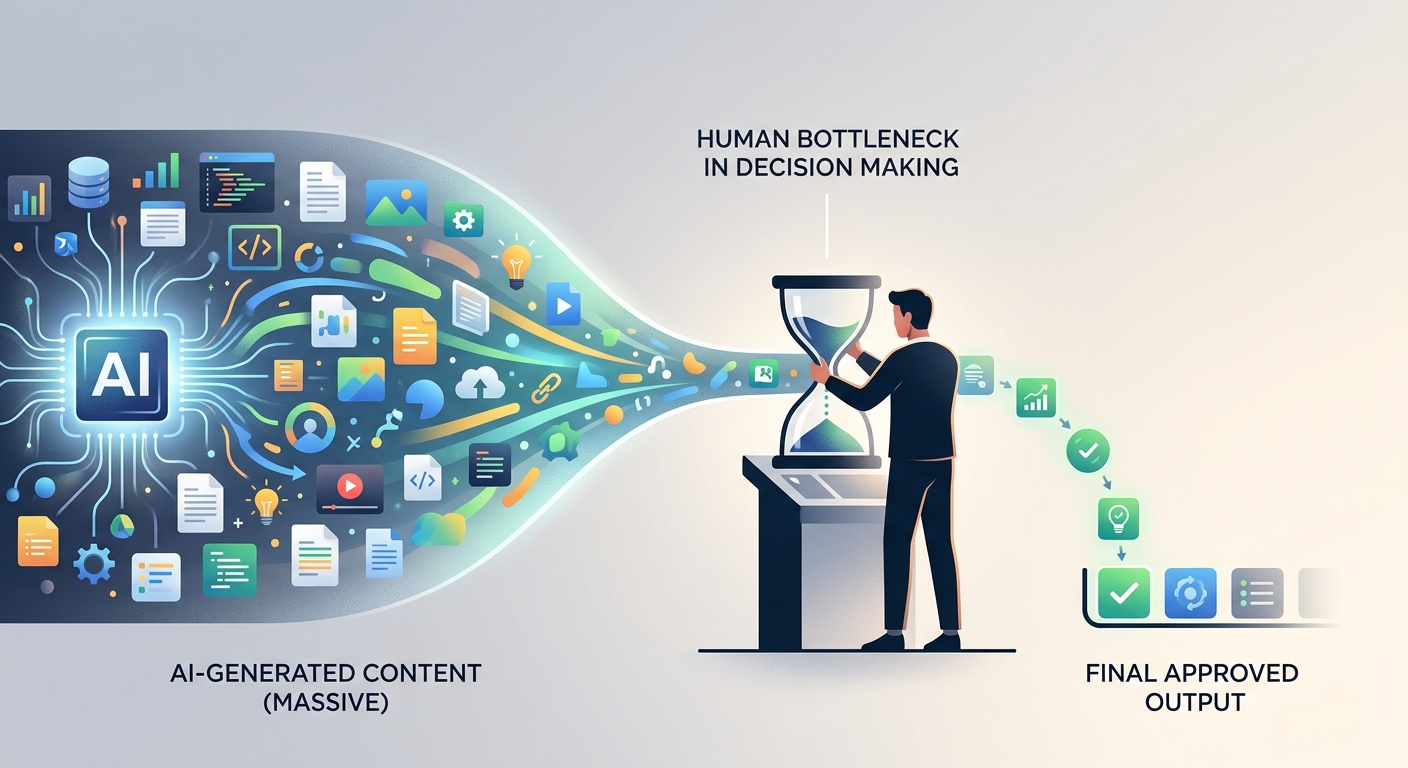
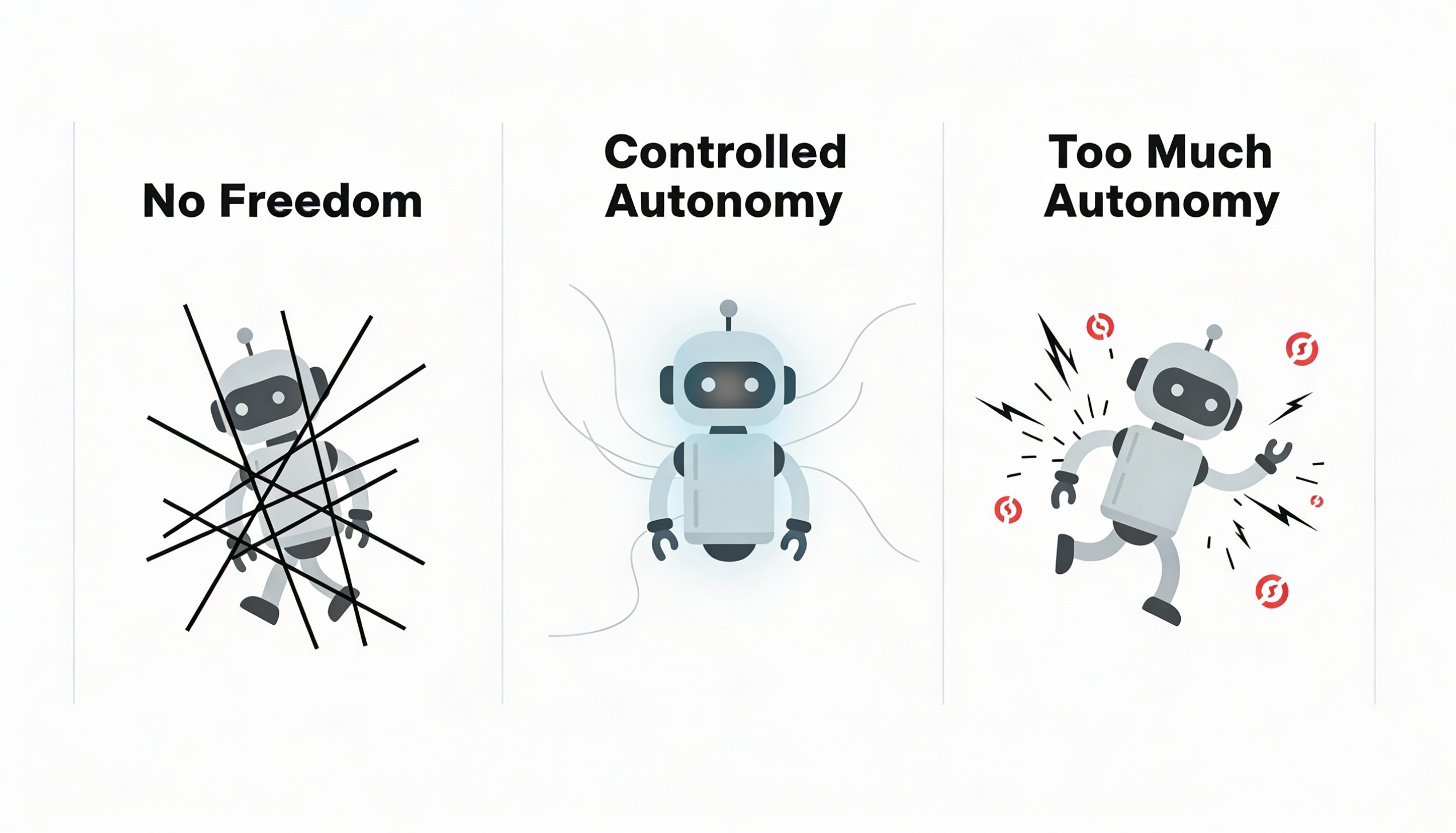
1. There are some tensions that organizations need to navigate in order to use agentic AI effectively. Agentic systems need some freedom to be useful, but too much autonomy leads to unpredictable outcomes and risks.
2. To have quick wins, it is better to retrofit agentic AI into existing workflows, but transformation likely comes from redesign the workflows altogether.
3. Over time, agentic AI can both become more useful through continuous learning and less useful through model drift.
Source: How to navigate the age of agentic AI (Ideas Made to Matter)
Top News
1. xAI has launched paid Grok Business and Grok Enterprise tiers.
2. ChatGPT Health is a dedicated, privacy-focused experience that securely integrates your health data and apps with ChatGPT.
3. Gmail is evolving into a Gemini-powered, proactive inbox assistant.
4. Nvidia unveils the Vera Rubin AI computing platform at CES 2026, a next-generation AI supercomputing stack.
5. Humanoid robots dominated CES, with companies demoing robots performing real-world tasks (e.g., laundry, bartending).
Additional Insights
1. The CEO’s Guide to Growth in 2026 (BCG)
Winning CEOs are pursuing growth aggressively despite volatility by combining bold ambition with disciplined execution. As market turbulence, geopolitical risk, and capital constraints persist, leaders are setting clear growth targets backed by a rigorous “growth equation,” using AI to accelerate innovation, sharpen strategy, and reduce the cost and risk of growth, and treating growth as a managed program rather than an aspiration. AI emerges as a critical differentiator, enabling faster decision-making, higher innovation output, and superior revenue performance, while an always-on M&A capability positions companies to capture opportunities as deal activity rebounds. Crucially, the report emphasizes that growth and resilience are not tradeoffs: sustained success in 2026 depends on reinvesting cost savings into strategic capabilities—especially AI—while building a culture of cost discipline that fuels a virtuous cycle of efficiency and top-line expansion.
2. Science at the speed of inference (a16z)
Biotech and software are reconverging through AI, with drug discovery becoming a computational “search problem” increasingly solvable at the speed of inference rather than limited by physical experiments. The article highlights how breakthroughs like AlphaFold proved that generalizable, data-driven models can tackle core biological challenges, but warns that recent trends toward closed, restricted-access models threaten broad scientific progress. The company Boltz positions itself as a response: building frontier-level, open-source AI models for structural biology, binding prediction, and protein design that are already used by over 100,000 scientists across academia and industry. Founded as a public-benefit corporation, Boltz aims to combine cutting-edge research, robust products, and an open community to make AI-native drug discovery accessible, affordable, and scalable, while sustaining itself through software and usage-based services rather than developing drugs. The overarching insight is that the future of medicine depends not just on powerful AI, but on keeping those tools openly available so scientists everywhere can iterate, discover, and innovate faster.
3. The Imagination Factory (The Economist)
AI is rapidly transforming pharmaceutical research by shifting much of drug discovery from slow, costly laboratory work to fast, computational “in silico” processes, dramatically improving efficiency across the pipeline. Transformer-based AI models can link genes to disease mechanisms, identify promising drug targets, design candidate molecules, and optimize trial design, cutting preclinical timelines from years to months and boosting early-stage success rates well above historical norms. AI is also reshaping clinical trials through smarter patient selection and the use of “synthetic patients” or digital twins, potentially reducing or even eliminating control groups while lowering costs and speeding results. Although technical limits remain—especially for complex biological structures like proteins, RNA and whole cells—rapid advances suggest these barriers are shrinking. For now, traditional drug firms retain an edge through data and domain expertise, favoring partnerships with AI companies, but as biology becomes more predictable the industry’s balance of power may shift. Overall, AI is already increasing the number of viable drugs reaching late-stage trials and holds the promise of significantly expanding future medical innovation and human health gains.
4. Why AI Boosts Creativity for Some Employees but Not Others (HBR)
The research shows that generative AI can enhance employee creativity, but only under specific conditions: creative gains occur primarily for employees with strong metacognition—the ability to plan, monitor, evaluate, and refine their thinking. While AI can expand cognitive job resources by providing vast information and reducing mental overload, simply having access to AI is not enough. Employees with high metacognition use AI reflectively, question and iterate on its outputs, and strategically shift tasks to restore cognitive capacity, resulting in more novel and useful ideas. In contrast, employees with weaker metacognitive skills tend to rely passively on AI’s first responses and see little creative benefit. The key implication for leaders is that AI does not automatically boost creativity; organizations must pair AI adoption with efforts to develop employees’ metacognitive skills and design workflows that encourage active, critical, and iterative engagement with AI.