
Highlights
Top Insights
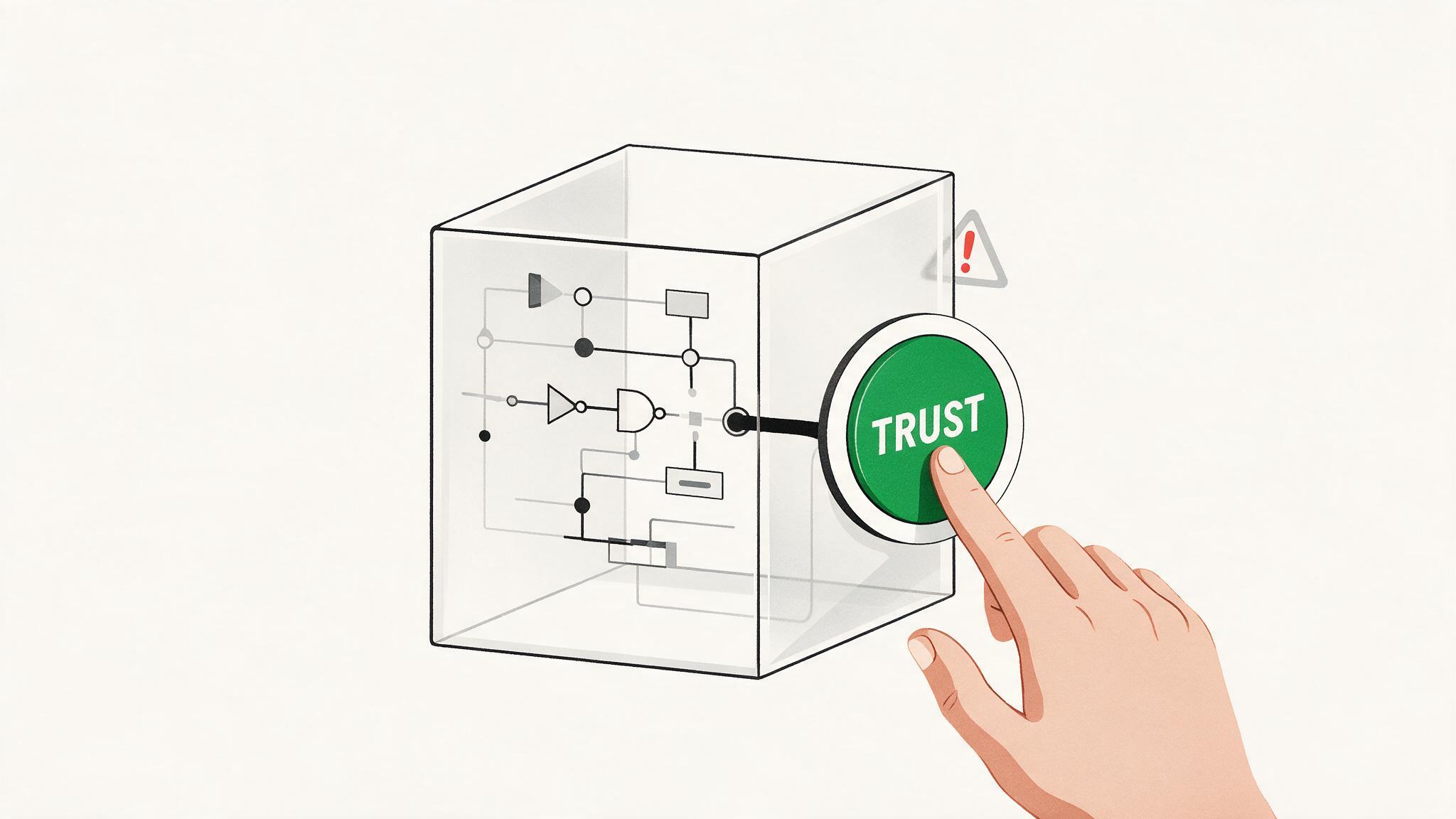
1. People begin to mirror the style, reasoning patterns, and even opinions of AI tools they use. Users exposed to AI-generated viewpoints tend to shift their own opinions toward those views.
2. In experiments on social issues (e.g., the death penalty), people who used AI to write about topics later expressed opinions closer to the AI’s position than those who didn’t use AI.
Source: AI can ‘same-ify’ human expression — can some brains resist its pull? (Nature)
Top News
1. Google released Gemini Embedding 2, its first natively multimodal embedding model.
2. NVIDIA published Nemotron 3 Super, an open model positioned for high-throughput agentic reasoning.
3. Google announced new Gemini AI capabilities across Docs, Sheets, Slides, and Drive that can generate documents.
4. Zoom launched an AI-powered office suite with Docs, Slides, and so on.
5. Microsoft introduced “Copilot Cowork” for long-running multi-step work.
Additional Insights
1. Hustlers are cashing in on China’s OpenClaw AI craze (MIT Technology Review)
China is experiencing a “gold rush” around OpenClaw, an open-source AI agent capable of autonomously performing tasks on a user’s computer, which has rapidly spread beyond developers to entrepreneurs and everyday users. Early adopters and technically skilled individuals are profiting by selling installation services, training, and customized tools to people eager to use the technology but lacking the expertise to set it up themselves. At the same time, a broader ecosystem of businesses—from cloud providers to API resellers and hardware vendors—is monetizing the surge in demand created by the hype. Many users are motivated by the belief that running AI agents could automate work or create new income streams, fueling a wave of experimentation and speculative activity. The phenomenon highlights how emerging AI tools can quickly spawn secondary markets where the biggest profits often go not to end users but to those selling the infrastructure, services, and expertise surrounding the technology.
2. Generative AI changes how employees spend their time (Ideas Made to Matter)
Generative AI is reshaping work by shifting employees toward higher-value core tasks and away from coordination-heavy or administrative work, as shown in research on developers using GitHub Copilot. In the study, developers spent more time coding and less time on project management, suggesting AI can change the composition of work rather than merely speed it up. The biggest gains appeared among less-experienced workers, reinforcing the idea that AI can accelerate skill development and make junior employees more productive rather than obsolete. At the same time, the findings raise concerns that AI may reduce collaboration and peer interaction, potentially weakening teamwork and the informal learning that comes from shared problem-solving. The broader insight is that companies should treat generative AI as a tool for augmenting capability and learning, while deliberately managing its side effects on collaboration, training, and foundational skill development.
3. Using AI Can Stifle Innovation. But It Doesn’t Have To (HBR)
This article introduces a formal model showing that as the “reuse” of knowledge becomes essentially free via AI, independent exploration falls and organizational innovation flattens. The underlying problem is the erosion of “absorptive capacity”—the ability to evaluate, adapt, and improve ideas rather than simply copy them. When AI makes research effortless, people stop investing in discovering better approaches. The researchers suggest that CEOs must build “calibrated friction” into workflows—requiring independent human attempts before AI is consulted and assessing how people use AI, not just what they produce. The mandate for 2026 is to ensure that AI does not make organizations faster overnight but shallower over time.
4. Your Data Agents Need Context (a16z)
This article explains why most “chat with your data” experiments fail: a lack of proper context. Agents are essentially useless if they cannot decipher vague business definitions or reason across disparate data sources. The solution is the construction of a “context layer”: a multi-dimensional corpus where code lives alongside natural language, capturing the “tribal knowledge” of an enterprise.