Cutting-Edge Insights into Innovation

Keep Up With Productivity Boom

Highlights


Top Insights

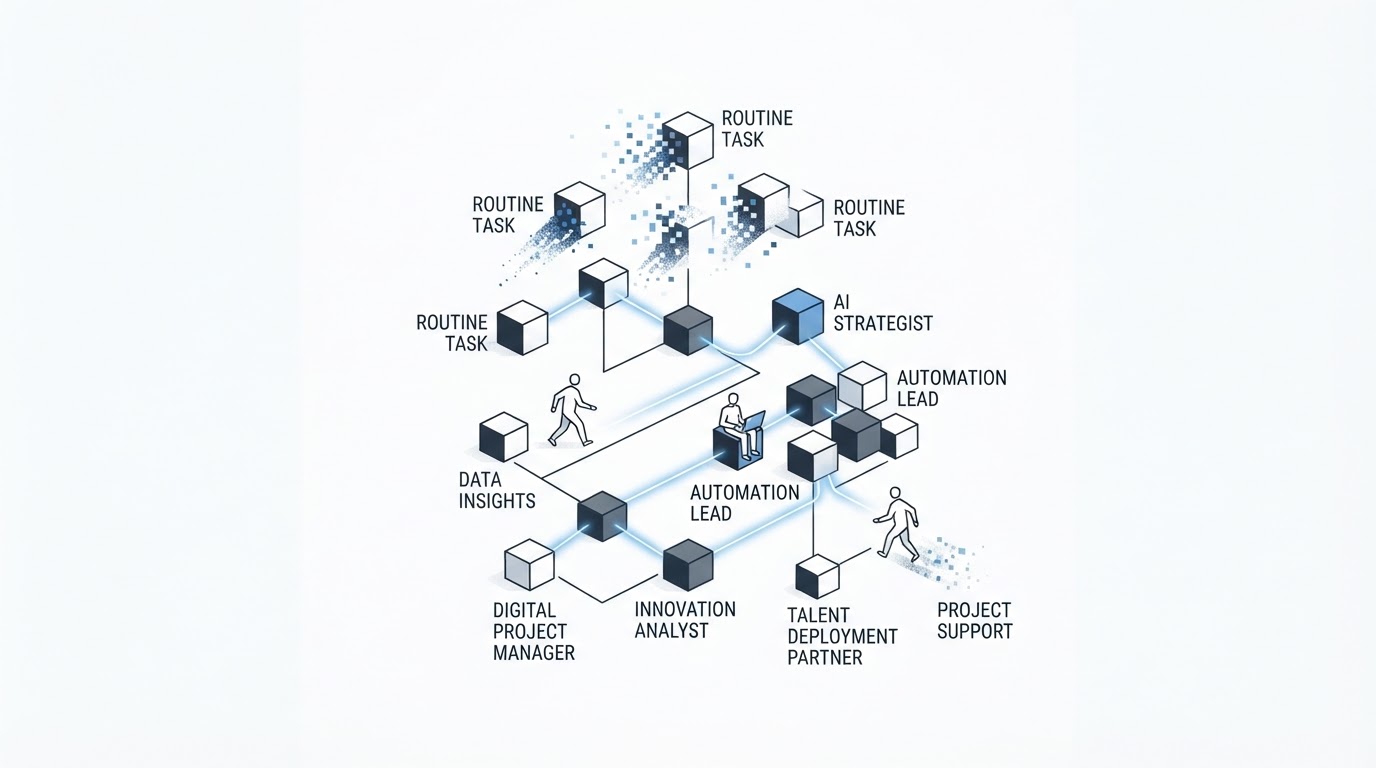
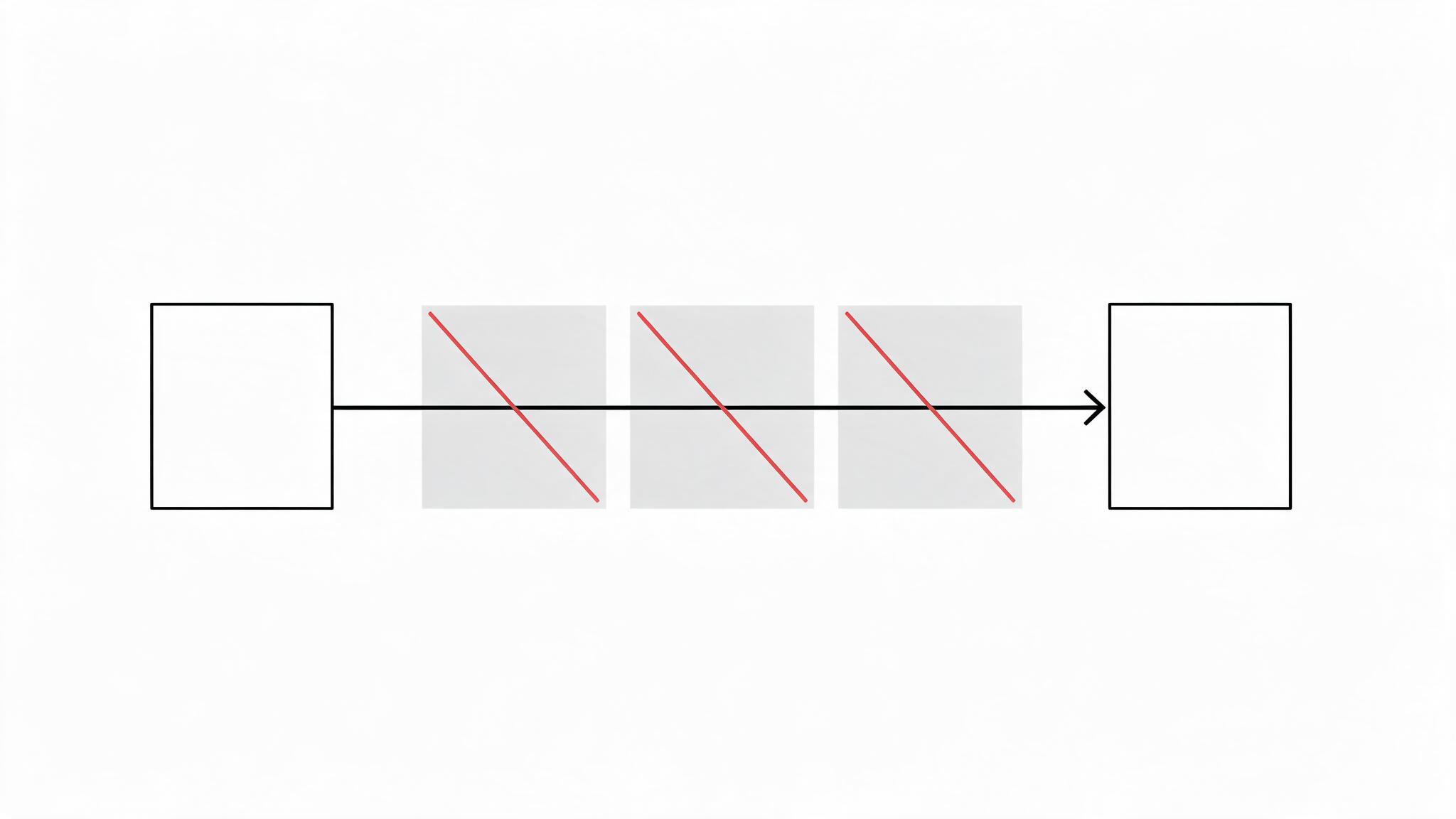
AI has collapsed execution cycles. Work that used to take days or weeks can now appear overnight. That creates a new problem: managers are still operating with old rhythms (weekly check-ins, slow review cycles, detailed feedback loops) while teams are moving at AI speed.

Managers should stop trying to inspect every piece of work. Instead, they need to clarify direction: the mission, key outcomes, success metrics, and decision rights. A useful framing: AI can help teams figure out the “what,” but leaders still need to define the “where.”

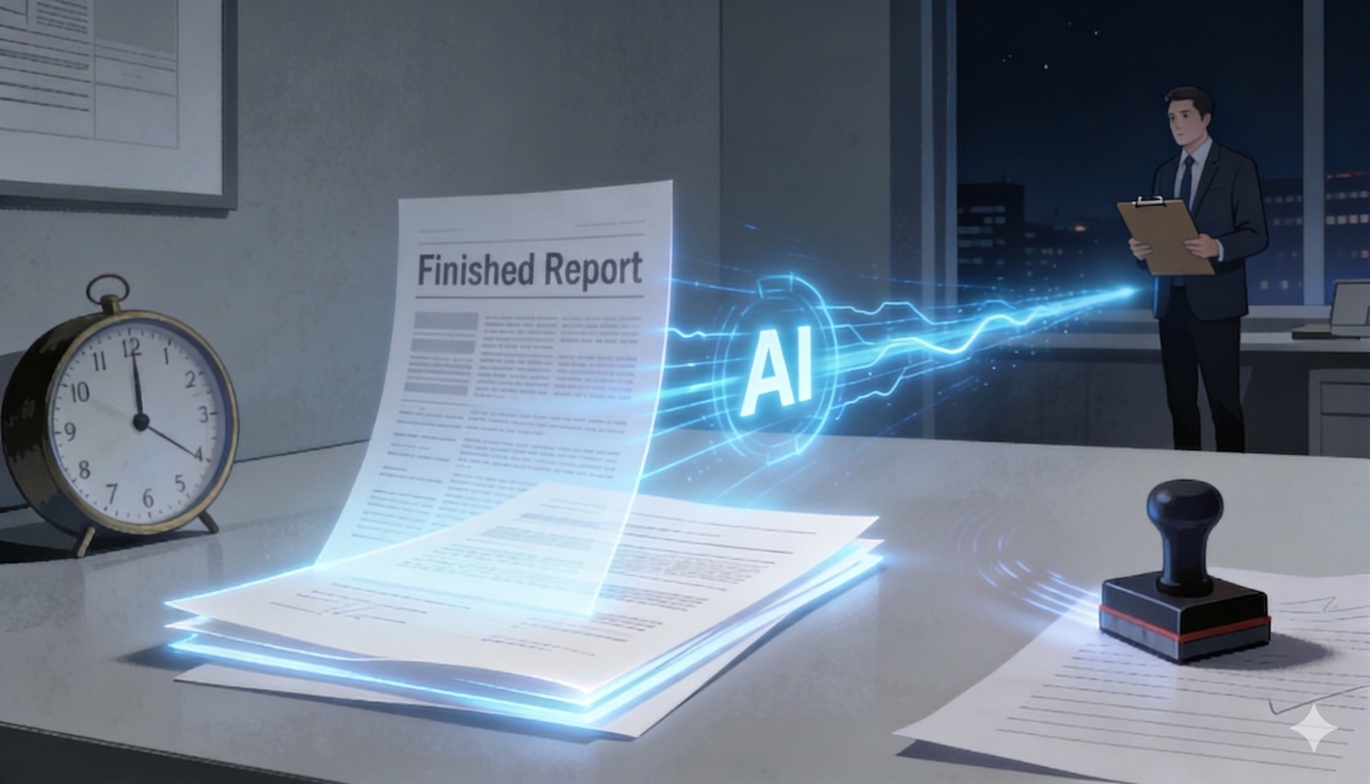
54% of managers report receiving AI-generated work that looks polished but lacks substance. The danger is that low-quality thinking can arrive in a more convincing package.

AI summaries may treat high-quality work and weak work the same, making everything sound generically acceptable. Instead, AI should help managers identify where to go deep.

Source: Managers are struggling to keep up with the AI productivity boom (HBR)

Top News

1. Google Workspace added automatic Drive syncing to NotebookLM so Docs, Sheets, and Slides sources update as files change while respecting deletions and permission changes.
2. Anthropic launched dynamic workflows in Claude Code so Claude can plan work, run hundreds of parallel subagents, and verify outputs before reporting back.
3. Anthropic upgraded Claude Opus to 4.8 with gains in coding, agentic skills, reasoning, and knowledge work.
4. Alibaba introduced Qwen3.7-Max as a proprietary “agent era” model for code, office workflows, and long autonomous execution runs involving hundreds or thousands of steps.
5. Alipay launched AI Wallet and Token Pay as part of a full-stack AI payment solution for agentic commerce.

Additional Insights

1. Redesigning Tech Company Operating Models for an AI-Accelerated World (Bain)
Bain argues that many tech companies still rely on Agile teams plus hierarchical escalation to resolve cross-team complexity, but that model becomes too slow as AI accelerates decision-making and execution. Its analysis of 290 tech companies found sustained high growth is rare—only 33 achieved at least 20% annual growth for 10 years, and only 9 of those successfully built two or more adjacencies—while the standouts tend to be flatter, more founder-minded, and more willing to experiment with operating models. The strongest companies reduce friction at the source through clearer decision habits, delegated authority within guardrails, and real-time workflow visibility, so issues are resolved by frontline teams before they become political or require escalation. The practical recommendation is to identify a recurring “seam” problem, pilot a focused fix—decision norms, clearer guardrails, or instrumented flow—and measure success by cycle time, rework, escalation rate, throughput stability, and strategic alignment.

2. How the Pope’s Magnifica Humanitas offers a template for individuals to meet the AI moment (MIT Technology Review)
Pope Leo XIV’s encyclical Magnifica Humanitas frames artificial intelligence as a moral and social challenge rather than a neutral technological force, urging people to choose collective responsibility over unchecked power. Using the contrast between the Tower of Babel and Nehemiah’s rebuilding of Jerusalem, the authors say AI should be governed in ways that rebuild human solidarity, protect rights, and serve the common good. They emphasize that because governments have not yet created strong AI oversight, institutional investors and shareholder coalitions have stepped in to demand transparency, risk assessment, and accountability from companies using AI in military targeting, health care, data centers, and creative industries. The key insight is that society still has agency: through ethical investing, corporate governance, and public pressure, individuals and institutions can help steer AI away from harm and toward a future that honors human dignity and shared responsibility.

3. Physical AI Will Reshape the Economics of Automation (BCG)
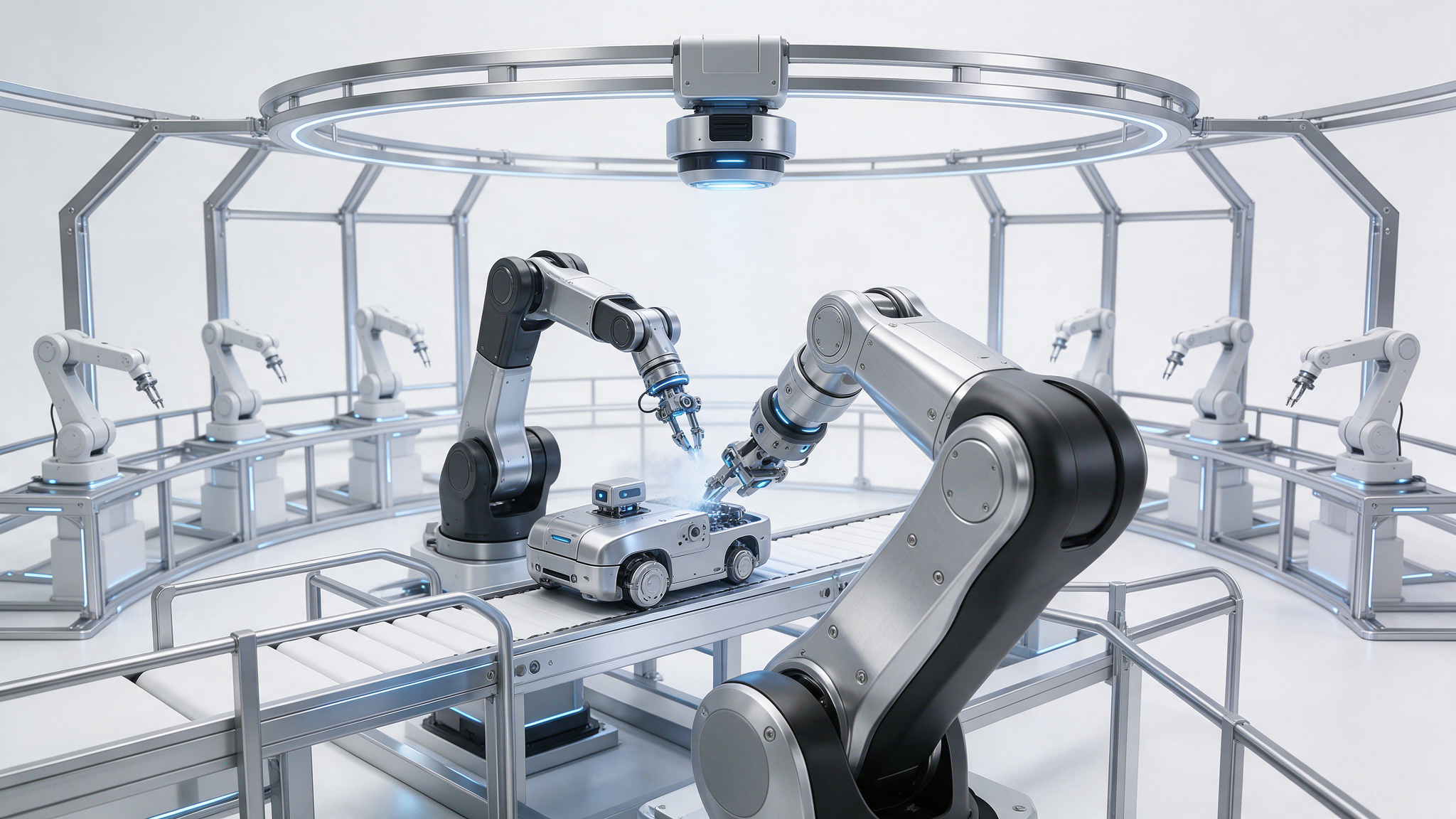
Physical AI is emerging as a major shift in industrial automation because it lets companies adapt machines through retrained AI “brains” rather than costly hardware replacements, improving flexibility, capital efficiency, and speed to market. The article argues that this is especially valuable as companies nearshore or onshore production, where productivity losses can reach 4% to 15%, and as aging populations make labor shortages harder to solve through offshoring alone. Drawing on Foxconn’s AI transformation work, including a brownfield printed circuit board assembly pilot, it emphasizes that companies should apply AI to core, scalable business workflows rather than small side pilots, while also transforming talent, IT architecture, incentives, and leadership mindsets. The central insight is that physical AI should be treated not as a cost-cutting tool, but as a strategic enterprise asset that captures operational know-how, strengthens resilience, and creates long-term competitive advantage.

4. Your AI Won’t Scale Without a Shared Language (BCG)
AI projects are failing to scale not mainly because models or talent are lacking, but because enterprise data lacks shared meaning across fragmented application silos; the article argues that companies need an ontology—a machine-readable semantic layer defining business concepts, relationships, and rules—to make data consistently interpretable by AI systems. By mapping existing CRM, ERP, and other systems to common concepts rather than rebuilding integrations for every use case, ontology can reduce integration costs, lower hallucinations, coordinate AI agents, and turn AI from isolated pilots into reusable enterprise capability. The authors recommend starting with one high-value domain, building jointly with business and technology teams, using GenAI to accelerate ontology creation, shifting from application-centric to data-centric governance, and keeping ownership of the ontology in-house because it represents a strategic asset: how the business understands itself.

5. Choosing to Stay Human (One Useful Thing)
Ethan Mollick argues that “staying human” in the age of AI means choosing deliberately which cognitive tasks to delegate and which to preserve. AI-generated writing and frictionless tools can save effort, but overuse risks draining meaning from communication, weakening personal skill development, and encouraging “cognitive surrender,” where people accept AI output without thinking. The article’s strongest examples come from education: students using ChatGPT to shortcut math homework performed worse later, while students using AI as a tutor to practice tailored problems learned more. Mollick’s central insight is not that AI should be avoided, but that its value depends on whether it helps people think, learn, and express themselves—or simply replaces those processes before users realize what they have given up.

 

Innovation Radar

 
1. AI Model Releases and Advancements

Anthropic upgraded Claude Opus to 4.8 with gains in coding, agentic skills, reasoning, and knowledge work while keeping pricing unchanged and adding dynamic workflows, effort control, and a cheaper fast mode for teams. (Anthropic).

Alibaba introduced Qwen3.7-Max as a proprietary “agent era” model for code, office workflows, MCP integrations, multi-agent orchestration, and long autonomous execution runs involving hundreds or thousands of steps. (Alibaba Cloud).

Microsoft released the Fara1.5-4B, 9B, and 27B browser computer-use agent family to complete tasks such as product comparisons, form filling, and event booking on modest hardware. (Microsoft Research).

Microsoft Research released MagenticLite, an experimental agentic application that works across the browser and local file system, together with MagenticBrain, a small model for planning, coding, and delegation. (Microsoft Research).

OpenAI launched Rosalind Biodefense to help trusted developers build biodefense and pandemic-preparedness applications using GPT-Rosalind, a frontier reasoning model for life-sciences research with expanded access for select U.S. government and allied partners. (OpenAI).

2. AI Tools and Features

Anthropic launched dynamic workflows in Claude Code so Claude can plan work, run hundreds of parallel subagents, and verify outputs before reporting back, while adding effort control in Claude and Cowork to trade quality against speed and rate-limit usage. (Anthropic).

Anthropic added Compliance API integrations so IT and security teams can govern Claude across Anthropic’s platform and products using existing security and compliance tools. (Anthropic).

GitHub expanded Copilot Memory controls with clearer deletion flows, a repository-level off switch, a /memory command in the Copilot CLI, and clearer scope labels for stored user-level and repository-level memory. (GitHub).

GitHub introduced organization-level model rules so enterprise owners can allow specific Copilot models for specific organizations instead of relying on a single enterprise-wide default. (GitHub).

GitHub open-sourced Copilot for Eclipse under the MIT license, making its implementation for chat, code completion, and agentic workflows publicly inspectable. (GitHub).

Alipay launched AI Wallet and Token Pay as part of a full-stack AI payment solution for agentic commerce, giving users authorization controls for agent-driven transactions and helping model providers support subscriptions, top-ups, and micro-transactions. (SCMP).

OpenAI and Thrive described how Codex-powered Tax AI for Crete’s network of accounting firms processed 7,000 tax returns, saved practitioners about a third of tax-prep time, reached up to 97% accuracy, and improved throughput by about 50%. (OpenAI).

Anthropic added connector permissions to Enterprise custom roles, allowing admins to control which connectors and connector tools are available to each Claude role. (Anthropic).

Google Workspace added automatic Drive syncing to NotebookLM so Docs, Sheets, and Slides sources update as files change while respecting deletions and permission changes. (Google Workspace Updates).

Google launched anomaly detection in Connected Sheets, using BigQuery ML and TimesFM to analyze BigQuery time-series data from Sheets without manual model training or complex SQL. (Google Workspace Updates).

Google Workspace added more granular admin controls for Workspace Studio so admins can decide which automation steps and starter templates employees may use by service or individually. (Google Workspace Updates).

3. AI Trends

TechCrunch argued that Google’s I/O 2026 overhaul is turning search into a conversational AI-driven experience and making alternative search engines more relevant. (TechCrunch).

36Kr reported that China’s AI application market is moving into deeper product and commercialization phases, with attention shifting from landscape mapping to performance and monetization signals. (36Kr).

OpenAI published a playbook for trustworthy third-party evaluations, arguing that frontier systems must be assessed in realistic tool-and-workflow contexts while checking for issues such as reward hacking, refusals, contamination, broken problems, and sandbagging. (OpenAI).

OpenAI published its Frontier Governance Framework, mapping safety and security practices to emerging legal requirements and covering risks such as cyber offense, CBRN misuse, harmful manipulation, loss of control, reporting, incident response, and external expert input. (OpenAI).

The Wall Street Journal reported that some large companies are starting to ration AI access, steer employees toward cheaper tools, and tie usage more closely to productivity as usage-based AI costs rise. (The Wall Street Journal).

4. AI for Science

Nature published a paper on an AI system designed to help scientists write expert-level empirical software, targeting the technical software layer that supports experimentation and validation. (Nature).

Nature reported that AI scientist systems are rapidly proliferating as tools that generate hypotheses and test plans, making scientific AI a recognizable workflow category rather than a one-off demo field. (Nature).

Axios reported that Chan Zuckerberg Biohub released a protein-biology stack including a protein structure model, a protein language model, and ESM Atlas, which maps 6.8 billion proteins and 1.1 billion predicted structures. (Axios).

5. Other

Google said Google Chat external interoperability with Microsoft Teams is now available through NextPlane OpenHub, supporting presence, one-to-one chat, group chat, channels and spaces, file sharing, and meeting initiation. (Google Workspace Updates).

Google announced that Device Bound Session Credentials is generally available and enabled by default in Chrome on Windows for Workspace users, binding session cookies to the device used for authentication. (Google Workspace Updates).

Google introduced a beta that lets admins bulk-export client-side encrypted Slides through Vault or Data Export and then convert those exports into PowerPoint files. (Google Workspace Updates).

SCMP reported that a fleet of 100 S1 humanoid robots will be trialed in employee housing in China before a broader household pilot focused on homes with elderly members, children, or pets. (SCMP).

The Wall Street Journal and Axios reported that IBM and Red Hat launched Project Lightwell, an initiative using AI and a 20,000-engineer effort to identify, test, and fix vulnerabilities across open-source software at scale. (The Wall Street Journal).

Google expanded Out-of-Domain file-level warnings across Workspace so external indicators appear in mobile apps, comment and sharing emails, and more sharing configurations to reduce accidental data exfiltration and phishing. (Google Workspace Updates).

Leave a Reply

Your email address will not be published. Required fields are marked *